



A New Frontier in Orbit
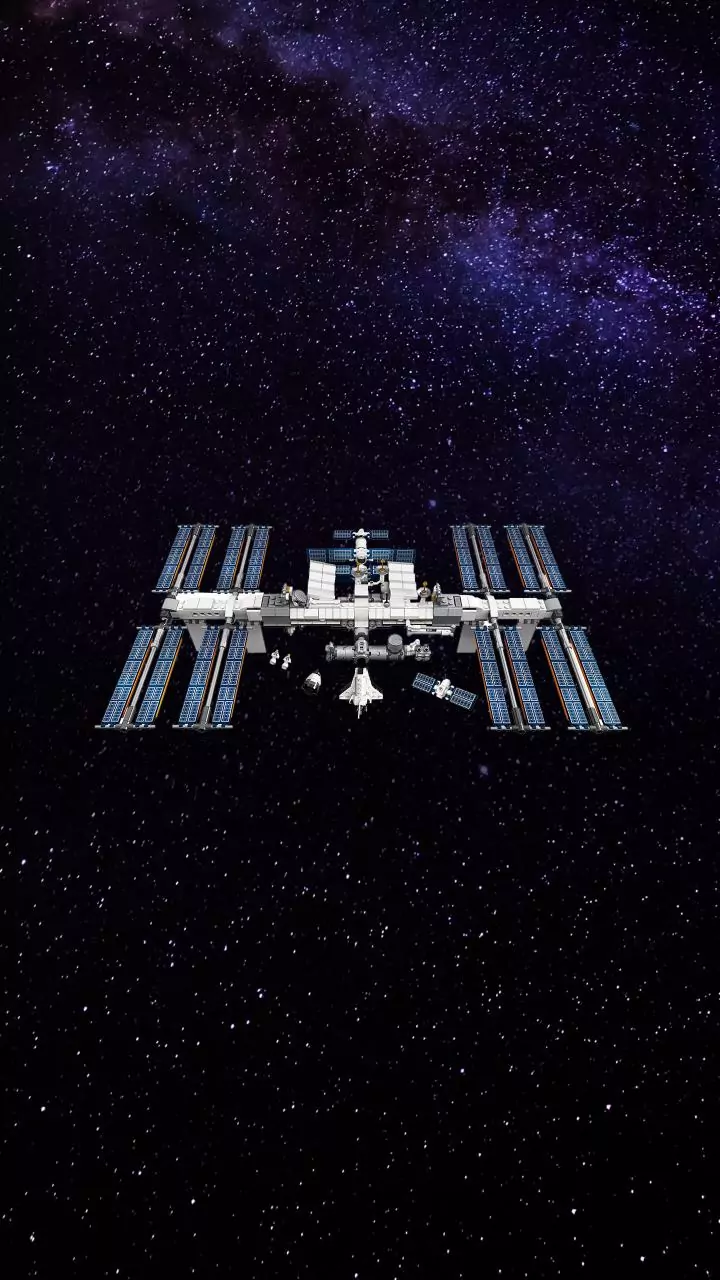
For over two decades, the International Space Station has been the sole orbital laboratory for humanity, facilitating groundbreaking research in microgravity. But with the ISS scheduled for decommissioning around 2031, the race is on to build its successors.
Rather than relying on government-led projects alone, NASA is fostering a commercial marketplace in low Earth orbit (LEO). Private companies are now developing a new generation of space stations, and many are betting on a technology that sounds like science fiction: habitats that inflate in the vacuum of space. These expandable modules are at the heart of projects like Orbital Reef, a collaboration between Blue Origin and Sierra Space, and are also part of Axiom Space's plans.
The Power of Inflatable Tech
Traditional space station modules are rigid metal cylinders, their size limited by the payload fairings of rockets. Inflatable habitats overcome this limitation. Constructed from layers of advanced, flexible materials like Vectran—a liquid crystal polymer—these modules are launched in a compressed state. Once in orbit, they are inflated, expanding to create a voluminous interior. The result is a habitat that provides significantly more living and working space for a given launch mass compared to traditional rigid structures. Sierra Space’s Large Integrated Flexible Environment (LIFE) habitat, for instance, is designed to offer a three-story interior with one-third the entire volume of the ISS in a single launch.
Enabling Science at Scale
The term 'scalable' is key to understanding the promise of these new platforms. It refers to two main advantages. First, the sheer volume. A larger habitat allows for more experiments to run simultaneously and can accommodate bigger, more complex research hardware. This is crucial for fields like in-space manufacturing and advanced pharmaceutical research, which require dedicated space and equipment. Second, scalability means expandability. Private stations like Axiom Station are designed to be modular, with plans to attach additional inflatable and rigid segments over time, growing the station's capabilities as market demand increases. This allows for a more flexible and commercially viable approach than a single, monolithic station.
What Kind of Research?
Low gravity offers a unique environment for scientific discovery. Without the pull of gravity, researchers can study biological processes in new ways, from how cancer cells progress to how human tissue can be grown. In 2024, for example, Redwire announced it had successfully bioprinted a live human heart tissue sample aboard the ISS. Future commercial stations will dramatically expand these opportunities. Areas of focus include creating superior semiconductor crystals, developing new alloys, and advancing regenerative medicine by growing artificial organs. The ability to have larger, dedicated research zones in inflatable habitats will be critical for turning these experiments into commercially viable products.
The Players and the Path Forward
Several companies are at the forefront of this technology, often supported by NASA's Commercial LEO Destinations (CLD) program. Sierra Space has been rigorously testing its LIFE habitat, recently completing a full-scale burst pressure test at a NASA facility to prove its durability. Axiom Space is building its commercial station, which will initially attach to the ISS before becoming a free-flying platform, with plans to incorporate an inflatable module as a multipurpose entertainment and content studio. While the technology's roots go back to NASA's TransHab concept in the 1990s and the Bigelow Expandable Activity Module (BEAM) tested on the ISS since 2016, these new commercial efforts are designed on a much grander scale.