





The Ultimate Safety Check
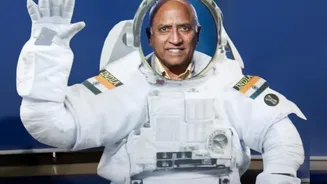
Before Indian astronauts, or 'Vyomanauts', make their historic journey, the Indian Space Research Organisation (ISRO) is leaving no stone unturned to ensure their safety. The upcoming uncrewed missions are the ultimate end-to-end dress rehearsals. Their
purpose is to test every single system—from the launch vehicle and orbital module to life support and re-entry procedures—in real-world conditions. According to ISRO, these flights are essential for technology demonstration and to verify the safety and reliability of the entire system before a human crew is on board. The first of these, the Gaganyaan-1 (G1) mission, is slated for the latter half of 2026. It represents the culmination of thousands of ground tests and the transition from development to operational readiness.
Meet Vyommitra, The Humanoid Stand-In
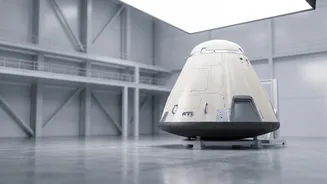
A key passenger on the first uncrewed Gaganyaan flight will be Vyommitra, a sophisticated humanoid robot developed by ISRO. The name, derived from the Sanskrit words for "space" (Vyoma) and "friend" (Mitra), perfectly describes her role. Vyommitra is a half-humanoid, meaning she has a torso, head, and two arms, but no legs. She is designed to meticulously simulate human functions inside the crew module. She can operate switch panels, monitor the cabin environment, and communicate with the ground crew in both English and Hindi. By collecting data on vibrations, acoustics, and the performance of the life support systems, Vyommitra will provide invaluable insights into what human astronauts will experience, helping to validate that the crew module is perfectly safe for its future occupants.
The G1 Mission: A Full Orbital Test
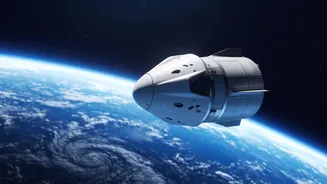
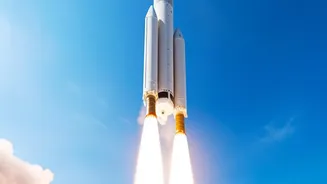
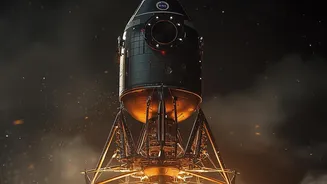
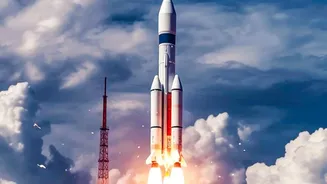
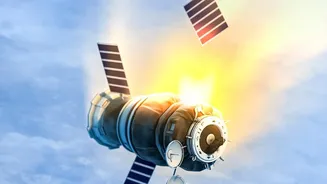
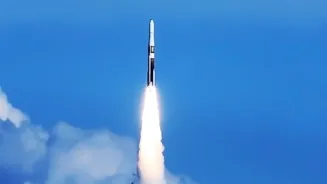
The G1 mission will be a comprehensive test of the entire Gaganyaan system. The human-rated LVM3 rocket will launch the orbital module, consisting of the crew and service modules, into a low Earth orbit of about 400 km. For several days, the spacecraft will circle the Earth, allowing ISRO to test its navigation, guidance, control, and life support systems in the harsh environment of space. One of the most critical phases of the mission will be the re-entry. The module will have to withstand extreme temperatures as it travels back through the atmosphere before deploying its parachute system for a safe splashdown in the Indian Ocean. A successful G1 flight will prove the viability of the entire mission architecture, from launch to recovery.
A Stepping Stone in a Long Legacy
The Gaganyaan mission is not happening in a vacuum. It is the logical next step in a space journey that began with the launch of the Aryabhata satellite in 1975. Since then, ISRO has achieved remarkable feats, including the Chandrayaan missions to the moon and the Mangalyaan mission, which made India the first nation to reach Martian orbit on its first attempt. These missions built India’s indigenous capabilities in launch vehicle technology, satellite manufacturing, and deep-space communication. Gaganyaan leverages this rich legacy, particularly the development of the powerful and reliable LVM3 rocket, which has been human-rated for this very purpose. This series of successes has positioned India as a major space power, with human spaceflight as the next frontier.
What Comes After Success?
Successfully completing the uncrewed tests will be a monumental achievement, paving the way for the first crewed flight, which is anticipated in 2027. This will make India only the fourth country in the world—after Russia, the United States, and China—to have an independent capability to send humans to space. Beyond this immediate goal, Gaganyaan is seen as a foundational program for much bigger ambitions. These include establishing a sustained human presence in space, potentially leading to the development of an Indian space station (the Bharatiya Antariksh Station) by 2035 and contributing to future international collaborative missions. These upcoming tests are, therefore, not just about a single mission; they are about unlocking the future of Indian space exploration for decades to come.