



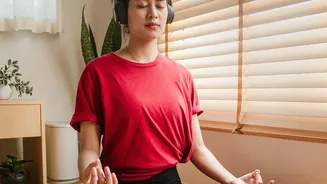

Feeling tired but wired? You're not alone. In our fast-paced world, chronic stress often leaves us drained. But an ancient practice called Yoga Nidra offers a powerful way to recharge by tackling the stress hormone, cortisol, right at its source.
Understanding the Stress Culprit: Cortisol
Cortisol
is often called the 'stress hormone', but it's essential for our daily functioning. Produced by the adrenal glands, its levels naturally peak in the morning to help us wake up and feel alert, then gradually decrease throughout the day. When we face a stressful situation, the body releases cortisol to provide a quick burst of energy for a 'fight or flight' response. The problem arises when stress becomes chronic. Constant pressure from work, personal life, or even poor sleep can keep cortisol levels consistently high. This prolonged elevation disrupts our natural rhythm, leading to issues like poor sleep, a weakened immune system, and that persistent feeling of fatigue, even after a full night's rest. Essentially, your body gets stuck in a state of high alert, constantly draining your energy reserves.
What Exactly Is Yoga Nidra?
Yoga Nidra, which translates to 'yogic sleep', is a powerful guided meditation practice performed while lying down comfortably. Unlike active yoga styles, it involves no physical movement. Instead, a teacher or an audio recording guides you through a systematic process of relaxation. The practice invites you to bring awareness to different parts of your body, your breath, and your inner sensations without judgment. It’s not about forcing your mind to be quiet, but rather allowing it to enter a unique state of consciousness between waking and sleeping. In this state, your body achieves a level of rest that can be as restorative as deep sleep, while your mind remains gently aware. This makes it an incredibly accessible practice for anyone, regardless of their experience with meditation or yoga.
The Bridge Between Rest and Cortisol Reduction
The magic of Yoga Nidra lies in its ability to influence our nervous system. Our bodies have two main modes: the sympathetic nervous system ('fight or flight') and the parasympathetic nervous system ('rest and digest'). Chronic stress keeps us locked in 'fight or flight', fueling cortisol production. Yoga Nidra acts as a switch, activating the 'rest and digest' response. As you are guided into a state of deep relaxation, your brainwave patterns begin to slow down, shifting from the active beta waves of normal wakefulness to the slower alpha and theta waves associated with deep meditation and rest. Some practitioners can even access delta waves, the state of deep, restorative sleep, while remaining conscious. This profound state of relaxation signals to your body that the threat has passed. As a result, the nervous system calms down, and studies show this can lead to a measurable reduction in cortisol levels.
From Lower Cortisol to Higher Energy
When your body is no longer in a constant state of emergency, it can finally focus on restoration. Lowering cortisol levels through practices like Yoga Nidra helps re-establish the body's natural rhythm. Your sleep quality can improve, as the body is better able to wind down at night. With the 'rest and digest' system engaged, functions like digestion and immune response, which are suppressed during stress, can return to normal. This shift doesn't just reduce the feeling of being stressed; it directly impacts your energy. Instead of being wasted on maintaining a state of high alert, your body's energy is conserved and replenished. Over time, this leads to a noticeable restoration of your daily vitality. You might find yourself feeling more focused, emotionally balanced, and equipped to handle daily challenges without feeling completely depleted.
How to Begin Your Practice
Getting started with Yoga Nidra is simple. You don't need any special equipment, just a quiet, comfortable place where you won't be disturbed. You can lie on a yoga mat, your bed, or even a comfortable couch. Find a guided Yoga Nidra recording online—many are available for free on platforms like Insight Timer, YouTube, or through various yoga apps. These sessions can range from as little as 10 minutes to an hour, so you can choose what fits your schedule. The key is consistency. Even a short, 11-minute daily practice has been shown to reduce stress and improve mood. Simply lie down, close your eyes, and follow the voice guiding you. Don't worry if your mind wanders or if you fall asleep—it's all part of the process of allowing your body and mind the deep rest they need.