




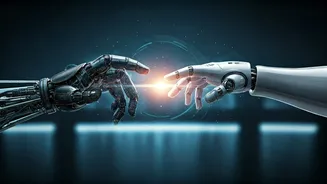



From Text Prompts to Cinematic Scenes
For years, the idea of generating video from a simple text description felt like a distant dream. Today, it’s one of the fastest-growing areas in artificial intelligence. Tools like OpenAI's Sora, Runway, and Kling are leading a global charge, transforming
written prompts into dynamic, high-quality video clips. These platforms use complex AI models to understand language, context, and visual elements, producing everything from realistic human movements to fantastical landscapes. In India, where digital content consumption is exploding, this technology isn't just a novelty; it's a potential solution to a massive production gap. The demand for video content for advertising, social media, and entertainment has outpaced the capacity of traditional production methods, making AI-driven solutions an operational necessity.
The Indian Creative Gold Rush
Across India, a diverse set of creators and businesses are eagerly adopting these new tools. Marketing agencies are using them to generate social media ads at a fraction of the traditional cost and time. Brands can now create multiple versions of a video ad tailored for different regions and platforms, something that was previously too expensive to be viable. For instance, a campaign that once required a massive budget for a pan-India shoot can now generate localised visual content that resonates better with regional audiences. Beyond advertising, educational platforms are using AI to create animated explainers, while independent creators are producing short films without ever picking up a camera. The democratisation of video creation is empowering a new generation of storytellers who were previously held back by high production costs.
Bollywood's New Co-Director?
India's prolific film industry, Bollywood, is also embracing AI with notable enthusiasm, moving faster than its Hollywood counterparts. While US unions have raised concerns, Indian studios are experimenting with AI for everything from pre-visualisation and storyboarding to generating complex visual effects. This technology can drastically reduce the time spent on post-production tasks like colour grading and audio cleanup. Some filmmakers are even using it to generate entire scenes, with reports of production costs falling to a fifth of traditional methods. The potential to quickly create different versions of film endings or dub movies seamlessly into India's many languages presents huge commercial opportunities. However, some directors caution that while the tools are impressive, they cannot yet replicate the emotional depth and mystery that a human creator brings to the story.
Homegrown Innovation and 'Frugal AI'
A key part of India's AI video story is the rise of homegrown platforms. Startups are not just competing with global giants but are also creating solutions specifically for the Indian context. One Bengaluru-based startup, Avataar.ai, recently launched Varya, an AI model trained on thousands of Indian cultural datasets. This allows it to understand and generate visuals with authentic Indian nuances—from festivals and food to architecture—that global models often miss. Crucially, Varya is also significantly cheaper, embodying the principle of 'frugal innovation' to make the technology accessible to small businesses and individual creators. By releasing models like Varya as open-weight, the IndiaAI Mission aims to build a sovereign AI ecosystem, ensuring the country is not just a consumer but a creator of this transformative technology.
A Double-Edged Sword
Despite the immense potential, the rise of AI video tools brings significant challenges. The most immediate concern is job displacement, with editors, animators, and other production professionals fearing their roles could be automated. A more sinister threat is the proliferation of deepfakes and misinformation. In a country as socially and politically diverse as India, the ability to create realistic but fake videos can have serious consequences, amplifying propaganda and eroding public trust. There are also ethical questions around data collection, with concerns that workers' movements and skills are being recorded to train AI systems, sometimes without their full knowledge or compensation. This highlights the urgent need for strong ethical guidelines and regulatory frameworks to govern the use of AI.