







That 'Hit The Wall' Feeling
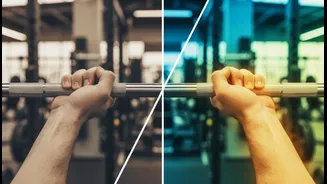
Every new gym-goer knows the feeling. One minute you’re pushing through a set, feeling the satisfying burn of hard work. The next, a wave of exhaustion washes over you, your strength disappears, and finishing your workout feels impossible. Many beginners
assume this is simply 'muscular failure'—the point where your muscles are too fatigued to continue. While that’s part of it, this sudden, whole-body shutdown is often a sign of something different, a hidden factor that’s cutting your workout short: electrolyte depletion. Understanding this is a game-changer, turning frustration into a solvable problem.
Understanding True Muscular Failure
True muscular failure is a specific, localised event. It’s when a targeted muscle group, after intense and repeated contractions, can no longer produce the force needed to lift a weight through its full range of motion with proper form. For example, during bicep curls, your arms simply refuse to lift the dumbbell for one more repetition. This is a positive sign in strength training, indicating that you’ve stimulated the muscle enough to trigger growth and adaptation. It feels like a deep, localised burn and weakness in that specific muscle, not a system-wide power outage.
The Role of Electrolytes
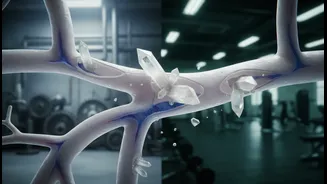
So, what is this other kind of fatigue? It often comes down to electrolytes. These are essential minerals like sodium, potassium, calcium, and magnesium that carry an electrical charge. They are fundamental to our bodies, playing a critical role in nerve function and muscle contractions. Think of them as the wiring that allows your brain to send signals to your muscles, telling them to move. When you exercise, especially in India’s hot and humid climate, you lose these vital minerals through sweat. If you don’t replace them, your body’s communication system starts to break down.
Signs of Electrolyte Depletion
Fatigue from electrolyte depletion feels very different from the focused burn of muscular failure. It’s a more general, systemic feeling of weakness. Common signs include sudden and severe muscle cramps in various parts of your body, not just the muscle you're working. You might also experience dizziness, nausea, headaches, or even a feeling of confusion. An unusually rapid or irregular heartbeat is another red flag. Unlike muscular failure which builds predictably, this type of fatigue can feel like a switch has been flipped, abruptly ending your capacity to perform.
How to Avoid the Crash
The good news is that preventing electrolyte depletion is straightforward. It starts with proper hydration even before you hit the gym. For workouts under an hour, water is often sufficient. However, for longer, more intense sessions, or if you sweat heavily, you need to actively replenish electrolytes. Consider sipping on an electrolyte drink during your workout. Natural sources are also fantastic; coconut water is rich in potassium, and a simple homemade solution of water, a pinch of salt, and a squeeze of lemon can work wonders. Foods like bananas and spinach are also great sources of these crucial minerals.