






Start with the Ingredients List, Not the Claims
The front of a package is advertising, designed to sell you a product with appealing words like “natural,” “healthy,” or “multigrain.” The real story is on the back. The ingredients list, regulated by the Food Safety and Standards Authority of India (FSSAI),
is your most trustworthy source. Ingredients are listed in descending order by weight. This means the first three ingredients make up the bulk of the product. If sugar, refined flour (maida), or palm oil are at the top of the list, you know the product is primarily composed of these, regardless of its health claims. A biscuit that screams “multigrain” on the front might only contain a small percentage of millets listed after maida and sugar.
Decoding the Nutrition Facts Panel
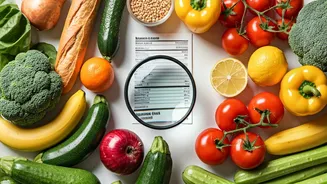
The nutrition panel provides a standardised breakdown of the food's content, usually per 100g and per serving. The most important thing to watch for is the serving size. Manufacturers often set unrealistically small serving sizes to make the calorie, sugar, and fat numbers seem lower. For instance, a packet of biscuits might list the nutrition for just two biscuits, when most people would eat several more. Always check the serving size and calculate the nutrients based on how much you realistically plan to eat. When comparing two different products, always use the 'per 100g' column for a fair, direct comparison.
Key Numbers to Check Per 100g
To quickly assess a product, focus on a few key values in the 'per 100g' column. For sugar, anything over 15g is considered high and should be treated as a sweet treat. For sodium, a figure above 600mg indicates a high-salt product. Remember that the daily recommended limit is around 2000mg of sodium, which equals about one teaspoon (5g) of salt. Also, keep an eye on saturated fat; more than 5g per 100g is significant. The FSSAI mandates that Total Fat, Saturated Fat, Trans Fat, Total Carbohydrate, Sugars, Protein, and Sodium must be displayed.
Watch Out for Misleading Health Claims
Many products use unregulated buzzwords to create a “health halo.” Terms like “natural,” “healthy choice,” or “boosts immunity” are often marketing tactics rather than scientifically backed claims. The ICMR's 2024 dietary guidelines specifically warned consumers that health claims on packaged food can be misleading. For example, a “sugar-free” product might be loaded with refined flours, fats, and artificial sweeteners which can still impact your health. Similarly, recent FSSAI crackdowns have flagged brands for using terms like “Zero Maida” or “True Vitamin” in potentially confusing ways. Look for official certifications like the FSSAI logo, AGMARK for agricultural products, or the Jaivik Bharat logo for certified organic goods to verify claims.
The Rise of Front-of-Pack Labelling
To make things simpler for consumers, FSSAI has been working on introducing mandatory Front-of-Pack Labelling (FOPL). These labels aim to display key nutritional information—like high levels of sugar, salt, and fat—prominently on the front of the package using an easy-to-understand system, such as a star rating. While the exact format for India is still being finalized, the goal is to provide a quick, at-a-glance summary of a product's healthiness without needing to turn it over and analyze the fine print. This move is intended to empower consumers to make healthier choices more easily.