


Imagine discovering a new planet, only for it to disappear a few years later. This cosmic vanishing act puzzled astronomers, but the solution to the mystery of exoplanet Fomalhaut b is even more spectacular than its discovery.
A Landmark Discovery
In 2008, the world of astronomy
was buzzing with excitement. Using the Hubble Space Telescope, scientists announced they had taken the first visible-light snapshot of an exoplanet—a planet outside our solar system. Located 25 light-years away in the constellation Piscis Australis, the object was orbiting the bright star Fomalhaut. Dubbed Fomalhaut b, it was hailed as a landmark achievement, a ghost-like dot of light that represented a massive world, estimated to be up to three times the mass of Jupiter. For years, directly imaging an exoplanet had been an elusive goal, as the faint light from such worlds is almost always lost in the overwhelming glare of their parent stars. Fomalhaut b seemed to be the breakthrough everyone was waiting for.
A Planet Behaving Badly
However, as astronomers continued to study Fomalhaut b, nagging questions emerged. The object was unusually bright in visible light but had no detectable heat signature in infrared, which was strange for a large gas giant. A true planet should be warm enough from its formation to radiate heat, but Fomalhaut b was stubbornly cold. Furthermore, its path through space was peculiar. Instead of following the predictable elliptical orbit of a planet, it seemed to be on a trajectory that would fling it out of the star system entirely. Then, the ultimate mystery unfolded: in subsequent Hubble observations, the 'planet' started to fade. By 2014, it had vanished completely. A planet cannot simply disappear. Clearly, something else was going on.
The Collision Theory
In 2020, a team of astronomers led by András Gáspár and George Rieke from the University of Arizona proposed a dramatic and elegant solution. Fomalhaut b, they argued, was never a planet at all. Instead, what Hubble had witnessed back in 2004 was the immediate aftermath of a titanic collision between two massive, icy bodies, each around 200 kilometres in diameter. What astronomers had mistaken for a planet was actually a vast, expanding cloud of incredibly fine dust particles created by the impact. This dust cloud was initially dense and bright enough to be seen by Hubble, but as it continued to expand and disperse, it became too faint to detect. The 'vanishing' was not a disappearance, but a dilution. By the time of the 2014 observations, the cloud had grown to over 200 million miles across, its fine dust particles spreading out so much they fell below Hubble's detection limit.
A Rare and Fortunate Glimpse
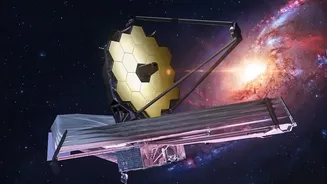
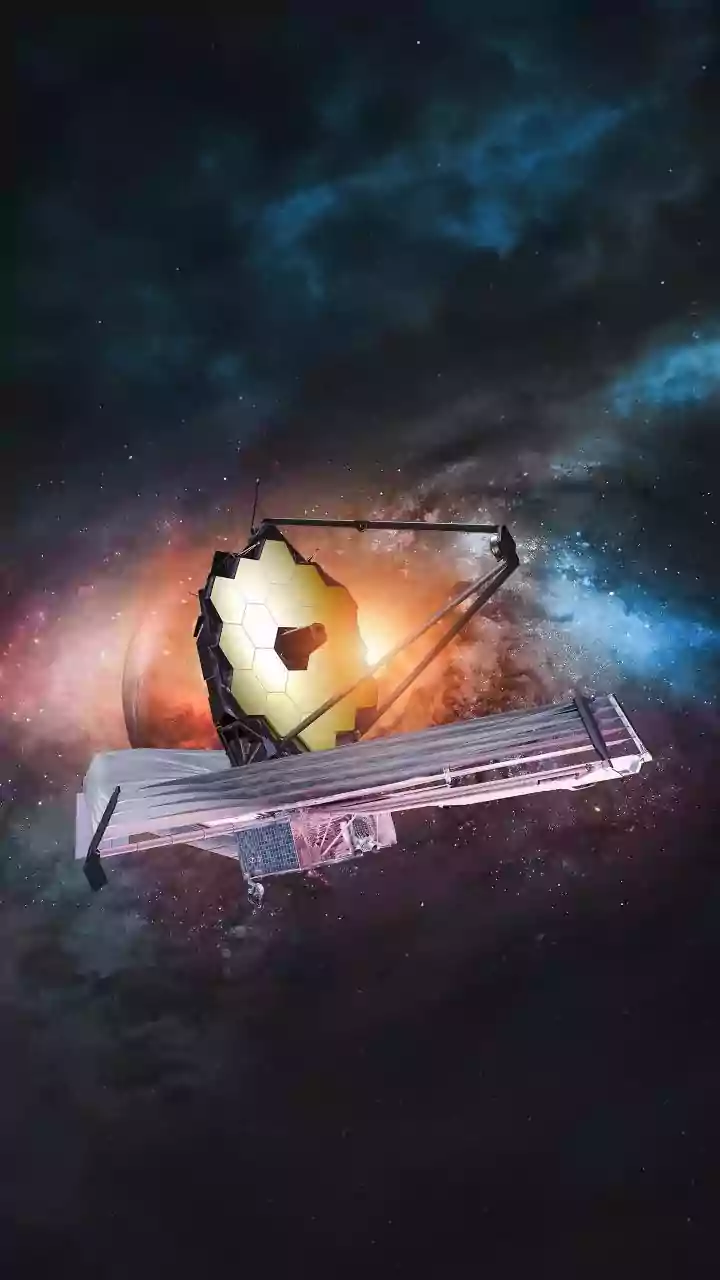
This conclusion means that astronomers were in the right place at the right time to witness an incredibly rare event. Such massive collisions are estimated to happen in the Fomalhaut system only once every 200,000 years. The discovery was a case of cosmic serendipity, providing the first ever direct look at the aftermath of a planetary scale smash up in another star system. The James Webb Space Telescope later confirmed the theory; in 2023, its powerful infrared instruments looked for Fomalhaut b and found nothing, strengthening the conclusion that it was a transient dust cloud and not a solid planetary body. This 'un discovery' serves as a crucial lesson for astronomers: not every point of light moving around a star is a planet. Some might be spectacular, fleeting ghosts of cosmic violence.