



The Gym That’s Always Open
At its core, bodyweight fitness—often called calisthenics—is a form of strength training that uses your own body's weight as resistance. Think push-ups, squats, planks, and lunges. Instead of lifting dumbbells or loading up a barbell, you're mastering
control over your own mass to build muscle, increase endurance, and improve mobility. It’s the oldest form of exercise known to humankind, now making a massive comeback in our hyper-modern world. It’s not about having no equipment; it’s about realising you *are* the equipment.
Why Is Everyone Doing It Now?
The recent surge in popularity isn’t an accident. The COVID-19 pandemic and subsequent lockdowns acted as a massive catalyst. With gyms closed, people were forced to find creative ways to stay active at home. Bodyweight workouts were the perfect solution: they require minimal space, zero investment, and are infinitely adaptable. What started as a temporary fix soon revealed its long-term benefits. People discovered they could achieve serious fitness goals without the commute, cost, and crowds of a traditional gym. This newfound freedom and convenience have made bodyweight fitness a permanent choice for many, long after the lockdowns ended.
The Cost-Effective Path to Fitness
In a country where value for money is paramount, the economic appeal of bodyweight training cannot be overstated. Gym memberships, personal trainers, and home equipment can be prohibitively expensive. Bodyweight fitness democratises health by removing this financial barrier. It aligns perfectly with a practical, 'jugaad' mindset, but it's far more than just a makeshift solution. It’s a sophisticated system for building functional strength—the kind of strength that helps you lift groceries, play with your kids, and move through life with ease and without pain.
Five Foundational Moves to Start Today
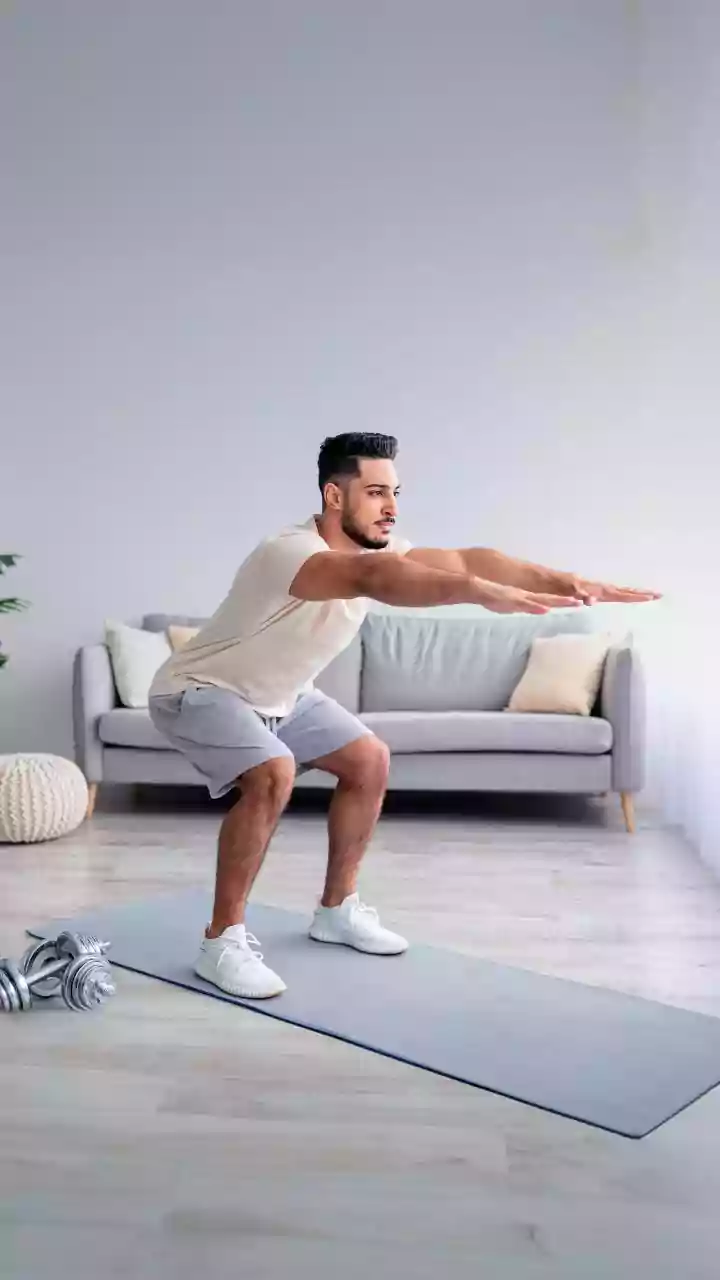
Ready to give it a try? The beauty of bodyweight training is its simplicity. Focus on mastering these five fundamental exercises with proper form: 1. **Squats:** The king of lower-body exercises. Stand with feet shoulder-width apart, keep your chest up, and lower your hips as if sitting in a chair. Go as low as you can comfortably, then push through your heels to return to the start. 2. **Push-ups:** A total-body classic. Start in a plank position with hands under your shoulders. Lower your body until your chest nearly touches the floor, keeping your back straight. Push back up. If this is too hard, start with your knees on the ground. 3. **Plank:** The ultimate core stabiliser. Hold the top position of a push-up, keeping your body in a straight line from head to heels. Engage your abs and glutes. Hold for as long as you can with good form. 4. **Lunges:** Great for balance and single-leg strength. Step forward with one leg and lower your hips until both knees are bent at a 90-degree angle. Push off the front foot to return to the starting position. Alternate legs. 5. **Glute Bridges:** Perfect for strengthening your posterior chain. Lie on your back with knees bent and feet flat on the floor. Lift your hips off the floor until your body forms a straight line from your shoulders to your knees. Squeeze your glutes at the top, then lower back down.
Avoid These Common Beginner Mistakes
While it’s accessible, it’s not foolproof. The biggest mistake beginners make is prioritising quantity over quality. Performing 50 sloppy push-ups is less effective and more dangerous than doing five perfect ones. Focus on slow, controlled movements and feeling the target muscles work. Another pitfall is ignoring progression. Once an exercise becomes easy, you need to make it harder. You can do this by increasing reps, slowing down the movement (e.g., a 3-second descent on a squat), or moving to a more challenging variation, like a one-legged squat or an archer push-up. Always listen to your body; pain is a signal to stop, not to push harder.