






The New Freedom of Unlimited Power
The dream of packing up the car and hitting the road for parts unknown has never been more popular. From weekend warriors in their SUVs to dedicated ‘van-lifers’ in custom-built homes on wheels, Indians are exploring the country’s vast landscapes like
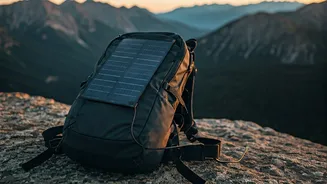
never before. But there’s always been a catch: power. How do you keep your phone charged, your camera batteries full, and your laptop running when you’re miles from the nearest plug point? For a long time, the answer was noisy generators or simply going without. Today, a quieter, cleaner, and more convenient solution is changing the game. Lightweight, portable solar panels are empowering road trippers to generate their own electricity, unlocking a new level of freedom and making long-term, off-grid travel more accessible than ever.
What Are Lightweight Solar Panels?
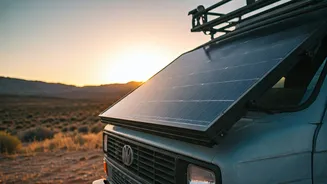
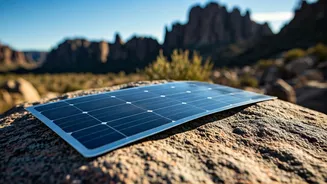
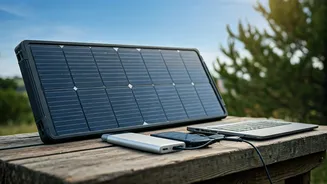
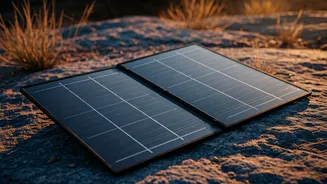
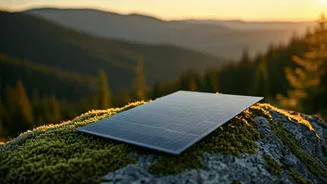
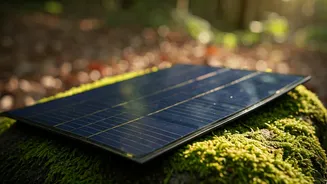
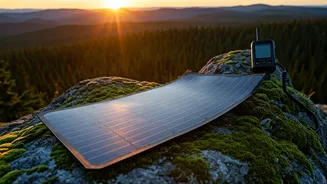
When you hear ‘solar panel,’ you might picture the large, heavy, glass-and-metal rectangles installed on rooftops. The panels used by road trippers are a different breed. Designed for mobility, they come in several forms: - **Foldable Panels:** Often called solar briefcases or blankets, these consist of several smaller panels sewn into a durable fabric case. You unfold them and lay them on your vehicle’s roof or on the ground, pointing them towards the sun. When you’re done, they fold up into a compact, easy-to-store package. - **Flexible Panels:** These are thin, semi-bendable panels that can be permanently or temporarily mounted to the curved roof of a van or the top of an SUV. They are extremely light but are generally less efficient and durable than their rigid counterparts. Most of these panels use high-efficiency monocrystalline cells, which offer the best performance in a compact size, making them ideal for the space-conscious traveller.
The Crucial Partner: The Power Station
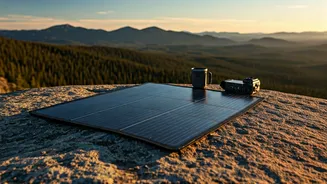
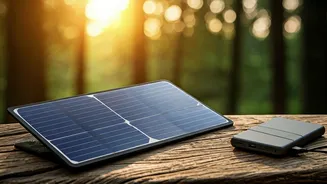
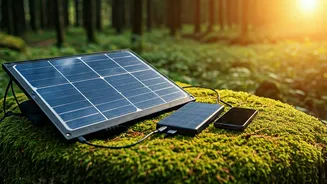
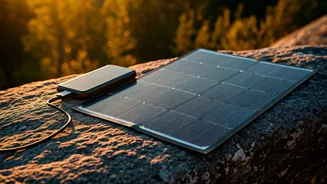
Here’s the most important thing to understand: you don’t just plug your phone directly into a solar panel. While some very small panels allow this, it’s inefficient and unreliable. The sun’s intensity varies, and your devices need a steady stream of power. Instead, the panels are used to charge a portable power station, often called a ‘solar generator’. Think of the power station as a sophisticated, high-capacity power bank. It’s a box containing a large lithium-ion battery, an inverter to convert DC power to the AC power used by household plugs, and a variety of outputs (USB ports, 12V car sockets, and standard wall sockets). The solar panel is the source that refills this ‘tank’ of electricity during the day. Then, day or night, rain or shine, you draw power from the station to charge your gadgets.
Decoding the Numbers: Watts and Watt-Hours
When shopping for a setup, you’ll encounter two key numbers. Understanding them is simple. - **Watts (W):** This measures the solar panel’s power output under ideal sunny conditions. It’s the rate at which it generates electricity. A 100W panel will charge your power station faster than a 50W panel. Think of it as the speed at which water flows into a bucket. - **Watt-hours (Wh):** This measures the power station’s capacity. It’s the total amount of energy it can store. A 500Wh station can deliver 500 watts for one hour, or 50 watts for 10 hours. This is the size of your bucket. To figure out what you need, check the power consumption of your devices. A laptop might use 50W, while a phone uses just 5-10W.
Choosing Your Ideal Off-Grid Setup
The right setup depends entirely on your needs. Before you buy, ask yourself: 1. **What am I powering?** Make a list. Is it just a phone and a headlamp? Or is it a laptop for remote work, a drone, and camera batteries? The more power-hungry your gear, the larger the power station (more Wh) and the more powerful the panels (more W) you’ll need. 2. **How long are my trips?** For a weekend trip, you might get away with pre-charging a large power station at home. For a week-long expedition into the Himalayas, having reliable solar input to recharge every day becomes essential. 3. **What’s my budget and space?** High-capacity systems can be expensive and bulky. Be realistic about what you can afford and what you have space to carry. A simple 100W panel and a 500Wh station is a popular and versatile starting point for many.