

The Primary Goal: A Lunar Sample Return
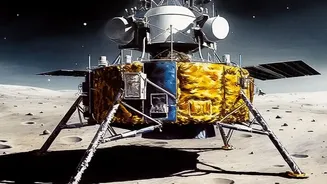
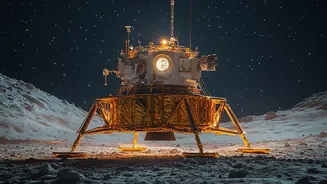
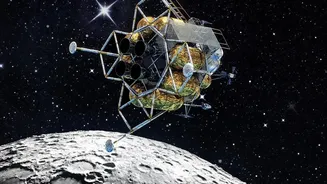
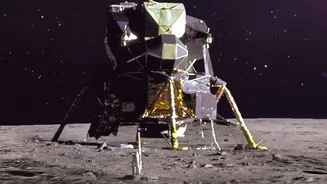
At its heart, the Chandrayaan-4 mission, approved by the Union Cabinet in September 2024, is India's first attempt at a lunar sample return. The objective is to soft-land on the Moon, collect up to three kilograms of soil and rock using a robotic arm
and a drill, and transport these precious samples back to Earth for scientific analysis. This would make India only the fourth country to achieve such a feat, joining an elite club with the United States, the former Soviet Union, and China. Scheduled for launch around 2028, the mission is not just a scientific endeavour; it's a monumental technological leap designed to master capabilities essential for future space exploration.
A Complex, Five-Module Architecture
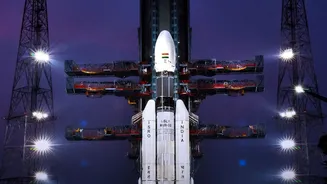
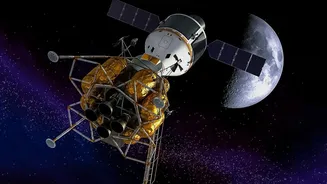
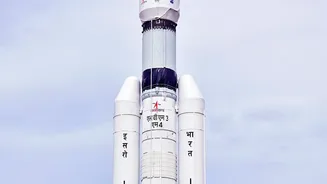
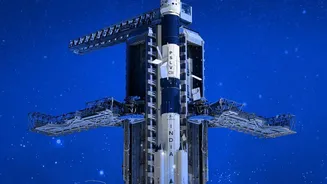
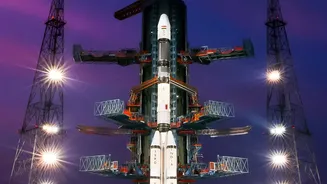
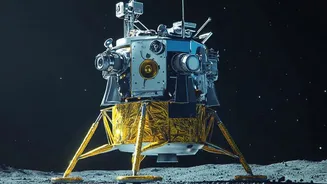
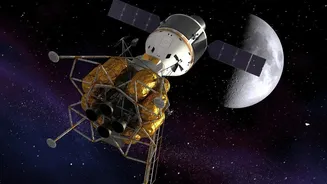
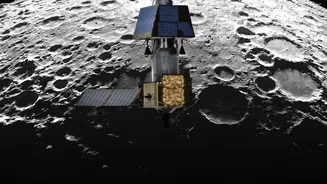
Unlike its predecessors, Chandrayaan-4 is not a single spacecraft but a composite of five distinct modules: a Propulsion Module, a Descender Module (lander), an Ascender Module, a Transfer Module, and a Re-entry Module. The total weight of this hardware is too much for even India's most powerful rocket, the LVM3, to handle in one go. To overcome this, ISRO has devised a dual-launch strategy. Two separate LVM3 rockets will launch the components in two stacks. The first will carry the Descender and Ascender, while the second will carry the other three modules. This complex approach is a direct result of the mission's immense weight and ambitious goals.
The Automated Docking 'Handshake'
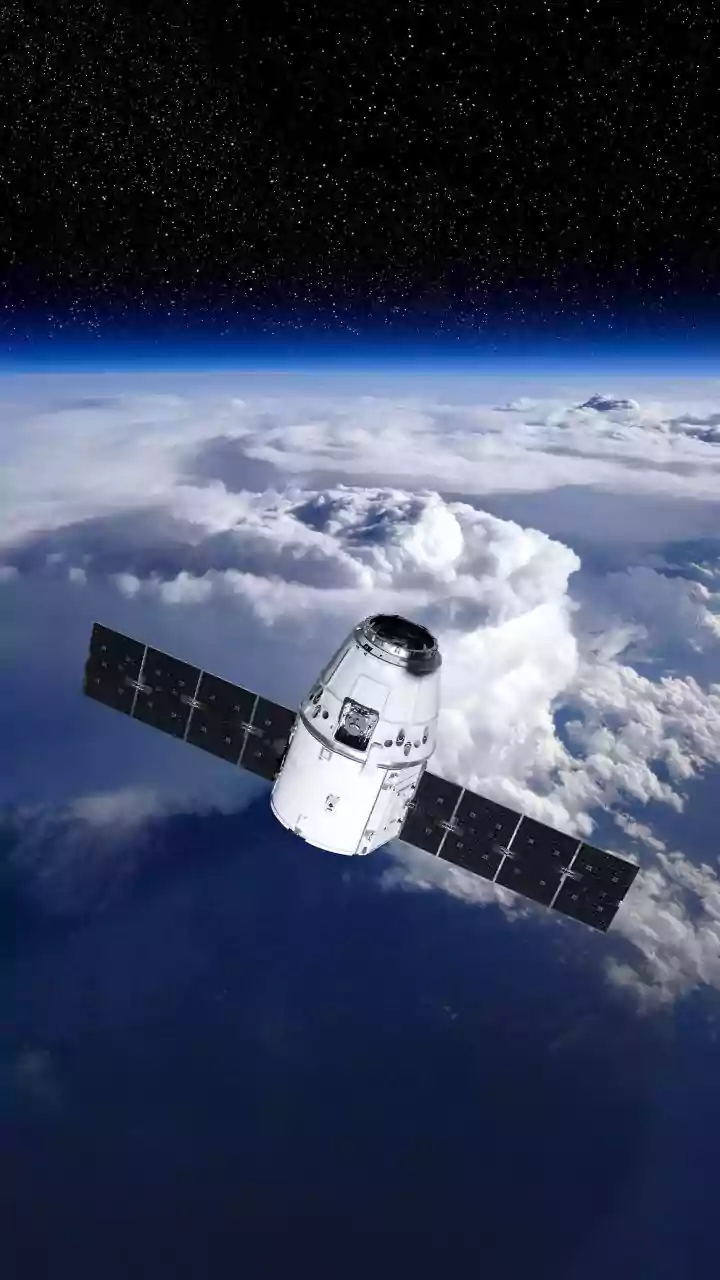
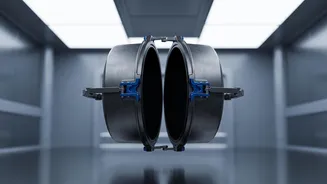
This is where automated orbit docking comes into play. After the two stacks are launched into Earth's orbit, they must find each other and connect to form the single, integrated spacecraft needed for the journey to the Moon. This manoeuvre, known as rendezvous and docking, is an intricate space ballet performed autonomously, hundreds of kilometres above Earth. Later, a second docking will occur in lunar orbit. After the lander collects the samples, the Ascender module will lift off from the Moon's surface and must dock with the Transfer Module waiting in orbit to hand over the cargo for the trip home. Mastering this technology is so critical that ISRO planned the Space Docking Experiment (SPADEX) to demonstrate the capability in Earth orbit first, reducing the risks for the main mission.
Why This Method is Necessary
The reason for this complexity is rooted in physics and engineering. A single spacecraft capable of landing on the Moon, taking off again, and flying all the way back to Earth would be prohibitively large and heavy. The amount of fuel required for the entire round trip would exceed the capacity of current launch vehicles. By breaking the mission into specialised modules, ISRO can optimise each stage. The heavy landing gear stays on the Moon, and only the small, lightweight Ascender needs to launch back into lunar orbit. There, it hands off its even smaller sample container to the Transfer and Re-entry modules, which are designed specifically for the long journey back and the fiery plunge through Earth's atmosphere. This modular, docking-dependent approach is the most efficient way to bring a piece of the Moon home.
Paving the Way for Future Ambitions
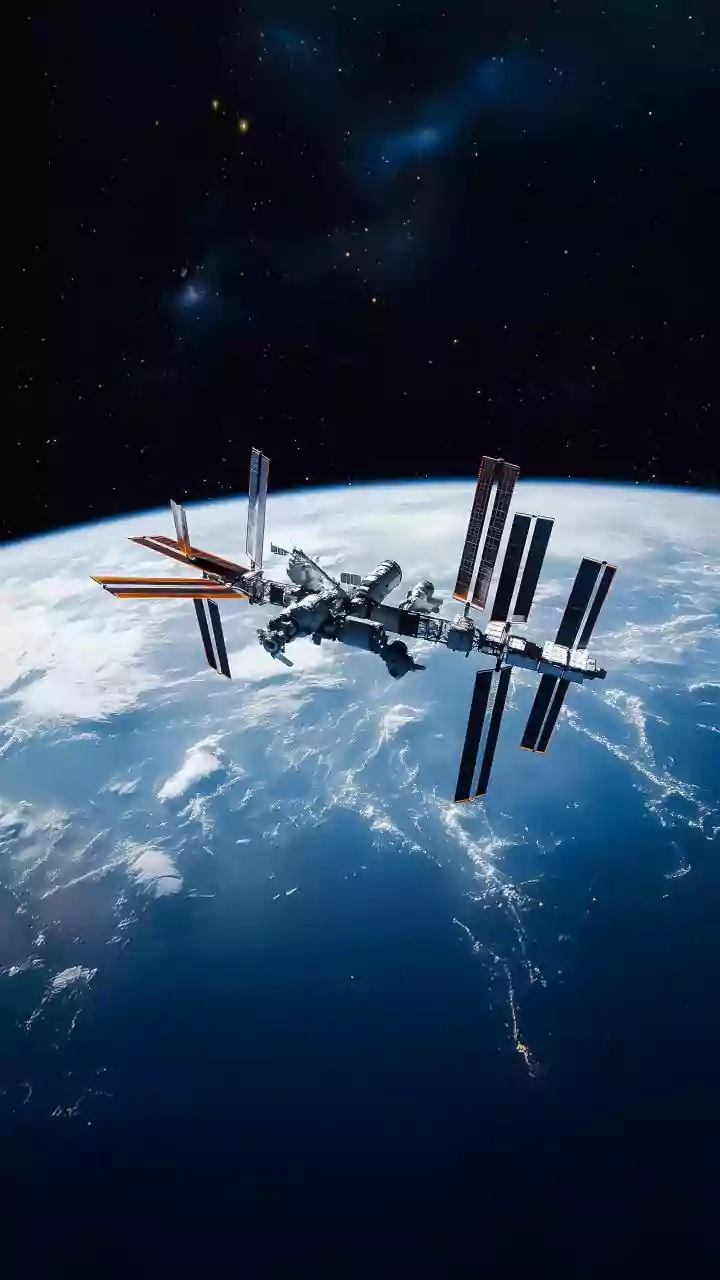
Successfully executing automated docking for Chandrayaan-4 is about more than just moon rocks. This capability is a fundamental building block for nearly all of India's future space aspirations. It is essential for assembling the Bharatiya Antariksha Station (Indian Space Station), which is planned for 2035. Furthermore, the architecture used in Chandrayaan-4 serves as a crucial technological precursor for the ultimate goal of landing an Indian astronaut on the Moon by 2040 and bringing them back safely. Each successful docking manoeuvre proves India's technological prowess and brings it one step closer to becoming a major, self-reliant power in human spaceflight and interplanetary exploration.