





In rural India, the twin challenges of unreliable power and precarious farm incomes are a daily reality. A new approach, solar farming, promises to tackle both by turning agricultural land into a source of both crops and clean energy.
The Promise of Harvesting the Sun, Twice
Solar farming, or
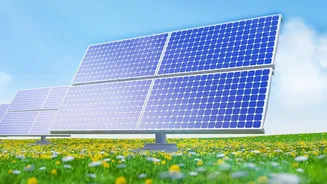
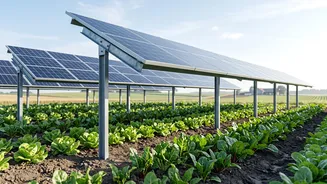
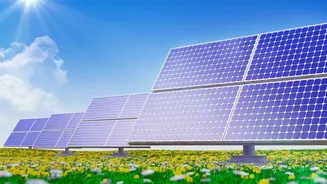
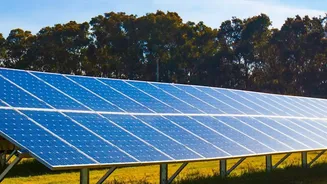
agrivoltaics, is the practice of using the same piece of land for both agriculture and solar power generation. Instead of choosing between a field of crops or a field of solar panels, this model combines them. Solar panels are installed on elevated structures, several metres above the ground, allowing farming activities like planting, cultivating, and even the movement of small machinery to continue underneath. The core idea is to create two simultaneous revenue streams from a single plot of land: one from selling crops and the other from generating and selling electricity. This approach directly addresses the land-use conflict that often arises between large-scale solar projects and the need to preserve fertile agricultural land.
A Dual Boost for Farmer Incomes
For India's farmers, many of whom are small or marginal landholders, income stability is a constant struggle. Agrivoltaics offers a potential 'third crop' in the form of electricity. Farmers can use the power generated to run their own irrigation pumps, cutting dependence on expensive diesel and erratic grid supply. More importantly, under government schemes like PM-KUSUM, they can sell surplus power to local electricity distribution companies (DISCOMs), creating a steady, non-agricultural income source. Pilot projects have shown dramatic results; one in Rajasthan reportedly increased a farmer's income nearly tenfold, from ₹40,000 to almost ₹4 lakh per acre. This diversification makes farm households more resilient to crop failures and price volatility.
Addressing the Rural Energy Deficit
Many parts of rural India still grapple with an energy deficit, marked by inconsistent power supply that hampers daily life and economic activity. Decentralised solar generation through agrivoltaics can strengthen rural energy security. Instead of relying solely on a distant, often overburdened central grid, communities can generate power locally. This not only ensures a more reliable electricity supply for homes, schools, and healthcare facilities but also reduces the immense subsidy burden on DISCOMs, which provide heavily subsidised power for agriculture. The government estimates that converting just 10% of suitable agricultural land to agrivoltaics could meet India's projected power demand for 2050.
The Nuanced Impact on Crop Yields
The critical question for any farmer is how solar panels will affect the crops growing beneath them. The answer is complex and depends on the crop, climate, and system design. The shade from panels can be beneficial, especially in hot, arid regions. It reduces heat stress, conserves soil moisture, and lowers water usage for irrigation. Studies have shown that certain crops, including leafy greens, peppers, tomatoes, and various herbs, can actually have higher yields under panels. However, the same shade can reduce the yield of sun-loving staple crops like rice and sugarcane by 15–20%. Therefore, successful agrivoltaics requires careful crop selection and region–specific planning, as a model that works in Rajasthan might not be suitable for Assam.
Hurdles on the Path to Scale
Despite its immense potential, solar farming faces significant challenges. The primary obstacle is the high upfront cost; agrivoltaic systems can be 25–30% more expensive than conventional ground–mounted solar projects due to the need for elevated structures. For small farmers, accessing affordable long–term credit to finance this investment is difficult. There are also operational issues, such as the difficulty and cost of cleaning panels mounted high above the ground. Furthermore, a clear policy framework is still developing. Issues like ensuring farmers don't lose their 'agricultural status' and associated benefits, and guaranteeing timely payments for the power they sell, need to be resolved to build trust and encourage widespread adoption.
The Government's Push with PM–KUSUM
The Pradhan Mantri Kisan Urja Suraksha evam Utthaan Mahabhiyan (PM–KUSUM) scheme is the government's primary vehicle for promoting solar energy in agriculture. The scheme has three components: supporting large decentralised plants on barren land, providing standalone solar pumps to individual farmers, and solarising existing grid–connected pumps. The government is now looking to formally integrate agrivoltaics into the next phase of PM–KUSUM. This policy push aims to provide financial support, set technical standards, and create a viable ecosystem for farmers to become producers of both food and energy, aligning with India's ambitious renewable energy targets.