



More Than Just Rocks and Snowballs
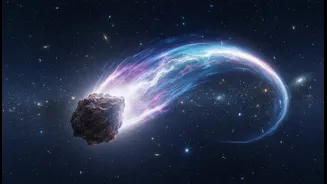
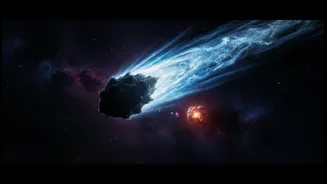
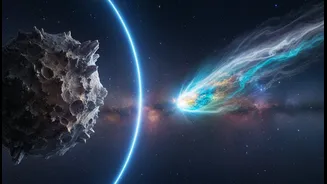
For centuries, the solar system’s small objects were neatly sorted into two bins. Asteroids were rocky, inert bodies mostly found in the belt between Mars and Jupiter. Comets were icy visitors from the solar system's frozen fringes, which grew spectacular
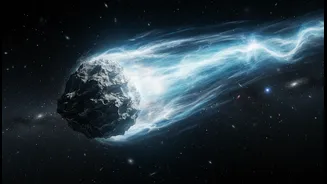
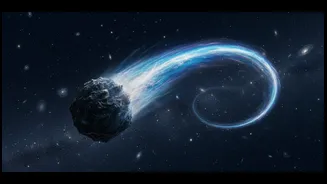
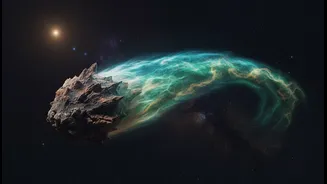
tails of gas and dust as they neared the Sun. This classification was practical and based on what telescopes could see. But recent discoveries are challenging this tidy division. Astronomers are finding more and more objects that refuse to fit in one box, forcing a major rethink of how we map our cosmic neighbourhood. These hybrid objects suggest a dynamic continuum between asteroids and comets, rather than a sharp divide.
The Curious Case of the Centaurs
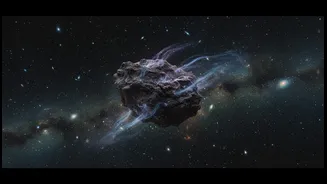
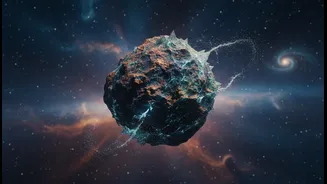
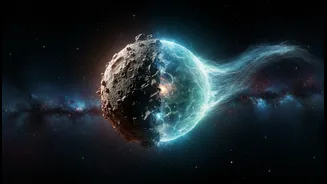
Nowhere is this blurring of lines more apparent than with a group of objects called Centaurs. Named after the half-man, half-horse creatures of myth, Centaurs are small bodies with unstable orbits between Jupiter and Neptune. They have characteristics of both asteroids and comets. For a long time, many were considered inactive. But then astronomers started noticing something strange. Objects like 2014 OG392, initially catalogued as a minor planet, were spotted sprouting a faint cloud of gas and dust, known as a coma. This activity was puzzling because, at such extreme distances from the Sun, it is too cold for water ice to sublimate easily. This discovery led to 2014 OG392 being reclassified as a comet, highlighting that many of these objects are not dormant rocks but sleeping comets waiting to awaken.
Enter the 'Dark Comets'
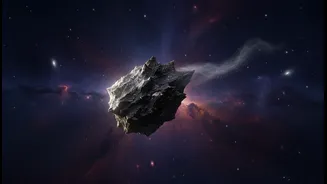
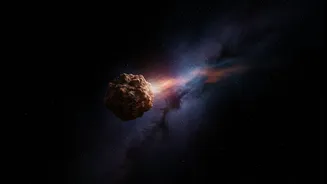
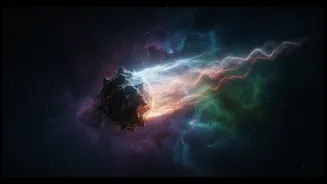
An even more mysterious category has recently come into focus: 'dark comets'. First formally identified in 2023, these objects are true celestial phantoms. They look like ordinary asteroids, showing no visible coma or tail. However, their orbits show a slight acceleration that cannot be explained by gravity alone. This movement is the tell-tale sign of outgassing, the rocket-like push a comet gets as its ices turn to gas. The fact that we cannot see the outgassing suggests it might be from substances like carbon dioxide or ammonia, or that it is happening at a very low level. This discovery, spurred by the strange motion of the interstellar visitor ‘Oumuamua, suggests a large, hidden population of weakly active objects, some of which may have delivered water to early Earth.
A Solar System in Constant Motion
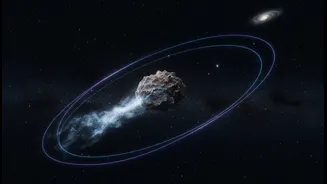
These discoveries paint a new picture of the solar system—not as a static collection of objects in fixed roles, but as a place of constant migration and evolution. Centaurs are now understood to be transient objects, flung from the distant Kuiper Belt and on a journey toward the inner solar system. Over millions of years, gravitational nudges from giant planets will either eject them or pull them into orbits where they can become what we recognise as traditional comets. This means that an object we label an asteroid or Centaur today could be the parent of a brilliant comet thousands of years from now. It reveals that the solar system's inventory is always shuffling, with objects constantly changing their address and their identity.
Rewriting the Cosmic Family Tree
So, what does this mean for our neat little categories? Scientists now use the broad term "Small Solar System Bodies" (SSSBs) for any natural object that isn't a planet, dwarf planet, or moon, a definition adopted by the International Astronomical Union in 2006. But within that, the lines remain wonderfully blurry. The existence of active asteroids, Centaurs, and dark comets shows that the composition of the early solar system was incredibly varied. These objects are more than just classification problems; they are pristine relics from the dawn of the planets. Studying them helps us understand how building blocks like water and organic molecules were distributed throughout the solar system, ultimately making their way to planets like our own.