





Decode the 'Red Alert'
First, understand what a 'red alert' means. Issued by the IMD, it's the highest level of warning, signifying that extremely heavy rainfall (over 204.5 mm in 24 hours) is expected. This isn't just a heavy shower; it’s a forecast that brings a significant
threat to life and property from widespread flooding, landslides, and disruption of essential services. The official advice during a red alert is to “take action,” which often means avoiding travel altogether. If you are already on the road or cannot postpone your trip, extreme caution is non-negotiable.
Fortify Your Vehicle
Your car is your primary shield, so ensure it’s in top condition. Before you even start, get your vehicle serviced. Pay special attention to tyres, brakes, wipers, and lights. Tyres must have deep treads for grip on slippery roads, and brakes need to be perfectly responsive as braking distances increase on wet surfaces. Functioning wipers are crucial for visibility, which can drop to near-zero in a downpour. Also, check all headlights, taillights, and fog lamps. Applying an anti-rust coating to the underbody can prevent long-term damage from water exposure.
Pack a Monsoon Emergency Kit
Your standard first-aid kit won't be enough. A monsoon-specific emergency kit should include a powerful waterproof flashlight with extra batteries, a tow rope, and a reflective triangle. Pack high-energy snacks and plenty of drinking water in case you get stranded. A portable tyre inflator and a puncture repair kit can be lifesavers on isolated ghat roads. Also include a waterproof poncho or raincoat, a change of dry clothes in a waterproof bag, and a fully charged power bank for your mobile phone. A multi-tool or a hammer to break the window in an emergency is also a wise addition.
Master On-Road Tactics
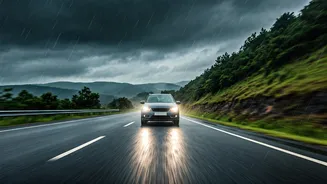
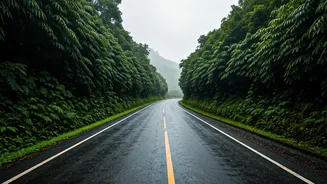
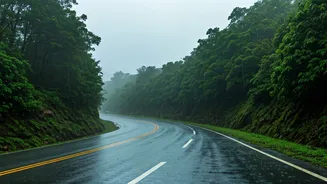
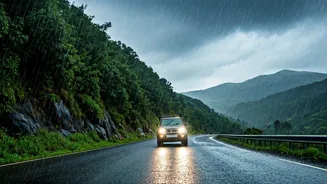
Driving in the ghats during a red alert demands a different approach. Reduce your speed significantly and maintain a much larger distance from the vehicle ahead. Turn on your headlights for better visibility, even during the day. Avoid overtaking on bends and narrow roads; be patient and let faster local drivers pass. Honk at blind curves to alert oncoming traffic. One of the biggest dangers is aquaplaning, where your tyres lose contact with the road. If you see a large puddle, slow down and drive straight through it without sudden steering changes. Never drive on a neutral gear downhill; use engine braking to control your speed.
Navigate Floods and Landslides
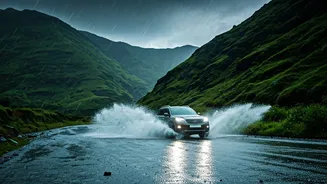
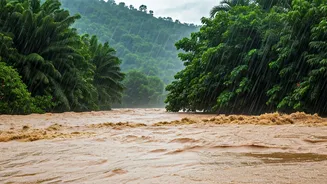
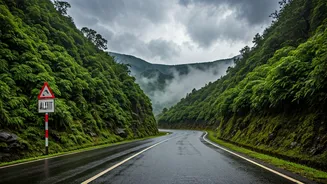
The two greatest threats in the ghats are waterlogged roads and landslides. Never attempt to drive through fast-flowing water. Just six inches of water can cause you to lose control, and two feet can sweep a vehicle away. If you encounter a flooded stretch, it's always safer to turn back. Be extremely vigilant for signs of landslides, such as falling rocks or mud on the road. Authorities often close vulnerable ghat sections like Malshej, Tamhini, and Bhor during red alerts for this reason. If you get stuck in your car in rising water, stay calm, unlock the doors, and try to lower the windows to escape.
Stay Informed and Connected
Information is your best defense. Before and during your trip, continuously monitor weather updates from official sources like the IMD website and local disaster management authorities. Mobile connectivity can be patchy in the ghats, so download offline maps of your route in advance. Inform a friend or family member of your travel plan and share your live location when possible. Keep emergency numbers for local police and district administration handy. If conditions worsen, listen to advice from local authorities—they may close roads or advise against proceeding.