



The Sound of Comfort
Before the taste, there is the sound. The sharp crackle of mustard seeds hitting hot oil in a kadai is the official announcement that comfort is on its way. It’s a sound that cuts through the gentle hum of the rain, a promise of warmth and flavour. This
is followed by the sizzle of onions turning translucent, the fragrant addition of curry leaves, and perhaps the pop of urad dal turning golden. Every household has its own sequence, its own signature rhythm, but the symphony is universally understood. It’s the soundtrack to a slow, cosy start on a day when rushing feels wrong.
A Masterclass in Simplicity
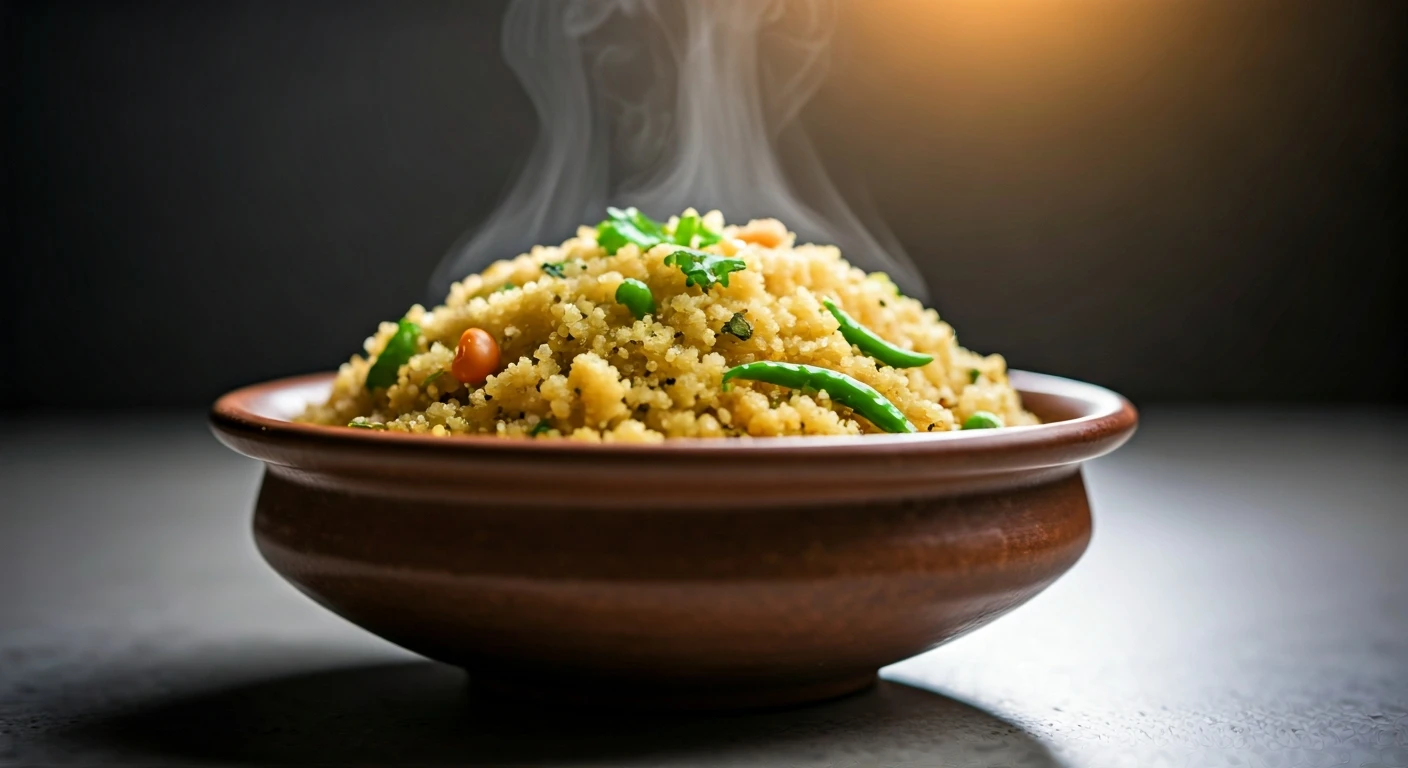
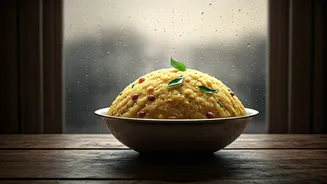
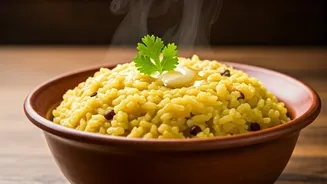
The true genius of upma on a monsoon morning lies in its elegant simplicity. It’s a dish born from the pantry, not the market. The star ingredient, semolina (rava or sooji), is a staple in every Indian kitchen, waiting patiently for its moment. This is crucial during the monsoon, a time when a trip to the vegetable vendor can feel like a major expedition. With just a handful of basic ingredients—semolina, onions, ginger, green chillies, and a few spices—you can create something deeply satisfying. It requires no elaborate preparation, no long hours of simmering. In less than 20 minutes, you can transform a few humble ingredients into a steaming bowl of nourishment. It’s the culinary equivalent of a warm hug, delivered with minimal fuss.
The Perfect Textural Balance
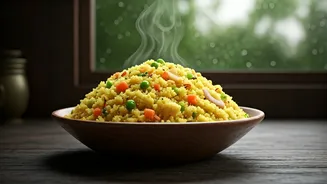
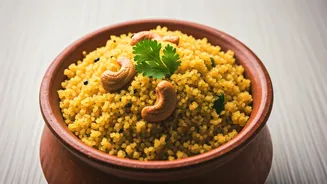
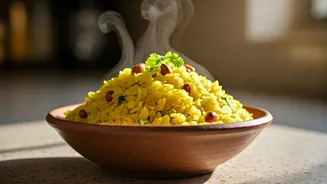
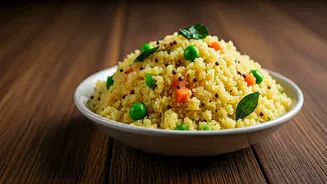
What makes upma so compelling is its texture. A well-made upma is a study in contrasts. It should be soft and fluffy, never lumpy or dry. Each spoonful offers a gentle, savoury warmth, punctuated by the crunch of roasted peanuts or cashews, the slight bite of the dal, and the soft sweetness of the onions. Some add finely chopped carrots and peas for colour and variety, transforming the simple dish into a more wholesome meal. The final drizzle of ghee or a squeeze of lime at the end elevates it further, adding richness and a bright, zesty note that cuts through the savouriness. This interplay of soft and crunchy, savoury and tangy, is what makes it so endlessly interesting to eat.
A Canvas for Memory
Upma is more than just a recipe; it’s a canvas for personal history and regional identity. In the south, it might be served with a side of coconut chutney or a spoonful of tangy pickle. In Maharashtra, it’s often garnished with freshly grated coconut. Every family has its non-negotiable additions and techniques. “My mother always added a pinch of sugar to balance the flavours,” one might say. “We can’t have it without roasted cashews,” insists another. This is why no two upmas ever taste exactly the same. Each bowl is a reflection of a home, a grandmother’s technique, a childhood memory of being fed on a rainy school holiday. It’s a dish that connects generations, a taste of home that can be recreated anywhere with just a few simple ingredients.