

The Universe as Your New Hobby
In a world saturated with screens and endless notifications, stargazing offers a powerful antidote. It’s an invitation to step outside, disconnect from the digital noise, and reconnect with something vast and ancient. This isn't a hobby that requires
expensive gear or intense training; it simply asks for your time and curiosity. The rewards are immense: a deeper appreciation for the natural world, a moment of mindfulness, and a consistent source of wonder. Each night offers a slightly different view as the Earth continues its journey through space. Following the celestial calendar turns the sky into a living spectacle, with a new show opening every month. It’s a practice that encourages patience, observation, and a humbling perspective on our place in the cosmos.
Your Essential Starter Kit
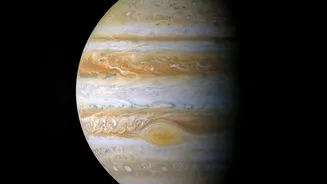
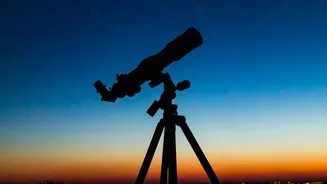
Getting started with stargazing requires surprisingly little. Your most important tools are your own eyes. Give them at least 15-20 minutes to adapt to the darkness, away from bright city lights or your phone screen, and you'll be amazed at how many more stars become visible. A comfortable chair and a warm blanket can make the experience much more enjoyable. While a telescope can reveal incredible details like Saturn's rings or distant nebulae, it's not a prerequisite for beginners. A simple pair of binoculars is a fantastic starting point, capable of revealing craters on the Moon, the moons of Jupiter, and the fuzzy glow of star clusters. To avoid ruining your night vision, use a red-light torch if you need to consult a chart or find your way; you can easily make one by covering a regular torch with red cellophane.
Finding Your Monthly Guide
This is where technology becomes your best friend. A good stargazing app acts as your personal monthly sky guide, pointing you toward the must-see events. Apps like Star Walk 2, SkyView, and Stellarium use your phone’s location and orientation to create a real-time map of the sky. Simply point your device upwards, and the app will identify the stars, planets, and constellations you’re looking at. Many also feature a calendar of upcoming celestial events, so you can plan ahead. For those interested in a more India-specific perspective, the 'Bhagol: Indian Sky Map' app offers names and constellations from Indian astronomical traditions, such as the nakshatras. These apps are the key to turning a random glance at the sky into an intentional act of discovery.
Your September 2026 Sky Guide
As the monsoon recedes, September 2026 offers a cascade of celestial sights perfect for new stargazers. On September 2, look for the brilliant planet Venus passing very close to Spica, the brightest star in the constellation Virgo, in the western sky just after sunset. The main event is a planetary parade from September 6 to 14, where the Moon will appear to dance past four planets. Watch as it makes close approaches to Mars, Jupiter, Mercury, and finally, a beautiful crescent Moon meets a dazzling Venus on September 14. On September 22, Venus reaches its maximum brightness, shining as a spectacular beacon that can cut through even moderate light pollution. Find a clear view to the west-southwest to catch it. Finally, the month closes with the Harvest Moon on September 26, the full moon closest to the autumnal equinox.
From a Single Night to a Regular Habit
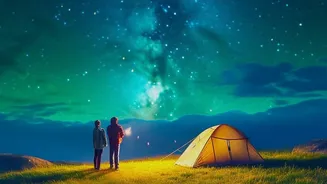
The secret to building any new habit is consistency and making it easy. Don’t try to see everything at once. Use your monthly sky guide to pick just one or two events for the month that genuinely excite you. Mark them on your calendar. Another powerful trick is to schedule time for stargazing during the New Moon. With no moonlight to wash out the fainter stars, the sky is at its darkest and most impressive. Make it a social activity; sharing the view with family or friends can make it a more memorable and motivating experience. Start small. The simple act of stepping outside for ten minutes on a clear night to find a single planet or constellation is a victory. Over time, these small moments build into a deeply rewarding and lifelong connection with the night sky.