






More Than Just A Doctor On Board
When we think of space missions, we often picture astronauts and engineers. But behind every crew member in orbit, there is a dedicated team of medical professionals on the ground. Space medicine isn't just about treating illness in zero gravity; it's
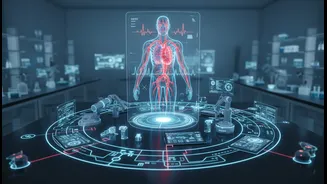
a proactive, specialised field dedicated to understanding and mitigating the unique ways the human body responds to the extreme environment of space. It involves everything from selecting the right astronaut candidates to managing the physiological effects of microgravity and developing countermeasures to keep them healthy millions of miles from the nearest hospital.
The Unique Challenges of Space
The human body is exquisitely adapted to life on Earth. In space, it faces a barrage of challenges. Microgravity causes bone density to drop and muscles to atrophy. Fluids shift upwards in the body, affecting vision and cardiovascular function. Astronauts are exposed to higher levels of cosmic radiation, and the psychological stress of isolation and confinement is immense. These are not problems that can be solved with a standard medical textbook. They require a deep, interdisciplinary understanding of physiology, engineering, and psychology, which is something a short-term course simply cannot provide.
Building Foundational Expertise
This is where the preference for multi-year fellowships becomes clear. India's goal is not merely to complete a single mission but to establish a sustainable human spaceflight programme. Recent collaborations between the Indian Space Research Organisation (ISRO) and premier medical institutions like the Sree Chitra Tirunal Institute for Medical Sciences and Technology (SCTIMST) and AIIMS are prime examples of this long-term strategy. By establishing postdoctoral fellowships in bioastronautics and space medicine, India is choosing to cultivate a cadre of specialists. These two-year programmes are designed to immerse researchers in the complexities of space medicine, from cellular-level changes to developing new medical technologies for future missions.
A Strategy of Self-Reliance
While a short tech course might train someone to operate a specific piece of monitoring equipment, a multi-year fellowship trains them to develop the next generation of that equipment. It fosters researchers who can ask critical scientific questions and find novel solutions to problems that may not even exist yet. This focus on research and development is crucial for self-reliance. As India plans for more ambitious, long-duration missions, including the Bharatiya Antariksh Station (Indian Space Station), it cannot depend on foreign expertise. It needs its own homegrown experts who are deeply integrated into the national programme, from the Institute of Aerospace Medicine (IAM) that selects and trains astronauts to the research hubs developing life support systems.
An Investment in India's Cosmic Future
The decision to prioritise in-depth fellowships is a powerful statement about India's ambitions. It signals a shift from being a participant in space exploration to becoming a leader. These programmes are creating a pipeline of talent that will not only support the Gaganyaan mission but also drive innovation for decades to come. The experts trained in these fellowships will be the flight surgeons, medical researchers, and health system designers for missions to the Moon and beyond. They will also contribute to healthcare on Earth, as research into space-related ailments often yields breakthroughs in treating conditions like osteoporosis and cardiovascular disease.