




The Foundation: Mastering Basic Tree Pose
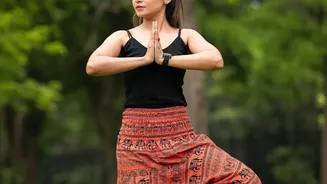
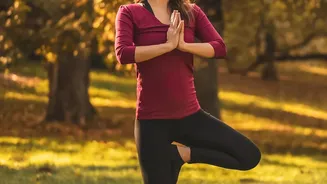
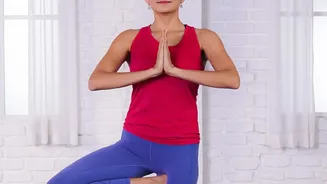
Before exploring variations, it's essential to build a strong foundation. Start in Mountain Pose (Tadasana), standing tall with your feet together or hip-width apart. Shift your weight onto your left foot, grounding down through the heel and ball of the foot.
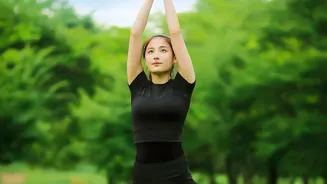
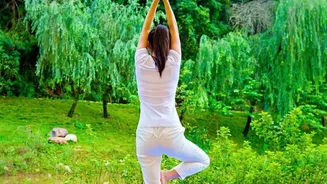
Engage your standing leg's muscles to create a stable pillar. Then, bend your right knee and use your hand to place the sole of your right foot on your inner left leg. A crucial rule is to always avoid placing your foot directly on your knee joint, as this can cause injury. Place it either on your inner thigh or below the knee on your calf. Press the foot and standing leg firmly into each other to create a stable connection. Keep your hips level and facing forward. For balance, fix your gaze on a single, unmoving point in front of you—this is your 'drishti'. You can bring your hands to a prayer position at your heart or, once steady, raise them overhead.
For Beginners: Finding Your Roots
If you're new to yoga or find balancing challenging, there are many ways to make Tree Pose more accessible. Don't be afraid to use support. Practicing near a wall or a sturdy chair and placing a hand on it can provide the stability you need to work on your alignment. Another excellent modification is to change your foot placement. Instead of lifting the foot high, you can rest your heel on your standing ankle with your toes remaining on the floor like a kickstand. This 'low branch' variation allows you to experience the pose's alignment without the intense balance challenge. From there, you can progress to placing the foot on your inner calf. Remember that wobbling is part of the process; it's how your muscles learn to make the tiny adjustments needed for balance.
Intermediate Steps: Growing Your Branches
Once you feel stable with your foot on your inner thigh and hands at your heart, you can begin to explore variations that challenge your balance further. One of the simplest ways to add difficulty is by changing your arm position. Try extending your arms out to the sides in a 'T' shape or reaching them overhead in a 'V'. Another challenge is to create a 'windy tree' by gently swaying your arms overhead, forcing your core and standing leg to work harder to maintain stability. You can also challenge your reliance on sight. Once you feel solid, try briefly closing your eyes or shifting your gaze upward toward the ceiling. You'll quickly notice how much we depend on our vision for balance and how this simple change forces your body to rely on proprioception—its internal sense of position.
Advanced Variations: Reaching for the Sky
For seasoned practitioners looking for a deeper challenge, there are several advanced variations. One popular option is the Half-Lotus Tree Pose (Ardha Padmasana in Vrksasana). This involves placing the top of the lifted foot onto the opposite hip crease, creating a much deeper hip opener. This requires significant hip flexibility, so it should be approached with care. Another variation is to add a side bend while in the pose. With your arms overhead, you can gently lean your torso to one side, creating a 'Bending Tree' that stretches the side body while demanding more from your stabilizing muscles. For those with a strong inversion practice, Tree Pose legs can even be incorporated into more complex poses like Handstand or Side Plank.
Core Tips for Better Balance
Regardless of which variation you practice, a few key principles will always help improve your balance. First, engage your core. Drawing your lower belly in and up helps to stabilize your entire torso, providing a solid center from which your limbs can move. Second, keep your standing leg active but not locked. There should be a micro_bend in the knee to prevent hyperextension and allow for small adjustments. Finally, focus on your breath. A steady, calm breath leads to a steady, calm mind and body. If you find yourself holding your breath, you're likely tensing up, which makes balancing more difficult. Inhale as you lengthen your spine, and exhale to root down more firmly through your standing foot.