








Taming the Monsoon Deluge
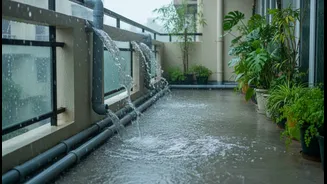
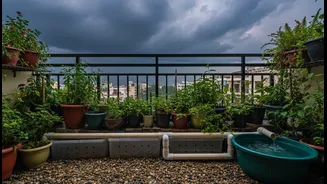
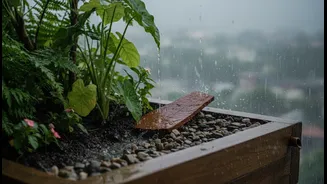
The Indian monsoon is a lifeline, but for potted plants on a terrace or balcony, it can be a period of intense stress. The primary enemy is waterlogging, which occurs when soil becomes saturated, starving roots of the oxygen they need to survive. This
can quickly lead to root rot, a condition often identified by wilting leaves despite wet soil, yellowing lower leaves, or even a sour smell from the pot. The key to monsoon success is pre-emptive action focused on one simple principle: getting excess water out as quickly as possible.
The Right Foundation: Pots and Soil
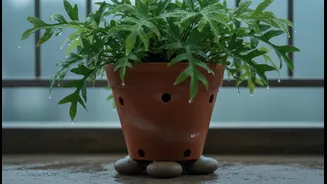
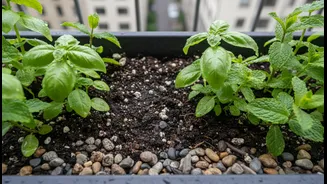
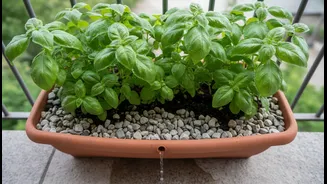
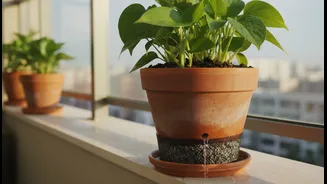
Your first line of defence is the pot itself. Ensure every container has multiple, unobstructed drainage holes at the bottom. Contrary to old advice, adding a layer of gravel or broken pottery at the base does not improve drainage and can actually worsen waterlogging by creating a perched water table. Instead, focus on the soil mixture. Heavy garden soil compacts easily in pots, retaining too much water. Create a well-draining mix by combining your soil with materials like coarse sand, perlite, or cocopeat. This creates a lighter, more porous medium that allows water to flow through freely while retaining enough moisture for the plant.
Strategic Placement and Care
Where your plants live during the monsoon matters. If possible, move sensitive plants like succulents to a covered corner or under an overhang to shield them from the heaviest downpours. For all other pots, elevating them is a simple but highly effective trick. Placing pots on bricks, stones, or dedicated plant stands allows water to drain freely and improves air circulation underneath, preventing the drainage holes from getting blocked. During the monsoon, stop watering on a fixed schedule. The rainfall is often more than enough. Always check the soil first; if it's moist, leave it be. Promptly empty any water that collects in the saucers beneath your pots.
Conquering the Summer Scorch
After the rains, the next great challenge is the intense summer heat, which can be just as damaging. Concrete rooftops and balconies absorb and radiate heat, creating a harsh microclimate for plants. The primary goals during summer are to keep the roots cool, reduce moisture loss from the soil, and protect leaves from being scorched by the intense sun.
Shade and Cooling Solutions
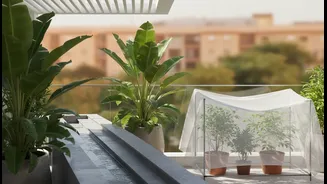
The most effective way to protect plants from extreme heat is to provide shade. Green shade nets are a popular and affordable option in India, available in different percentages (50% or 75%) to filter sunlight intensity while still allowing for airflow. You can stretch them over a simple frame or use them to cover a pergola. For a simpler solution, grouping plants together helps create a more humid microenvironment, which benefits all the plants. Another crucial technique is mulching. Applying a layer of organic material like wood chips, straw, or dry leaves on the soil surface helps to insulate the roots, keep the soil temperature lower, and significantly reduce water evaporation.
Smart Watering and Plant Choice
Summer watering requires a change in strategy. The best time to water your plants is early in the morning, which allows the plants to hydrate before the peak heat of the day and minimizes water lost to evaporation. Avoid watering in the middle of the day, as water droplets on leaves can act like magnifying glasses and cause burn spots. A deep, thorough soaking a few times a week is more effective than a light, daily sprinkle. Finally, consider the plants you choose. While any plant can be cared for, native and heat-tolerant species like bougainvillea, hibiscus, and neem are naturally better equipped to handle the Indian summer, requiring less intensive intervention.