





The Decades-Old Dilemma
Farming in many parts of Maharashtra has long been a story of struggle against uncertainty. A heavy reliance on rain-fed agriculture meant a single poor monsoon could devastate a family's income for the entire year. For those with access to grid electricity,
the supply was often inconsistent and scheduled at inconvenient times, like the middle of the night, making effective irrigation a constant challenge. Others turned to expensive and polluting diesel pumps, with fluctuating fuel costs eating into their already thin profit margins. This precarious situation forced many to cultivate only one crop cycle a year and led to widespread seasonal migration, as farmers and labourers sought daily wage work in cities to make ends meet.
A Sun-Powered Solution Arrives
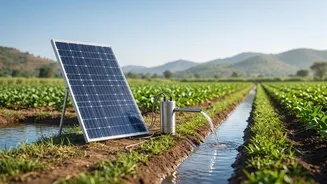
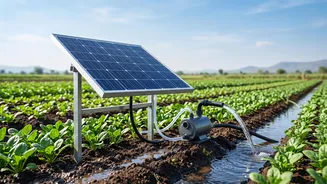
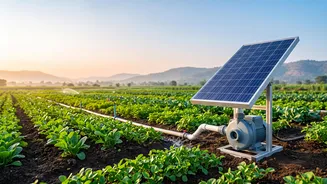
The game-changer has been the introduction of off-grid micro-pumps, overwhelmingly powered by solar energy. These systems consist of solar panels connected to a water pump, which can be used to draw from wells, boreholes, or nearby water bodies. The brilliance of this technology lies in its simplicity and independence. By operating completely off the grid, farmers are liberated from unreliable power supplies and volatile fuel prices. Government initiatives, most notably the national PM-KUSUM scheme and Maharashtra's own Mukhyamantri Saur Krishi Pump Yojana, have been instrumental in making this technology accessible through substantial subsidies, with farmers often paying only a small fraction of the initial installation cost.
From Scarcity to Security
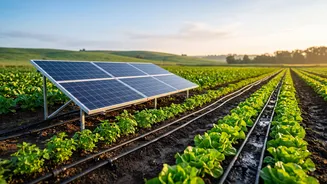
The impact on the ground has been profound. With a reliable source of water available during the daytime, farmers can now confidently plan for a second, and sometimes even a third, crop cycle. This has enabled a significant shift from traditional subsistence crops like paddy and millets to more lucrative, water-intensive cash crops such as vegetables and fruits. In the village of Tulyachapada in Palghar district, for example, the introduction of shared solar pumps helped increase the cultivated land from just five acres to nearly 96 acres, with farmers now growing groundnuts, mangoes, and cashews. This newfound water security directly translates to higher yields, reduced crop failure, and a dramatic increase in household income.
The Ripple Effect on Rural Life
The benefits extend far beyond the fields. Increased and stable income is transforming rural economies and reducing distress migration to urban centres by as much as 90% in some project areas. Farmers like Ashok Karade from Gadchiroli have seen their annual income rise to over ₹3.5 lakh after installing a solar pump, allowing them to not only grow more crops but also invest in fruit orchards. This economic stability allows families to stay together and invest in their children's education. Maharashtra has aggressively pursued this transformation, installing over 7.47 lakh solar pumps and even setting a world record by installing nearly 46,000 in a single month in late 2025. This leadership demonstrates a powerful model for sustainable agriculture and energy independence.
Challenges and the Path Forward
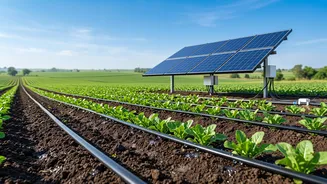
Despite the widespread success, some challenges remain. The initial investment for solar pumps can still be a barrier for the smallest farmers, even with subsidies. There are also valid concerns about the potential for over-extraction of groundwater if the newly available water is not managed sustainably, particularly in water-scarce regions. Experts suggest that pairing solar pumps with water-saving techniques like drip irrigation is crucial for long-term success. Furthermore, ensuring proper maintenance and cleaning of solar panels is necessary to keep the systems operating at peak efficiency. As the technology becomes more widespread, addressing these issues will be key to ensuring the revolution is a sustainable one.