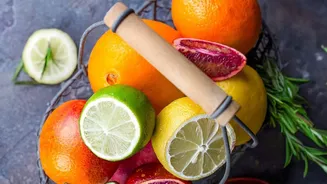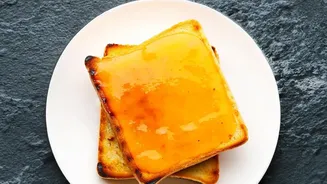


The Rise of the Zero-Waste Kitchen
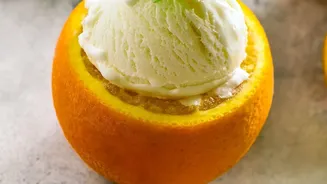
In kitchens across India, a quiet revolution is taking place. Driven by a desire to reduce food waste and live more consciously, home cooks are finding creative ways to use ingredients that were once destined for the bin. Orange peels, often discarded
without a second thought, are a prime example. Instead of contributing to landfill, these peels are being transformed into marmalades, candied treats, and fermented condiments. This approach not only honours the principle of using the whole ingredient but also cuts down on kitchen waste, a cornerstone of sustainable living. By repurposing what many consider trash, these cooks are making a powerful statement about mindful consumption.
A Surprising Boost for Your Gut
The real magic of the orange peel lies in its surprising nutritional profile. It's a powerhouse of dietary fibre, particularly a soluble fibre called pectin. Pectin acts as a prebiotic, which means it feeds the beneficial bacteria in your gut. A healthy community of gut microbes is essential for good digestion, a strong immune system, and even reduced inflammation. Furthermore, orange peels contain flavonoids like hesperidin, potent antioxidant and anti-inflammatory compounds that contribute to overall wellness. These compounds help soothe common digestive issues and support the natural function of your digestive tract.
Understanding the Power of Pectin
Pectin is the unsung hero in this story. It's the component that gives jams and jellies their characteristic set, and orange peels are naturally full of it. When you consume pectin-rich foods, this fibre forms a gel-like substance in your digestive tract. This process helps to slow digestion, making you feel fuller for longer, and can aid in regulating bowel movements. For those with sensitive digestion, pectin can be particularly beneficial. By making preserves, you are harnessing this natural gelling agent to create a delicious product while simultaneously extracting its gut-friendly benefits.
From Peel to Preserve: How It's Done
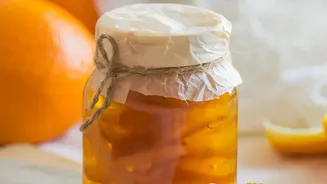
Making preserves from orange peels is a time-honoured technique that is surprisingly simple. The most common method involves candying the peels, a process similar to making murabba. The first crucial step is to boil the peels multiple times, changing the water each time. This process, known as blanching, is essential for removing their natural bitterness. Once blanched, the peels are simmered gently in a sugar syrup until they become translucent and glossy. The peels are then laid out on a wire rack to dry. The result is a chewy, sweet, and aromatic treat that can be eaten on its own, added to baked goods, or used as a garnish for desserts and drinks.
Beyond Candying: Fermentation and Infusions
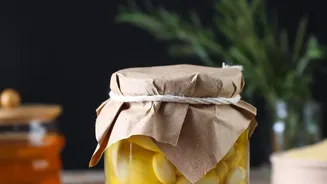
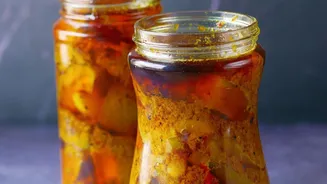
While candied peels are popular, they aren't the only option. For an even bigger probiotic punch, some cooks are fermenting orange peels. This involves submerging the peels in a saltwater brine and allowing them to ferment for several days, a process that cultivates beneficial bacteria. The resulting tangy, preserved peels can be added to salads and savoury dishes. Another simple method is to infuse dried peels in tea or even create a citrus-flavoured salt. These methods prove that with a little creativity, orange peels can be a versatile and valuable asset in any kitchen.