






The Timeless Allure of Brass
There’s a reason brass has been a beloved material in Indian households for centuries. Its warm, golden glow adds a touch of understated luxury to any space. Unlike the cold, clinical feel of chrome or steel, brass feels alive. It develops a unique patina
over time, a soft, greenish-brown layer that tells a story of its own. This aged character is now highly sought after in interior design, providing a welcome contrast to the sharp, clean lines of contemporary furniture. Whether in a minimalist apartment or a traditional bungalow, a piece of brass introduces history, warmth, and a connection to our roots. It's a material that doesn't just decorate a room; it enriches it.
Why Upcycling is More Than a Trend
Upcycling isn’t just about being crafty; it’s a conscious choice. In a world of fast furniture and disposable decor, turning an old item into something new and beautiful is a powerful act of sustainability. It reduces waste and gives you a one-of-a-kind piece that no one else has. For many in India, this trend is also deeply personal. The brass vessels we upcycle are often heirlooms—a grandmother’s water pot or a piece from a wedding trousseau. By giving them a place of honour in our homes, we are not just decorating; we are preserving a piece of our family’s history. This connection adds an emotional depth to your decor that you can't buy in a store.
Hunting for Your Brass Treasures
The first step is finding the perfect piece. Your treasure hunt can start at home—check attics, storerooms, or ask older relatives about any unused brassware. These often have the best stories. If you’re starting fresh, local flea markets, kabadiwalas, and antique shops are goldmines. Look for vessels with interesting shapes and textures: traditional pots (lota, handi), large flat plates (parat, thali), or even old lamps and containers. Don’t be put off by tarnish or dirt; that’s just a sign of a life well-lived. Focus on the form and weight of the piece. A heavy, solid vessel is a sign of good quality brass.
Your Step-by-Step Cleaning Guide
Bringing back the shine is the most satisfying part of the process. You don’t need harsh chemicals. For a natural and effective clean, try the traditional method: make a paste of tamarind pulp (imli) and salt, or use a mixture of lemon juice and baking soda. Apply the paste generously all over the vessel and let it sit for 10-15 minutes. Then, using a soft cloth or a gentle scrub brush (an old toothbrush works well for intricate details), start scrubbing in small circular motions. You’ll see the tarnish melt away, revealing the warm gleam underneath. Rinse thoroughly with water and, most importantly, dry it completely with a soft, clean cloth to prevent water spots and new tarnish from forming.
Creative Ideas for Your New Decor
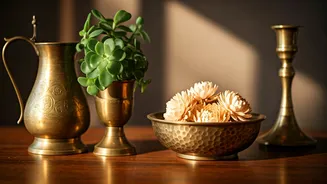
Once clean, your brass vessel is a blank canvas. The possibilities are endless. A medium-sized pot can become a chic planter for a low-maintenance succulent or a snake plant. A wide, flat parat makes a stunning centrepiece tray for your coffee table, perfect for holding candles, books, or a small vase. A collection of smaller brass tumblers can be used to hold makeup brushes on a vanity or pens on a desk. Tall, slender vessels are perfect as minimalist vases for dried flowers or pampas grass, adding a touch of rustic elegance. You can also simply let a beautifully shaped vessel shine on its own as a sculptural object on a bookshelf or mantelpiece.