







The Core Difference: Sit vs. Stand
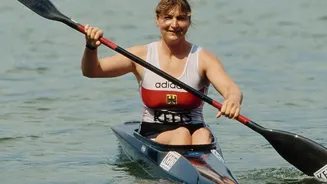
The fundamental difference between kayaking and paddleboarding lies in your posture. In a kayak, you sit low in the craft, either in an enclosed cockpit or on top of the hull. This seated position provides a low centre of gravity, which generally translates
to greater stability. You use a double-bladed paddle, allowing for alternating strokes on each side without switching your hand position. Stand-up paddleboarding, as the name suggests, involves standing on a board and using a long, single-bladed paddle to propel yourself. This upright stance offers a fantastic vantage point for looking down into the water and across the horizon, but it requires more engagement of your balance from the very first moment.
Stability and the Learning Curve
For most beginners, a kayak feels more stable and forgiving on the first outing. The seated position makes it less intimidating, and many people can start paddling confidently within minutes. Paddleboarding presents a greater initial balance challenge. However, modern inflatable paddleboards are often wide and surprisingly stable, and most beginners get the hang of standing and paddling within their first session, especially on calm water. The learning process for a SUP often starts on your knees before progressing to a standing position, which helps build confidence. So, while kayaking often has an easier first few minutes, the learning curve for recreational paddleboarding is not as steep as many imagine.
Fitness and Full-Body Workout
Both activities offer excellent physical benefits, but they work your body in different ways. Kayaking is a fantastic upper-body and core workout. A proper paddling technique involves rotating your torso, which heavily engages your abdominal muscles, obliques, and back. Your arms, shoulders, and back do a lot of the work pulling the paddle through the water. Stand-up paddleboarding provides a more comprehensive full-body workout. Just balancing on the board requires constant engagement from your core and leg muscles. Every paddle stroke works your arms, shoulders, and back, all while your legs and core are firing to keep you stable. If your main goal is a balanced, total-body fitness routine, paddleboarding has a slight edge.
Perspective and Versatility
Your view of the world is different from a kayak versus a paddleboard. The elevated position on a SUP gives you a unique perspective, allowing you to see deeper into the water to spot marine life or submerged features. It also offers more freedom of movement; you can stand, kneel, or even sit and treat it like a kayak. Many people use paddleboards for activities like yoga or fishing because of the open, flat deck. A kayak, being a seated craft, is often more efficient for covering long distances and generally performs better in windy or choppy conditions. The enclosed design of some kayaks offers better protection from cold water and spray, making them a more comfortable choice for longer expeditions or in less-than-perfect weather.
Gear, Cost, and Portability
When it comes to logistics, paddleboards often have a significant advantage, particularly inflatable models. An inflatable SUP can be deflated, rolled up, and stored in a large backpack, making it incredibly easy to transport in a car and store in a closet. Hard-shell kayaks are bulky and typically require a roof rack for transport and significant garage space for storage. In terms of cost, entry-level kayaks can sometimes be found cheaper than paddleboards at big-box retailers. However, inflatable SUPs often come in complete packages that include the board, pump, paddle, and carrying bag, representing great value for beginners.