
Decoding the 'Cosmic Tornados'
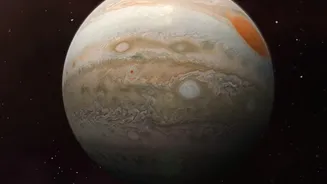
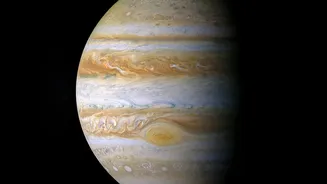
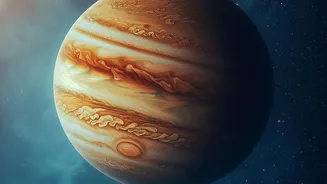
The term 'cosmic tornados' paints a dramatic picture, but what are scientists actually seeing? These features are not tornados in the terrestrial sense. Instead, they are smaller vortices, or eddies, that exist within the colossal swirl of the Great Red
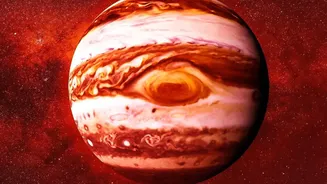
Spot. The Great Red Spot itself is a massive anticyclone—a high-pressure system that rotates counter-clockwise and has been raging for at least 190 years, and possibly much longer. Within this gigantic storm, the dynamics are incredibly complex. Smaller eddies are often 'sucked in' or consumed by the main vortex. Think of it like small whirlpools forming and disappearing around a much larger one in a river. For years, scientists have hypothesized that these smaller storms might act as a food source, feeding energy into the Great Red Spot and contributing to its longevity. Observing them in detail is crucial to understanding the mechanics of the solar system's most famous storm.
A Sharper View of the Storm
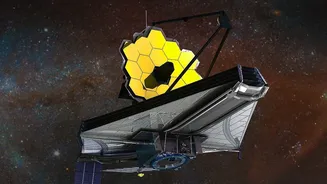
Recent advancements in observational technology, particularly from space telescopes like Hubble and the James Webb Space Telescope, have given astronomers a front-row seat to Jupiter's atmospheric drama. These powerful instruments can capture images with incredible resolution, cutting through the planet's hazy upper atmosphere to see fine details. While the headline refers to a 'new camera', this is part of an ongoing monitoring campaign using the most advanced tools available. These observations have confirmed that the Great Red Spot is not a static feature; it's a dynamic and evolving system. The data shows the storm wobbling, changing shape, and even fluctuating in size over short periods. This level of detail allows scientists to track the movement and life cycle of the smaller eddies within it, providing hard data to test their theories about what powers the colossal storm.
The Incredible Shrinking Storms
The key finding from these new captures is the changing nature of these internal vortices. The headline points to them 'shrinking,' which is part of a larger, more complex story. The Great Red Spot itself has been steadily shrinking for decades. In the late 1800s, it was wide enough to swallow three Earths, but recent measurements show it is now barely wider than one. The rate of this shrinkage even appeared to accelerate starting around 2012. The behaviour of the smaller eddies is believed to be directly linked to this transformation. Some theories suggest that a decline in the number or energy of these smaller storms that feed the main vortex could be causing it to 'starve' and lose momentum. By observing these smaller tornados shrink or get absorbed, scientists are essentially watching the Great Red Spot's metabolism in real-time, gaining clues as to whether the storm is slowly dying or merely transitioning to a smaller, more stable state.
A Landmark in Flux
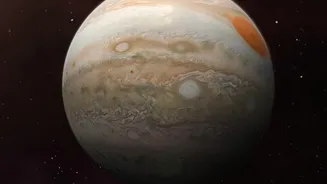
For centuries, the Great Red Spot has been a planetary landmark, a seemingly permanent feature in a chaotic atmosphere. However, these latest observations reinforce that it is anything but permanent. Its colour has been known to change, shifting from a deep brick red to a paler salmon or even white at times. We now know its size and shape are also in flux. The storm, which was once a distinct oval, has become more circular as it has contracted. Understanding why this is happening is one of the biggest open questions in planetary science. Since Jupiter is a gas giant with no solid surface to create friction and slow the storm down, its longevity is remarkable. The interactions with the surrounding jet streams and the consumption of smaller vortices are key pieces of the puzzle. By watching these smaller 'tornados' evolve, scientists hope to finally predict the ultimate fate of the Great Red Spot: will it eventually disappear, or will it find a new equilibrium and persist for centuries more?