








What is GPT-5.6?
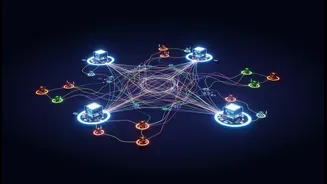
GPT-5.6 is the latest family of large language models from OpenAI, which became publicly available on July 9, 2026. It's not a single model but a series of three, each designed for different levels of complexity and cost. The lineup includes Sol, Terra,
and Luna. Sol is the most powerful flagship model, built for highly complex reasoning and tasks. Terra is the mid-tier, everyday model, offering performance competitive with the previous generation (GPT-5.5) at a lower cost. Luna is the fastest and most affordable option, designed for smaller, quicker tasks. This tiered approach allows users to choose the right balance of intelligence, speed, and price for their needs. The release is seen as a direct response to competitors like Anthropic, with benchmarks and pricing structures aimed at winning over developers and enterprise customers.
The Fierce AI Model Race
The release of GPT-5.6 is the latest move in an escalating competition among a handful of major players. The primary race is between OpenAI (backed by Microsoft), Google (with its Gemini series), Anthropic (with its Claude models), and to some extent, Meta with its open-source Llama models and other international players like Z.ai from China. This race is no longer just about creating the 'smartest' model. As the top models from each company have begun to cluster in terms of raw intelligence, the competition has shifted to other fronts. These include price, speed, efficiency, and the ability to perform specialized tasks like coding or complex data analysis. Companies are also competing to build entire systems around their models, including developer tools, enterprise platforms, and consumer-facing applications like Microsoft 365 Copilot, which now uses GPT-5.6.
More Than Just Intelligence
For years, the key metric was which model could top leaderboards on benchmarks like MMLU (measuring knowledge) or SWE-bench (measuring coding ability). While these are still important, the battleground has expanded. Companies now emphasize factors like the 'context window' (how much information a model can remember at once), latency (how quickly it responds), and cost per token. Anthropic's Claude models have gained significant ground, particularly in coding and agentic tasks that require multi-step reasoning. Google's Gemini is known for its massive context window and native multimodal capabilities, meaning it can understand text, images, and video from the ground up. OpenAI's advantage often lies in its strong ecosystem, brand recognition from ChatGPT, and the overall polish of its products.
What Does This Mean for You?
For individuals and businesses, this intense competition is largely beneficial. It means more choice, falling prices, and rapidly improving capabilities. However, it also creates complexity. The constant release of new models with incremental names (like GPT-5.5, GPT-5.6, Claude 4.8) can be confusing. The key is to shift focus from finding the single 'best' model to understanding which model is best for a specific task. A powerful, expensive model like GPT-5.6 Sol might be perfect for complex strategic analysis but overkill for summarizing meeting notes, where a cheaper model like Luna or Anthropic's Haiku would suffice. As the models themselves become commoditized, the real advantage will come from how effectively they are applied to solve real-world problems. The focus is shifting from the magic of the model to the judgment behind its use.