
A Sweet Steeped in Legend
The story of Mathura Peda is deeply woven into the fabric of the Braj region, an area with a strong dairy tradition thanks to its cultural connection to Lord Krishna's pastoral life. For centuries, milk, butter, and ghee have been central to the local
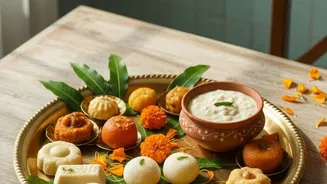
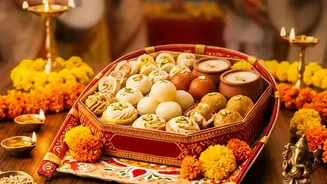
cuisine, creating the perfect environment for milk-based sweets to flourish. The peda's origin isn't just culinary; it's devotional. It has long been a cherished 'prasad' (a religious offering) in the temples of Mathura, especially during festivals like Janmashtami. Devotees visiting the sacred city often carry boxes of these pedas back home, transforming a local delicacy into a nationally recognized symbol of faith and tradition. This connection elevates the peda from a simple sweet to a sacred offering, a taste of Mathura's spiritual essence.
The Heart of the Peda: Slow-Roasted Khoya
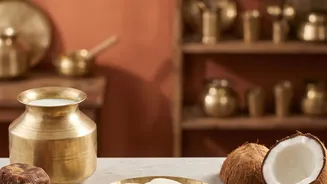
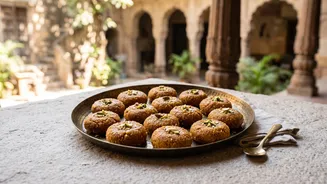
The journey to the perfect Mathura Peda begins with one core ingredient: khoya, also known as mawa. Authentic recipes call for high-quality, full-fat milk, which is slowly simmered in a large, heavy-bottomed pan. The process is a testament to patience. The milk is stirred continuously for hours until most of the moisture evaporates, leaving behind a thick, solid mass. But this is where the Mathura technique diverges. The khoya isn't just formed; it's roasted. It continues to cook on a low flame, slowly caramelizing the milk solids until they develop a distinctive light brown colour and a rich, nutty aroma. This slow-roasting process is non-negotiable for achieving the peda's signature deep flavour and also contributes to its longer shelf life.
The Secret to the Grainy Texture: Tagar
Many wonder what gives the Mathura Peda its signature grainy, yet soft, consistency. The secret isn't just finely ground sugar; it's a special ingredient called 'tagar' or 'boora'. Unlike powdered sugar, which is simply ground granulated sugar, tagar is made through a unique process. Sugar is dissolved in water and cooked until it reaches a specific crystallization point. As it cools, it is stirred continuously, forming a porous, sandy-textured sugar that is less powdery than icing sugar but finer than granulated crystals. This 'bura' or 'tagar' is then mixed into the warm, roasted khoya. It dissolves just enough to sweeten the mix but retains its crystalline structure, creating that delightful, slightly crumbly and grainy mouthfeel that sets Mathura Peda apart from its smoother counterparts. Using regular powdered sugar would result in a pasty texture, missing the iconic bite.
An Unmistakable Culinary Identity
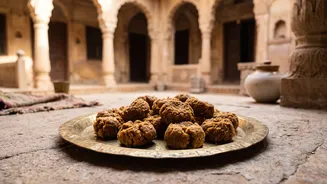
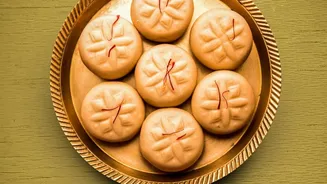
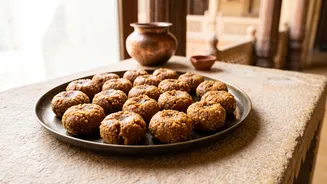
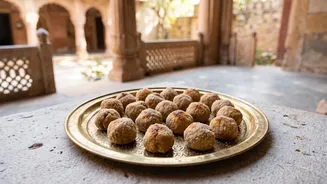
The final product is a testament to the art of minimalism. With just a few primary ingredients—milk, sugar, and perhaps a touch of ghee and cardamom for aroma—the peda achieves a complex flavour profile. The taste is of caramelized milk first, with sweetness playing a supporting role. Traditionally, the small, hand-shaped discs are often rolled in a final coating of tagar, giving them a dusty, rustic appearance. It is this careful, multi-step process that has cemented Mathura's reputation as the 'peda capital'. While many variations exist, the authentic version remains a benchmark for quality, a perfect blend of rich flavour and that sought-after grainy texture. It’s a taste that carries the story of a city, its faith, and its culinary mastery in every bite.