






The Race Against Rot
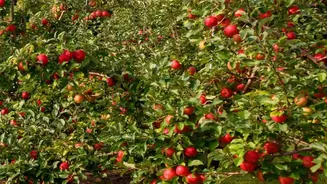
The journey for a Kashmiri apple from orchard to market has traditionally been a perilous one. A host of factors, from unpredictable weather and pests to logistical hurdles, threaten the harvest. The region's reliance on the often-disrupted Srinagar-Jammu
National Highway, the primary road link to markets in the rest of India, creates a significant bottleneck. In the past, closures due to landslides or bad weather could leave trucks stranded for weeks, leading to devastating spoilage. This vulnerability forced growers into a pattern of "distress sales," where they would offload their entire harvest immediately at low prices to avoid a total loss, often at the mercy of middlemen. One farmer noted that without storage, boxes worth over ₹1,000 were sometimes sold for as little as ₹100 or ₹200 just to cut losses.
The Cold Chain Revolution
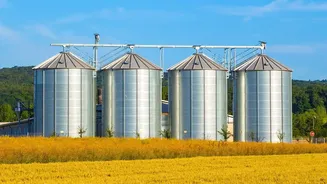
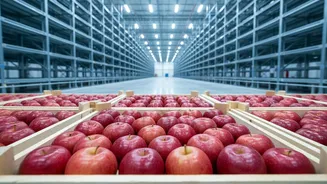
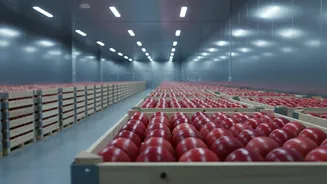
Enter the Controlled Atmosphere (CA) cold storage facility. These are not just giant refrigerators; they are technologically advanced units that carefully manage temperature, humidity, and the levels of oxygen and carbon dioxide. This precise environment dramatically slows down the ripening process, extending the shelf life of apples for up to 10 months, compared to just a few weeks in regular refrigerated storage. In recent years, Jammu and Kashmir has seen a significant expansion in this crucial infrastructure. Government initiatives like the Mission for Integrated Development of Horticulture (MIDH) and the Pradhan Mantri Kisan Sampada Yojana (PMKSY) have provided subsidies and financial assistance to encourage the construction of these facilities. As of early 2026, J&K had sanctioned dozens of new cold storage projects, significantly increasing its capacity to preserve the valuable apple crop.
From Distress Sales to Strategic Selling
The impact on the ground has been transformative. With access to CA stores, growers are no longer forced to sell their produce during the peak harvest season when markets are flooded and prices are at their lowest. They can now store their apples and release them gradually throughout the year, waiting for market demand to pick up and prices to become more favorable. This newfound bargaining power has led to a dramatic increase in income. As one grower from Shopian district noted, a box of apples that once fetched ₹550-₹650 can now sell for ₹1,200-₹1,500 after being held in a cold store. This shift gives farmers control over their own sales, reducing dependency on commission agents and providing a crucial buffer against market volatility.
Strengthening the Apple Economy
The benefits of a robust cold chain extend beyond individual farmers. By regulating the supply of apples into the market, these facilities help stabilize prices for consumers year-round. They also ensure a higher quality product reaches the end customer, as the apples retain their freshness and nutritional value for much longer. This has strengthened the reputation of Kashmiri apples and bolstered the entire horticulture economy, which supports an estimated 3.3 million people in the region. Furthermore, the growth of the cold storage industry itself creates rural employment in sorting, grading, packaging, and facility management.
Challenges on the Road Ahead
Despite the progress, significant challenges remain. The current cold storage capacity in Kashmir is still estimated to be only about half of what the industry truly needs. There is also a notable disparity in infrastructure, with most facilities concentrated in South Kashmir, while North and Central Kashmir remain underserved. Furthermore, these facilities are only as good as the fruit that goes into them. Events like the panic-induced premature harvest of 2025, caused by highway blockades, showed that putting immature or low-grade fruit into CA stores can still result in significant losses. For the system to work perfectly, it must be supported by reliable transport infrastructure and best practices in harvesting and grading.