


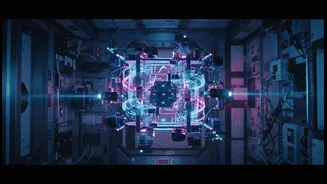



The Coolest Science in Orbit
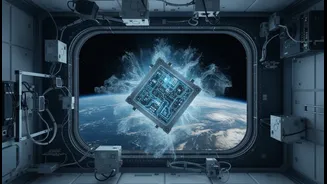
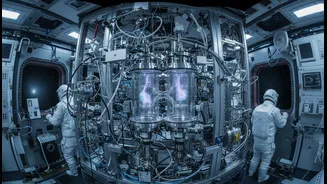
Imagine a refrigerator so powerful it can chill atoms to temperatures a fraction of a degree above absolute zero—the theoretical point where all atomic motion ceases. That's precisely what NASA's Cold Atom Laboratory (CAL) does. It’s a compact, remotely
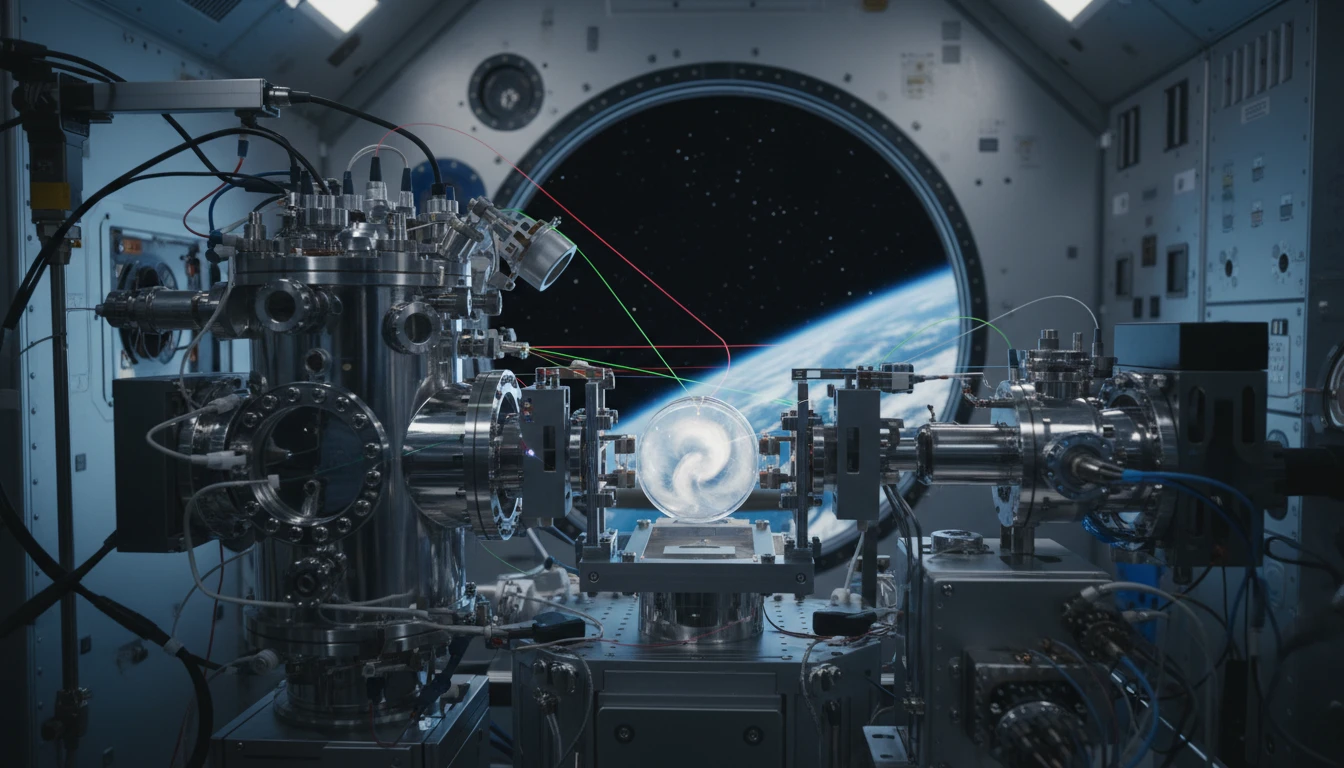
operated facility about the size of a mini-fridge, designed for one main purpose: to study the bizarre world of quantum physics in a way that’s impossible on Earth. By using a combination of lasers and magnetic fields, CAL slows down atoms like rubidium and potassium until they are almost perfectly still. This extreme cold is where the magic of quantum mechanics, normally hidden at subatomic scales, becomes visible on a larger scale.
Creating a Fifth State of Matter
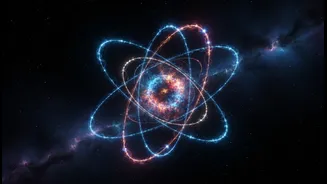
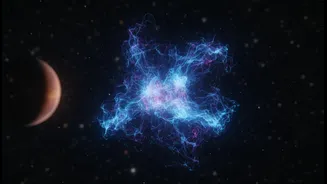
When atoms get this cold, they can merge into a single, unified quantum entity known as a Bose-Einstein condensate (BEC). Think of it as the ultimate team sport for atoms; instead of billions of individual particles bouncing around randomly, they start behaving as one single, coordinated wave. This 'fifth state of matter' is incredibly delicate. On Earth, gravity quickly pulls these condensates apart, giving scientists only milliseconds to study them. But in the microgravity of the ISS, these BECs can float freely, allowing them to be observed for much longer—up to several seconds. This extended observation time is crucial for understanding their fundamental properties.
What the New Upgrade Brings
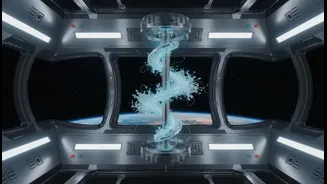
Recent hardware upgrades have significantly boosted CAL's capabilities. A new science module, installed earlier this year, allows for the creation of Bose-Einstein Condensates that are five times larger than before. It also introduces a redesigned magnetic trap that gives researchers more flexibility to manipulate the shape of the quantum gases, even forming them into bubble-like structures. Another key improvement is the ability to work with two different types of atoms simultaneously, like rubidium and potassium. This enables the study of quantum chemistry, exploring how different atoms interact and combine in these ultracold states. These enhancements provide a more robust platform for testing the fundamental laws of physics.
From Lab Curiosity to Space-Age Tech
So, what does studying cold atoms have to do with future rockets and astronauts? The answer lies in developing next-generation quantum sensors. The principles demonstrated in the Cold Atom Lab could lead to navigation systems that don't rely on GPS. These 'quantum gyroscopes' would use atom interferometers—devices that use the wave-like properties of cold atoms to measure acceleration and rotation with extreme precision. This could allow submarines, aircraft, and deep-space probes to navigate autonomously and resist jamming or spoofing. The technology could reduce positioning errors from kilometres per hour down to just metres per day.
Charting the Universe and Its Mysteries
The potential applications don't stop at navigation. Ultra-precise quantum sensors could be used to detect faint gravitational waves from cosmic events or even help in the search for mysterious dark matter. They could also be used to build incredibly accurate atomic clocks, essential for deep-space communication and for testing Einstein's theory of general relativity with unprecedented accuracy. By comparing how different atoms fall in microgravity, scientists hope to test the equivalence principle, a cornerstone of general relativity, at the quantum level. The fundamental research being conducted today on the ISS is laying the essential groundwork for these transformative technologies.