

A New Chapter for Monsoon Tourism
Traditionally, the monsoon season from June to September meant that many of Assam’s top attractions, particularly wildlife sanctuaries like Kaziranga National Park, were closed to visitors. The heavy rains and subsequent flooding of the Brahmaputra River
made safari trails impassable and led to wildlife migrating to higher ground. However, the state government is now making a concerted push to rebrand the monsoon as a prime time to visit. Recent policy shifts and a focus on community-led tourism are creating new opportunities for travellers who wish to see the state in its most verdant and vibrant form. This includes a new Homestay Policy to provide authentic local experiences and a single-window registration system to ease travel planning.
The Allure of the Green Season
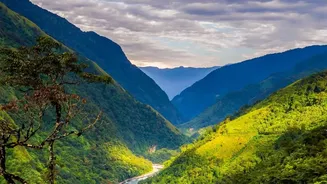
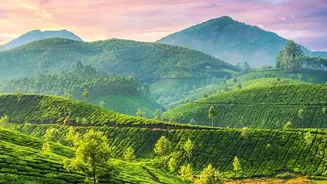
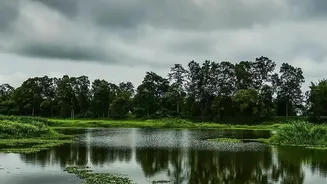
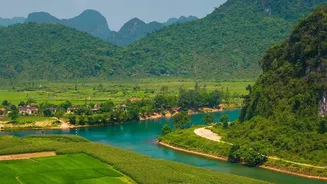
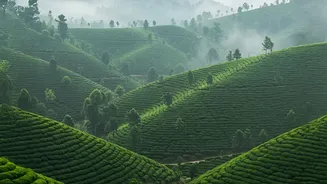
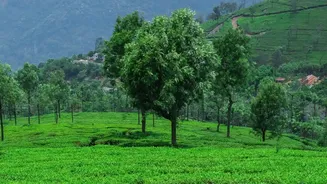
So, what can a monsoon traveller expect? Imagine endless tea gardens, their leaves glistening with fresh rain, and the air thick with an earthy aroma. This is the green season, where Assam’s landscapes are transformed into a spectacle of lush, vibrant colours. While the core zones of major national parks remain closed for safety and conservation, the monsoon opens up other unique experiences. Parks that remain open year-round, like Dibru Saikhowa, offer a different kind of wildlife adventure. Beyond the parks, the entire state becomes a photographer's paradise, with mist-covered hills in Haflong, overflowing waterfalls, and the mighty Brahmaputra river at its most magnificent.
Cultural Immersion and Festivals
The monsoon is not just a natural event in Assam; it's deeply intertwined with its cultural fabric. One of the most significant spiritual gatherings in India, the Ambubachi Mela at the Kamakhya Temple in Guwahati, takes place in June. This festival celebrating fertility draws thousands of devotees, offering visitors a profound glimpse into local faith and traditions, even amidst the downpour. The quieter tourist traffic during this season also allows for more intimate cultural experiences. Travellers can explore the unique Vaishnavite monasteries (Satras) on Majuli, the world's largest river island, or discover the historic Ahom-era architecture in Sivasagar, all set against a dramatic monsoon sky.
Planning Your Monsoon Getaway
A trip to Assam during the monsoon requires some planning. While the weather is generally pleasant, with temperatures ranging from 24°C to 32°C, heavy rainfall is a given. It's essential to pack waterproof clothing, sturdy footwear, and insect repellent. While major national parks like Kaziranga and Manas typically close for safaris, some eco-tourism activities in fringe areas and other destinations remain accessible. Potential travel disruptions due to rain are possible, so building flexibility into your itinerary is wise. Despite these considerations, the rewards are plentiful: fewer crowds, lower prices for accommodation, and the chance to see Assam in a way that few tourists do.