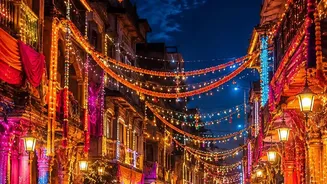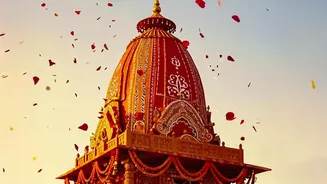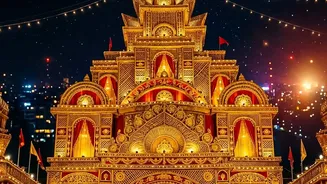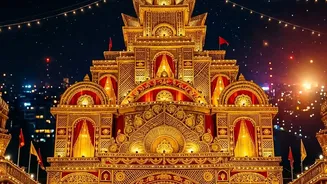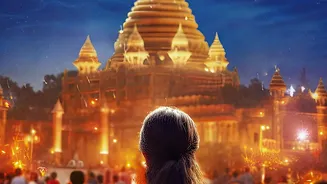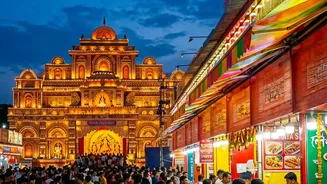



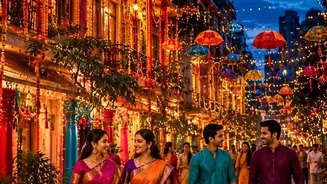
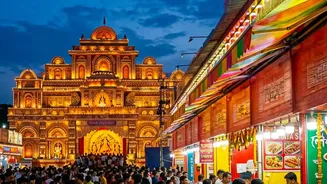
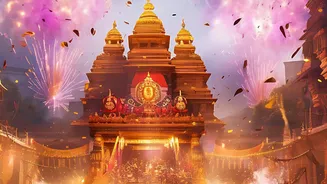
Each year, the ancient city of Ayodhya transforms into a realm of divine light for Deepotsav. This isn't just a festival; it's a monumental production, blending ancient tradition with cutting-edge technology to create a breathtaking spectacle.
A River of Light
The soul
of Deepotsav is the lighting of millions of earthen lamps, or diyas, along the ghats of the Sarayu River. What began in 2017 with 51,000 lamps has grown exponentially. The 2025 edition saw a Guinness World Record set with over 26 lakh diyas illuminating 56 ghats. For 2026, the tenth edition of the festival, the aim is to surpass 30 lakh lamps. This incredible feat is achieved by an army of around 35,000 volunteers, mostly students, who meticulously arrange the lamps in the days leading up to the main event. The sight of Ram Ki Paidi and the surrounding riverbank turning into a continuous ribbon of fire at dusk is the festival's defining image, a tradition that also supports local artisans who handcraft millions of these diyas.
Technology Meets Tradition in the Sky
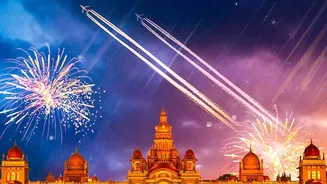
While the diyas provide the spiritual core, modern technology elevates the spectacle into the sky. Deepotsav now features one of India's largest aerial drone shows. For the 2026 event, a fleet of over 2,000 drones is expected to create synchronized 3D formations, a significant increase from the 1,100 used in 2025. These aerial ballets, set to a symphonic score, depict iconic scenes from the Ramayana—Lord Ram breaking Shiva's bow, Hanuman carrying the Sanjeevani mountain, and the Pushpak Viman's return to Ayodhya. The drone show is complemented by 3D holographic projections and laser shows, often using a water mist screen over the Sarayu to bring the epic tale to life with vivid visuals and sound.
A Stage for Global Culture
Deepotsav is also a significant cultural conclave. The 2026 celebrations will feature around 2,500 artists performing across 12 stages. The event includes a grand Shobha Yatra, a procession of elaborate tableaux depicting scenes from the Ramayana, that winds its way through the city. Beyond local and national talent, the festival has a strong international presence. Ramlila troupes from countries like South Africa, Sri Lanka, Nepal, Laos, and Thailand are scheduled to perform, presenting their unique interpretations of the epic through their own languages, costumes, and theatrical traditions. This global participation transforms Ayodhya into a hub where different cultures unite to celebrate a shared heritage.
The Masterminds of the Spectacle
Organizing an event of this magnitude is a colossal undertaking. The Uttar Pradesh Tourism Department and the Ayodhya district administration work in coordination for months. From managing the logistics of millions of diyas, tens of thousands of litres of oil, and countless cotton wicks, to coordinating thousands of volunteers, the scale is immense. Security is a major focus, with multi-tiered traffic diversions implemented days in advance and the core festival zone becoming a pedestrian-only area. The aim is to ensure the convenience and safety of the lakhs of devotees and tourists who descend on the city, all while preserving the event's religious sanctity. This fusion of meticulous planning, community participation, and technological innovation is what makes Deepotsav a truly world-class event.