




A New Era of Cosmic Data
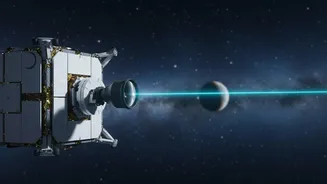
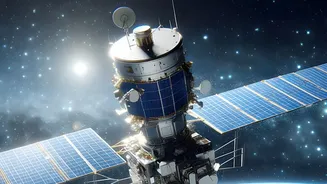
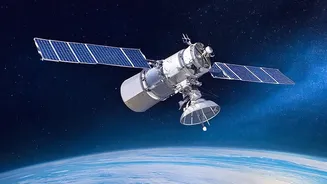
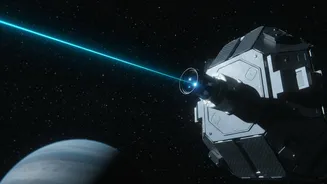
In a remarkable demonstration of next-generation technology, NASA has successfully tested its Deep Space Optical Communications (DSOC) system, a sophisticated laser communications payload hitching a ride on the Psyche spacecraft. Launched in October 2023,
the Psyche mission is on a long journey to a unique metal-rich asteroid, but its companion experiment is already revolutionising how we think about interplanetary data transfer. While the main spacecraft still relies on traditional radio communications for its primary mission, the DSOC is a technology demonstration designed to test the limits of sending and receiving data using lasers, or light, instead of radio waves. Its early successes have exceeded expectations, proving that this method can work flawlessly over mind-boggling distances.
Putting the 'Fast' in Far Away
The most headline-grabbing achievement came when the DSOC system beamed a 15-second, ultra-high-definition video from the spacecraft back to Earth. The clip, which featured a charming cat named Taters chasing a laser dot, travelled over 19 million miles (31 million kilometres) to reach us. The transmission was sent at the system's maximum data rate of 267 megabits per second (Mbps), a speed comparable to many home broadband internet plans. The light from the laser took 101 seconds to travel that immense distance and was successfully received by the Hale Telescope at Caltech's Palomar Observatory in California. This test was a monumental proof-of-concept, showcasing that high-bandwidth data, like HD video, can be streamed from deep space.
From Radio Waves to Laser Beams
For decades, space missions have relied on radio frequency (RF) systems to communicate. While reliable, these systems are facing a data bottleneck as our scientific instruments become more powerful and generate massive amounts of information. The Mars Reconnaissance Orbiter, for example, can take over seven hours to transmit data from its onboard recorder. Laser communications offer a solution by using a much higher frequency portion of the electromagnetic spectrum—near-infrared light. Packing data into laser beams allows for transmission rates 10 to 100 times greater than the best radio systems today, using comparable mass and power. This leap is akin to the difference between old telephone modems and modern fibre-optic internet, promising to clear the data traffic jam for dozens of missions competing for network time.
Pushing the Limits of Distance
While streaming video from 19 million miles was impressive, the DSOC experiment continued to break records as the Psyche spacecraft ventured further into the void. In subsequent tests, the system successfully transmitted data from over 140 million miles (226 million kilometres) away, a distance one and a half times that between the Earth and the Sun. Even at this extreme range, where the laser signal becomes incredibly faint, the system still achieved a respectable data rate of 25 Mbps. Later tests pushed the boundary even further, establishing links at over 200 million miles. These demonstrations prove that the technology is robust enough to work at the distances required for missions to Mars, which was a primary goal of the experiment.
Why This Changes Everything for Exploration
This technological breakthrough is far more than just a successful engineering test; it is a fundamental enabler for the future of space exploration. Faster data rates mean scientists can get more high-resolution imagery and larger volumes of science data back from robotic probes, accelerating discovery. Perhaps most importantly, it lays the groundwork for human missions to Mars. Future astronauts will be able to send high-definition video feeds back to Earth, allowing for real-time video conferencing, faster diagnostics, and a much richer connection to mission control and the public. This high-speed link will be crucial for ensuring astronaut safety and for sharing the experience of exploring another world with billions of people back home, making the vastness of space feel a little less distant.