


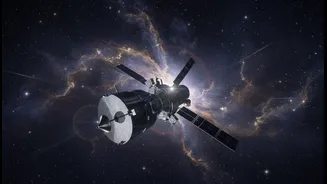


A Ghostly Star and Its Unlikely Companion
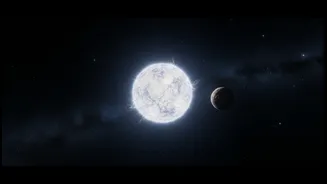
In a discovery that feels like a glimpse into our own solar system's distant future, astronomers have identified a baffling planetary system some 80 light-years from Earth. The system consists of a white dwarf — the tiny, super-dense core left behind
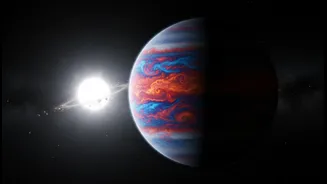
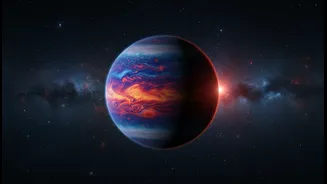
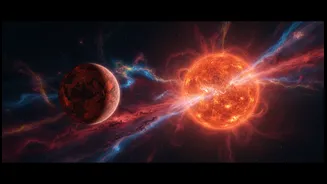
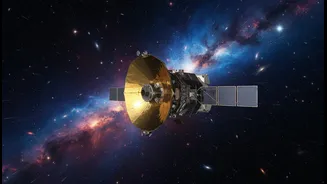
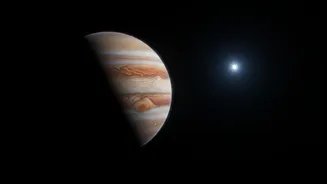
after a star like our Sun dies — and a giant gas planet named WD 1856 b. What makes this pairing so strange is its configuration. The planet, which is roughly the size of Jupiter, is seven times larger than the Earth-sized stellar remnant it orbits. It zips around this dead star in a blistering 34-hour orbit, a proximity that by all accounts should have meant its demise billions of years ago. This discovery, made using data from NASA's James Webb Space Telescope, has presented a major puzzle for scientists trying to understand the final chapter of a star's life.
The Puzzle of Planetary Survival
When a star like our Sun runs out of fuel, it doesn't just quietly fade away. It first expands dramatically into a red giant, swelling to hundreds of times its original size and engulfing its inner planets. In our solar system, Mercury, Venus, and possibly even Earth are expected to be consumed when the Sun enters this phase in about 5 billion years. Given that WD 1856 b orbits its white dwarf 50 times closer than Earth orbits the Sun, it should have been deep inside its star's red giant phase and vaporized. So how did it survive? Scientists have two main theories. One possibility is that the planet was somehow engulfed by the star but managed to survive the trip through its outer layers. Another, more likely scenario, is that the planet originally had a much wider, safer orbit. After the star collapsed into a white dwarf, gravitational nudges from other stars in the system could have slowly nudged the planet inward over billions of years.
A Glimpse Into Our Solar System's Future
The unlikely existence of WD 1856 b offers a fascinating, if unsettling, preview of what might happen to our own celestial neighborhood. While Earth's fate seems sealed, the survival of this distant gas giant suggests that planets like Jupiter and Saturn might endure the Sun's death. Using the James Webb Space Telescope, researchers analyzed the planet's atmosphere for the first time, a groundbreaking feat for a world orbiting a dead star. They found that the planet is much warmer than expected, suggesting it was heated up by gravitational forces during its migration toward the white dwarf billions of years after the star had already died. This finding implies that planetary systems don't just die with their stars; they can continue to evolve and rearrange themselves for eons afterward. It’s like using a time machine to look into the far future of our solar system.
An Atmosphere Against All Odds
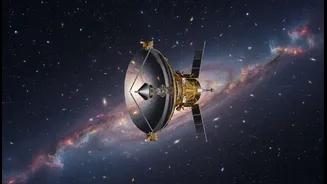
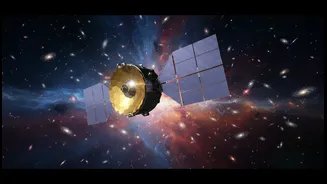
Characterizing a planet around a dim white dwarf is incredibly challenging. The transits—when the planet passes in front of the star—are brief, lasting only about eight minutes. Yet, the powerful James Webb telescope successfully captured the light filtering through the planet's atmosphere. These observations revealed the tell-tale signs of hydrocarbons, likely methane, and small cloud particles. This marks the first time an atmosphere has been detected on a planet orbiting a stellar remnant. The presence of these molecules provides further evidence that the planet likely avoided being engulfed by its star's red giant phase, as that violent process would have altered its atmospheric chemistry. Future observations are planned to delve deeper into its composition, promising more clues about this strange world's history and makeup.