





A Doctor, Engineer, and Astronaut
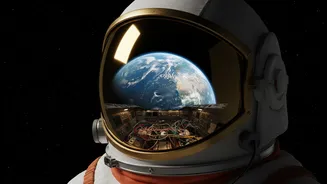
Before becoming a NASA astronaut, Anil Menon's career was a masterclass in high-stakes medicine and engineering. Born in Minnesota to Indian and Ukrainian immigrants, he holds degrees in neurobiology from Harvard and both medicine and mechanical engineering from Stanford.
His experience isn't just academic. He served as a first responder during the 2010 Haiti earthquake and the 2015 Nepal earthquake. In the U.S. Air Force, he was a flight surgeon who transported critically wounded soldiers. This path led him to become NASA's crew flight surgeon for ISS expeditions and later, the first flight surgeon at SpaceX, where he helped launch the first commercial crewed mission. This unique blend of skills in emergency, wilderness, and aerospace medicine makes him perfectly suited for the challenges of space.
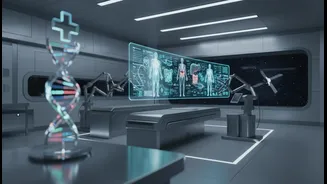
What Exactly Is Space Medicine?
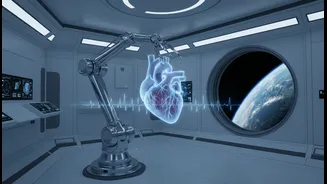
Space medicine is the specialized field focused on keeping humans healthy in the extreme environment of space. Without Earth's gravity, the human body undergoes significant changes. Astronauts experience muscle atrophy, bone density loss similar to osteoporosis, and shifts in bodily fluids that can affect vision and cardiovascular health. They are also exposed to higher levels of space radiation. This field isn't just about treating illness; it's about prevention and understanding how the body adapts to an environment it was not designed for. Essentially, it's the ultimate form of remote healthcare, where there's no hospital down the street and evacuation isn't an option.
A Doctor on Deck in Orbit
For his eight-month mission, Menon will serve as a flight engineer for Expeditions 74/75. While on board, he will be both a researcher and a subject of research himself. Having a trained physician on the station is invaluable, but Menon’s role goes deeper. He will conduct a series of experiments studying the physiological toll of long-duration spaceflight. His work will include examining how microgravity affects blood flow and vein structure. He'll also test new technologies, like producing IV fluids from the station's drinking water—a critical capability for future deep-space missions to the Moon and Mars where resupply is impossible.
Bridging the Gap for Earthly Benefits
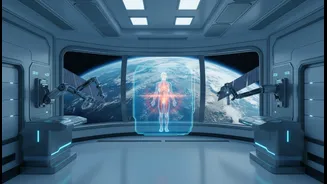
One of the most important aspects of Menon's mission is how it translates complex science into understandable concepts. The challenges astronauts face—like bone loss and muscle weakness—are accelerated versions of the aging process on Earth. By studying these effects in space, scientists can gain insights into conditions like osteoporosis and muscle dystrophy back home. For example, Menon will use ultrasound with augmented reality and AI to perform medical checks, a technology that could one day help reduce the need for expert medical support in remote locations on Earth. His research on how the body adapts to space provides a powerful, real-world story that makes the abstract concepts of human physiology tangible for the public.
The Next Chapter in Human Health
Menon’s work is part of a larger effort to use the ISS as a unique laboratory for human health. For over two decades, research aboard the station has led to breakthroughs in medicine, from developing new drugs for cancer treatment to creating devices that help diagnose lung inflammation. Menon has already co-authored significant research on the physiological changes seen in the first all-civilian space crew. His upcoming mission continues this legacy. By serving as a living example of space medicine in action and participating in cutting-edge research, he helps demystify the field. He provides a direct link between the seemingly distant world of space exploration and the very tangible goal of improving human health for everyone, everywhere.