






The Old Rules of Engagement
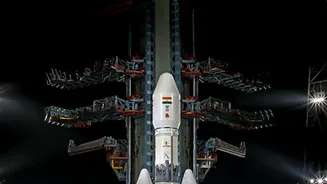
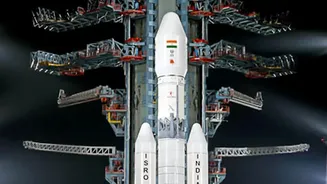
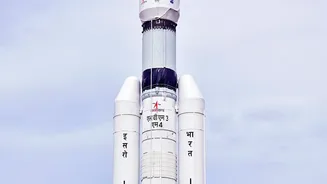
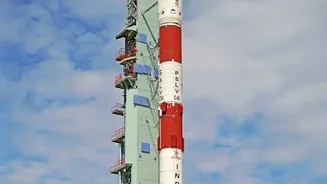
Until recently, India's space sector was largely the domain of the Indian Space Research Organisation (ISRO). Foreign investment was highly restricted. Previously, any foreign direct investment in the establishment and operation of satellites required
case-by-case approval from the government, a process that could be lengthy and uncertain. This framework limited the inflow of foreign capital and technology, keeping private and international participation at arm's length while ISRO focused on national strategic goals.
What Exactly Has Changed?
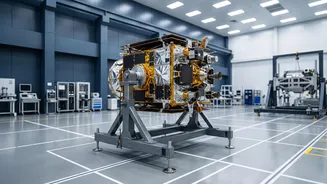
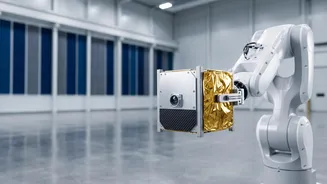
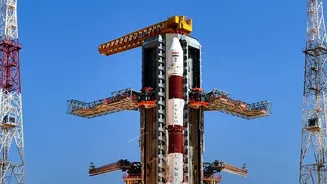
The new policy, effective from April 2024, unbundles the space sector into three distinct categories for foreign investment. For the manufacturing of components and systems for satellites and ground segments, 100% FDI is now permitted through the automatic route, meaning no prior government approval is needed. For more sensitive areas, like satellite manufacturing and operations, the automatic route is open for up to 74% FDI. For launch vehicles and the creation of spaceports, FDI up to 49% is allowed under the automatic route. Investments beyond these automatic limits still require government approval.
Why the Big Push Now?
This policy liberalisation is a key part of the Indian Space Policy 2023, which aims to unlock India's potential by boosting private participation. The government's goal is to increase India's share of the global space economy from its current small percentage. Projections estimate India's space economy could grow from around USD 9 billion in 2025 to USD 44 billion by 2033. By attracting foreign capital and technology, India hopes to empower its burgeoning ecosystem of over 400 private space startups and integrate them into the global supply chain. This move is designed to create high-skill jobs and foster self-reliance through the 'Make in India' initiative.
A New Role for ISRO and IN-SPACe
The reforms are also intended to shift ISRO's focus from routine manufacturing and operations to what it does best: advanced research, development, and deep-space exploration. The day-to-day promotion and authorisation of private space activities now falls to the Indian National Space Promotion and Authorization Center (IN-SPACe). Established in 2020, IN-SPACe acts as a single-window agency, streamlining the regulatory process for private companies, both domestic and foreign. This is designed to reduce bureaucratic hurdles and cut down project timelines for investors.
What This Means for Global Investors
For global aerospace firms and investment funds, these changes represent a landmark opportunity. The liberalised entry routes significantly lower the barrier to entry into one of the world's most dynamic and cost-effective space ecosystems. The 100% automatic FDI in component manufacturing is particularly attractive, allowing foreign companies to set up production facilities in India with unprecedented ease. For investors in satellite constellations and launch services, the clearer, tiered FDI limits provide much-needed policy certainty, making it easier to structure investments and form joint ventures with a burgeoning number of Indian space startups.