




An Astronomer's Paradise
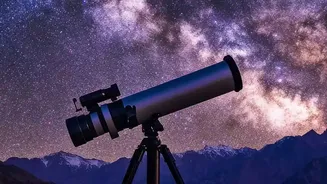
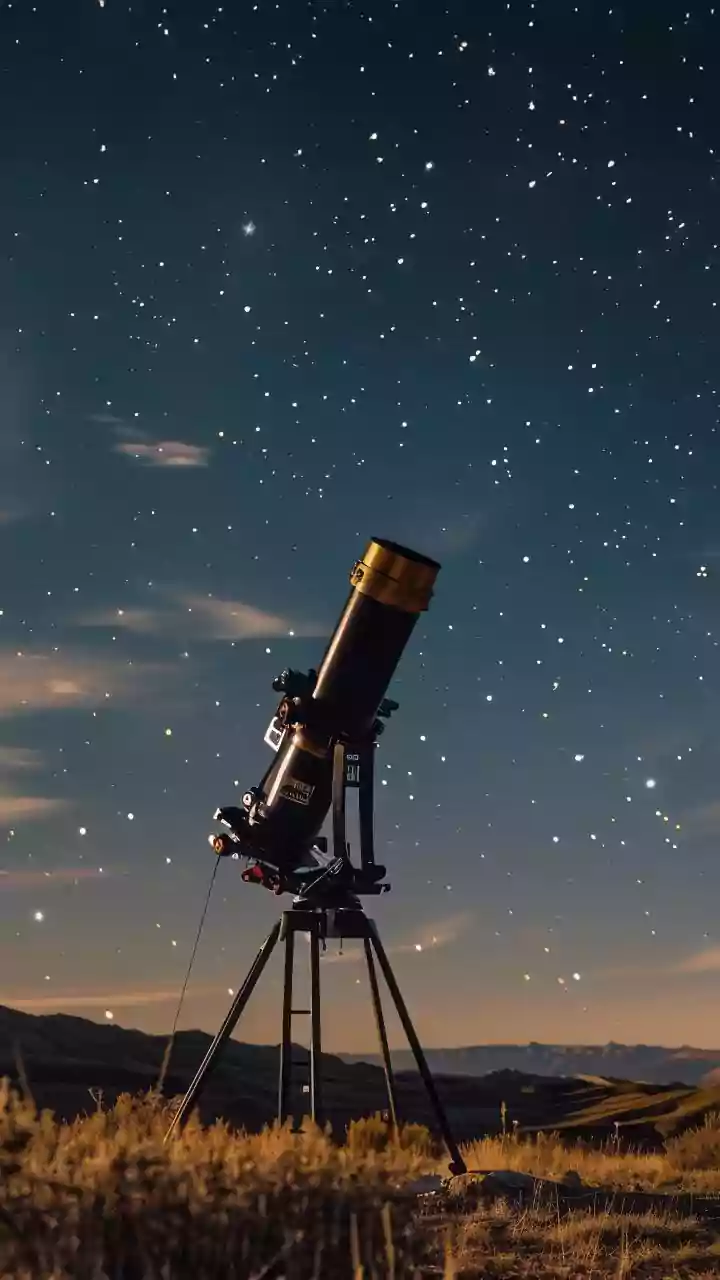
Spiti's unique geography is what makes its skies so special. Located in the rain shadow of the Himalayas at altitudes often exceeding 4,000 metres, the valley experiences minimal cloud cover and has incredibly dry, thin air. This combination results in a stunningly
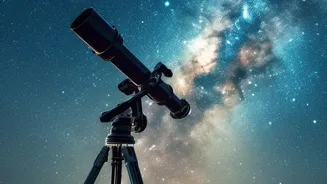
transparent atmosphere, where stars don't just twinkle, they burn with a steady, fierce light. Far from any major cities, light pollution is practically non-existent, achieving a Bortle Class 1 rating—the darkest possible. On a clear, moonless night, the Milky Way is not just visible; it's a brilliant, textured river of light that can be bright enough to cast a faint shadow. Even the Andromeda Galaxy is visible to the naked eye.
Classic Field Guides: The Analog Approach
Before pointing your phone at the sky, consider a traditional printed guide. They don't require batteries—a significant advantage in Spiti's cold, power-scarce environment—and help you learn the sky in a more deliberate way. A red torch is essential to read them without ruining your night vision.
Book: 'NightWatch: A Practical Guide to Viewing the Universe'
Often hailed as the single best introductory book for amateur astronomers, Terence Dickinson's 'NightWatch' is a must-have. It provides an excellent, easy-to-understand overview of everything you need to know, from basic astronomical concepts to selecting equipment. Its durable, spiral-bound design allows it to lay flat, making it perfect for use in the field. The book includes seasonal star charts that are clear and intuitive, helping you get your bearings and learn the major constellations visible from the Northern Hemisphere.
Book: 'Turn Left at Orion'
While 'NightWatch' teaches you the fundamentals, 'Turn Left at Orion' is designed to be used at the eyepiece (or with binoculars). It is a practical field guide focused on helping you find specific celestial objects. For over 100 deep-sky targets, it provides simple, clear directions and shows you what to expect to see through a small telescope or binoculars. Its spiral binding and large-format diagrams make it exceptionally user-friendly in the dark. Many astronomers recommend using both 'NightWatch' for foundational knowledge and 'Turn Left at Orion' as your active guide under the stars.
Digital Guides: Your Phone as a Planetarium
Modern stargazing apps turn your smartphone into a powerful pocket planetarium. Using your phone's GPS and motion sensors, they can identify any star, planet, or constellation you point them at in real-time using an augmented reality (AR) overlay. For Spiti, it's crucial to choose an app that offers a robust offline mode, as mobile connectivity is unreliable. Download the necessary star maps before you lose signal.
App: Stellarium Mobile
Stellarium is widely regarded as one of the best all-around astronomy apps, frequently recommended by amateur astronomers for its accuracy and comprehensive features. The free version is powerful, ad-free, and works entirely offline, showing you stars, constellations, planets, and even satellites. It offers a realistic depiction of the night sky from your precise location. While other apps might have more visually flashy interfaces, Stellarium is praised for being a deep and rigorous tool for actually learning the sky.
App: Star Walk 2
If you're looking for a user-friendly interface and stunning visuals, Star Walk 2 is a top choice for beginners. Its AR feature is quick and beautiful, making it incredibly easy to simply point your phone at a bright object and find out its name. The app excels at providing information about upcoming astronomical events and has a 'Sky Live' feature that tells you rise and set times for celestial bodies. While the free version has ads, it's more than sufficient for casual identification.
App: SkyView Lite
For sheer simplicity and ease of use, SkyView Lite is an excellent option. It offers a straightforward point-and-identify AR experience without overwhelming the user with features. If you just want to quickly answer the question 'what is that bright star over there?', this app does the job beautifully. It’s a great free tool that serves as a perfect entry point into digital stargazing, allowing you to identify celestial objects with minimal fuss.