




Know Your Fridge's Climate Zones
Not all parts of your refrigerator are equally cold. Cold air sinks, making the bottom of the fridge the chilliest spot, while the door is the warmest due to constant exposure to room temperature. Heat rises, so upper shelves often have milder, more consistent
temperatures. Understanding these micro-climates is the first step to smarter storage. An overfilled fridge also prevents cold air from circulating properly, creating warm spots where bacteria can grow.
Top Shelves for Ready-to-Eat Foods
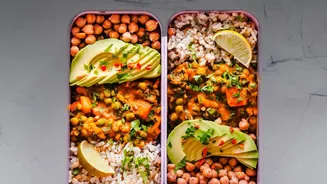
The upper shelves have the most stable temperatures, making them ideal for foods that don't need cooking. This is the place for leftovers (in clear containers!), ready-to-eat snacks, dairy products like paneer and cheese, and drinks. Storing ready-to-eat items high up also prevents juices from raw foods dripping onto them, a crucial food safety step.
Middle Shelves for Eggs and Dairy
While many fridge doors have egg compartments, this is actually the worst place to store them. The door is the warmest part of the fridge and experiences frequent temperature fluctuations every time you open it. Milk, dahi, and eggs thrive in the consistent, cool temperatures of the middle shelves. Place milk towards the back where it’s colder.
Bottom Shelf: The Cold Zone for Raw Meats
The lowest shelf is the coldest part of your fridge, making it the perfect and safest spot for raw meat, poultry, and fish. Storing these items on the bottom shelf serves a critical dual purpose: it keeps them at a safe, cold temperature and prevents their juices from dripping down and cross-contaminating other foods. Always keep raw meats in sealed containers or on a plate.
Demystifying the Crisper Drawers
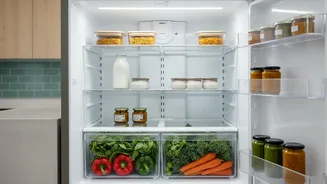
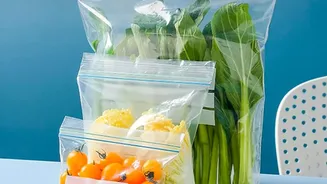
Those drawers at the bottom are for more than just corralling vegetables; they control humidity. Many fridges have two drawers for this reason. Use the high-humidity drawer for vegetables that wilt, like leafy greens (spinach, coriander) and carrots. Use the low-humidity drawer for fruits and vegetables that tend to rot, like apples and pears. Many fruits, like apples, release ethylene gas which can cause other produce to spoil faster, so it's wise to keep them separate.
Use the Door for Condiments Only
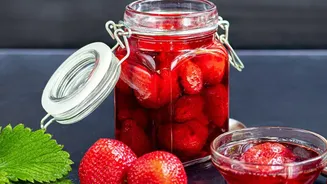
The refrigerator door is the warmest zone, so it should be reserved for items that can handle temperature swings. This makes it the perfect home for condiments like ketchup, pickles, sauces, and jams, which are typically high in natural preservatives like salt and vinegar. Never store perishable items like milk or eggs in the door, no matter how convenient it seems.
Visibility Is Your Secret Weapon
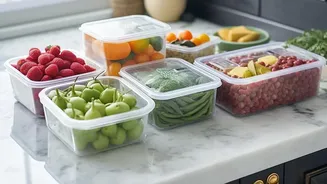
If you can't see it, you won't eat it. Use clear, stackable containers to store leftovers and chopped ingredients, so you can tell what's inside at a glance. Labelling items with the date helps you track what needs to be eaten first. Consider creating an 'Eat First' bin for items that are close to their expiry date. Placing taller items at the back and shorter ones at the front also improves visibility, ensuring nothing gets lost and forgotten.