



What Exactly Is Hitting the Moon?
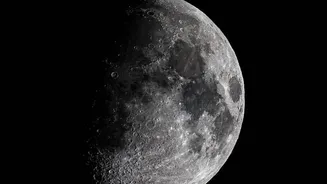
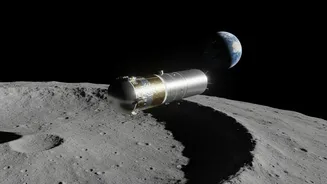
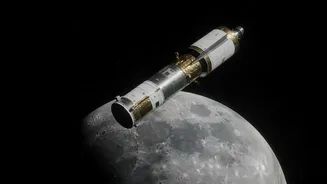
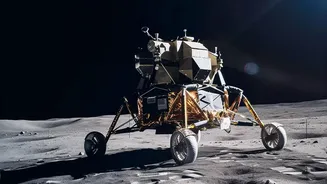
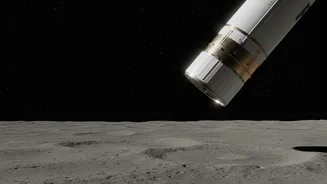
The object on a collision course with the Moon is the upper stage of a Falcon 9 rocket. This section of the rocket helped launch two lunar lander missions in January 2025 and has been in a looping, uncontrolled orbit ever since. Astronomer Bill Gray,
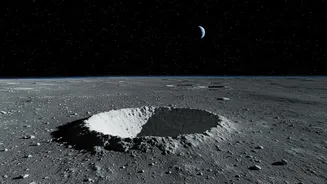
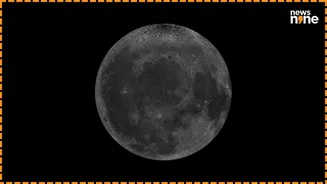
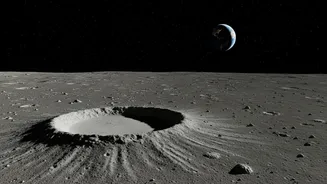
who tracks near-Earth objects, first predicted that this piece of space junk would slam into the Moon. It is expected to hit at around 5,400 miles per hour (roughly 8,700 kph) near a feature called Einstein crater. While the collision is accidental, it poses no danger and is being treated by scientists as a rare research opportunity.
How Do Scientists Predict These Impacts?
Predicting any impact, whether from an asteroid or space debris, starts with discovery and tracking. Telescopic surveys scan the sky for objects that have moved or appeared, and subsequent observations help map out a preliminary orbit. For potentially hazardous objects, organisations like NASA's Planetary Defense Coordination Office (PDCO) use this data to compute high-precision paths. Their systems calculate future positions to determine if, when, and where an orbit might intersect with another body, like the Earth or Moon. The more observations that are collected over time, the more the orbital prediction is refined and uncertainty is reduced.
Why Can Predictions Be Uncertain?
Initial predictions often come with a degree of uncertainty because of a limited observation arc. An early, small set of data points can result in a wide 'error ellipse'—a cloud of possible orbits. Other factors also complicate predictions. For man-made objects like this rocket stage, their hollow and irregular shape means they can be pushed around by solar radiation in ways that are hard to model precisely. For natural asteroids, their composition, shape, and whether they are tumbling can all influence their exact trajectory. Over time, as more data is gathered, that cloud of possibilities shrinks, and the prediction becomes much more accurate.
Will We Be Able to See This Impact?
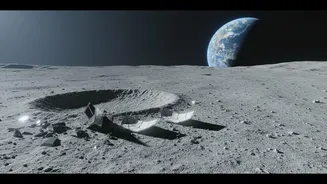
Unfortunately, the impact itself will not be visible to the naked eye. Even for telescopes, seeing the initial flash will be difficult. The rocket stage is traveling much slower than a natural meteoroid, meaning the impact flash will be less intense and last under a second. However, scientists are very interested in observing the plume of ejecta—the lunar dust and rock thrown up by the collision. Models predict this plume could reach altitudes of over 75 kilometres and should be observable for several minutes by powerful ground-based telescopes in the Americas. Spacecraft like NASA's Lunar Reconnaissance Orbiter will also try to image the new crater after the event.
What is India's Role in Watching the Skies?
India is an active participant in global efforts to monitor objects in space. The Indian Space Research Organisation (ISRO) runs Project NETRA (Network for space object TRacking and Analysis), an initiative to independently track debris and near-Earth objects. ISRO operates a Multi-Object Tracking Radar (MOTR) at Sriharikota, which can track multiple objects up to 1,000 km away. To enhance its capabilities, ISRO is also installing a new high-altitude optical telescope in Ladakh and developing another radar in the northeastern region. These systems are crucial for protecting India's 50-plus operational satellites from collisions and contributing to our global understanding of the space environment.