




The Ringed Jewel Returns to the Evening Sky
If you have ever wanted to see the solar system’s most famously beautiful planet, this is your moment. August marks the beginning of ‘Saturn season’ for stargazers. Each night, the planet will rise a little earlier and shine a little brighter, making
it an increasingly magnificent sight. This is all in preparation for its 'opposition' in early October, the point in its orbit when Earth passes directly between Saturn and the Sun. An opposition makes a planet appear at its largest and brightest in our sky. While the peak is still a couple of months away, the lead-up throughout August provides a fantastic and extended opportunity for viewing, with the planet becoming a prominent fixture of the night.
When and Where to Find Saturn
Finding Saturn is easier than you might think. Throughout August, look towards the eastern sky in the late evening. At the start of the month, the planet will climb above the horizon around 11 p.m., but by month’s end, you can spot it as early as 9 p.m. Saturn will be journeying through a faint patch of sky in the constellation Pisces, which means it won’t have to compete with many bright stars, making its steady, yellowish gleam stand out. Unlike stars that twinkle, planets tend to shine with a more constant light. For an easy-to-find marker, look for the Moon on the night of August 30-31, when it will appear close to the ringed planet, guiding your eyes to the right spot. Once it rises, Saturn will travel across the sky all night, reaching its highest point around midnight.
Your Viewing Guide: From Naked Eye to Telescope
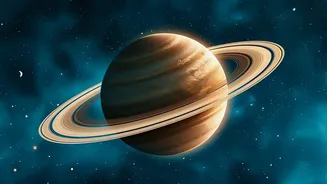
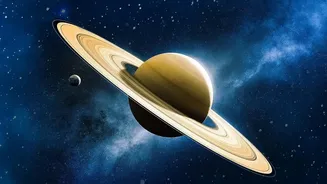
You don’t need expensive equipment to enjoy Saturn. To the naked eye, it will look like a particularly bright, unblinking star. It’s a simple yet rewarding way to connect with the cosmos. If you have a pair of binoculars, point them at Saturn. You won’t see the rings distinctly, but you might notice the planet appears as a tiny, slightly elongated oval rather than a sharp point of light. However, the real magic happens with a telescope. The good news is that even a small, beginner-level telescope with a modest magnification of 25x is powerful enough to reveal Saturn's iconic rings. With a small instrument, you'll see the planet's golden disk and a clear structure encircling it. If you have access to a larger telescope, around 4 inches or more in aperture, you might be able to spot the famous Cassini Division—a thin, dark gap that separates the main rings.
What to Look For: The Famous Rings and a Giant Moon
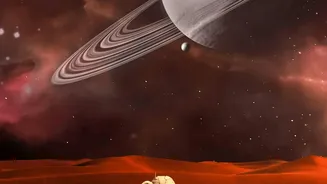
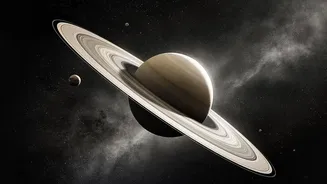
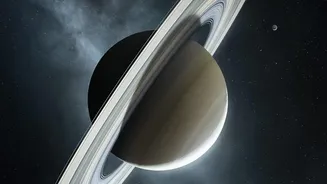
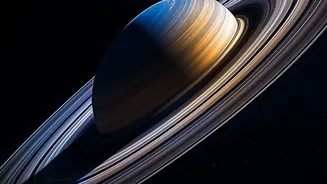
Saturn’s rings are the main attraction for a reason. They are a breathtaking sight, a seemingly solid, shimmering structure floating in the blackness of space. During August 2026, the rings are tilted towards Earth at a favourable angle of about 9 degrees, giving observers a clear, three-dimensional view. This is a significant improvement from the nearly edge-on view of the previous year, making the rings appear distinctly separate from the planet itself. For those with a telescope, there’s another challenge: try to spot Titan, Saturn’s largest moon. It will appear as a tiny, star-like point of light very close to the planet. On any given night, it can be found on one side of Saturn or the other as it orbits the gas giant.
An August Sky Full of Wonders
While Saturn is the headliner, it’s part of a busy month for celestial events. August 2026 also features the peak of the Perseid meteor shower around August 12-13 and a beautiful morning alignment of six planets visible before dawn. In fact, Saturn will be one of the easiest planets to spot during that pre-dawn parade. Unfortunately, the solar and lunar eclipses happening this month will not be visible from India, but the planetary show more than makes up for it. Saturn's reliable presence throughout the month provides a perfect anchor for your stargazing adventures, whether you’re watching for shooting stars or hunting for planets.