




Elon Musk’s ambition now targets the very backbone of the digital world: data centers. His proposal is to move them into space. While the idea of orbital computing powered by constant sunlight is revolutionary, it remains a distant, high-cost prospect.
The Grand Vision of Orbital Data
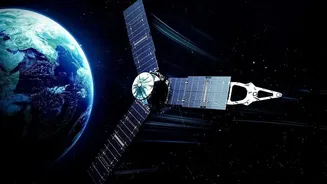
The core idea behind space computing is a direct response to a growing crisis on Earth. Terrestrial data centers, the engines of the AI revolution and the cloud, are incredibly demanding. They consume vast amounts of electricity, strain local power grids, and require huge quantities of water for cooling. In some regions, getting approval for a new grid connection can take years, creating a significant bottleneck for technological growth. Elon Musk's proposal, echoed by others in the tech industry, is to bypass these terrestrial limits by placing data centers in orbit. These facilities would be powered by solar panels receiving strong, nearly constant sunlight, uninhibited by weather or nighttime. This vision, however, is not just about solving an energy problem; it is about creating a new frontier for computational infrastructure.
Why Take Computing to Space?
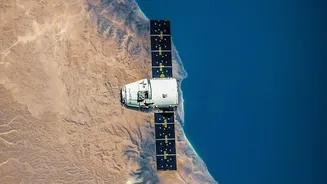
The primary driver is energy. In orbit, solar panels can generate significantly more power than on the ground, free from atmospheric interference. Proponents argue this could eventually make large-scale AI computing more efficient. A secondary benefit is physical security and sovereignty. A data center floating in the vacuum of space is physically inaccessible, creating a level of security impossible to achieve on Earth. For Musk's company, SpaceX, this concept aligns with its vertical integration strategy. The company’s Starship rocket is being developed to drastically lower launch costs, while its Starlink satellite network provides a blueprint for managing a massive orbital constellation and inter-satellite laser communications. The company has even filed for a constellation of up to one million data center satellites under the name 'Starmind'.
The Astronomical Hurdles
Despite the bold vision, the challenges are immense. The first is cost. Even with reusable rockets, launching the necessary mass into orbit is incredibly expensive. One analysis estimates a hypothetical 1GW orbital data center would cost over three times more than its terrestrial equivalent. Then there is the physics of the problem. While space is cold, it is a vacuum, which makes cooling extremely difficult. Heat from computer chips cannot be carried away by air or water; it must be radiated away, requiring large, heavy panels. Furthermore, hardware in orbit is bombarded with cosmic radiation, which can degrade components and cause data-corrupting 'bit-flips'. Unlike on Earth, routine maintenance, repairs, or hardware upgrades are practically impossible. Any component failure could render an entire satellite useless.
A Timeline Lost in Space
This is where the prospect meets reality. While Musk has made ambitious predictions, suggesting significant scale could be reached by 2028, there is no confirmed, official deployment timeline. SpaceX plans to launch its first test satellites, co_designed with Nvidia, in late 2027. However, many experts and even rival executives are skeptical, with some estimating the cost could be up to 100 times that of building on the ground. It is telling that while SpaceX pushes this grand vision, other major players like Google are also in the race, but with a more cautious, experimental approach. Google recently launched a prototype satellite, 'Project Suncatcher', to test the viability of running its AI chips in space. These are small, exploratory steps in a field where every advance is hard_won. The success of the entire concept hinges on whether launch costs, particularly with Starship, fall as dramatically as Musk hopes.