



The Science Behind Green Lungs
The idea that plants can clean indoor air gained widespread attention following a 1989 NASA study. This research found that certain houseplants could absorb common volatile organic compounds (VOCs) like formaldehyde, benzene, and xylene from sealed environments.
These chemicals are not abstract threats; they are released from everyday items like paint, cleaning supplies, pressed-wood furniture, and even incense. Plants absorb these gaseous pollutants through their leaves and transport them to their roots, where microbes in the soil help break them down. However, it's important to have realistic expectations. A home is not a sealed lab chamber, and a few plants won't replace a high-efficiency air purifier. More recent studies suggest you would need a very large number of plants for a significant impact. Think of them as natural, beautiful supplements to good ventilation and other air-cleaning methods, not a magic solution.
Snake Plant: The Bedroom Essential
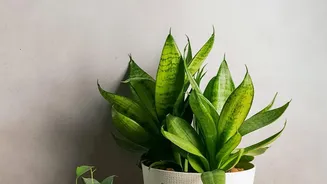
Known as one of the hardiest indoor plants, the Snake Plant (Sansevieria) is perfect for beginners and busy homeowners. Its key advantage is its ability to perform photosynthesis at night, releasing oxygen after dark when most other plants do not. This makes it an ideal companion for the bedroom, helping to freshen the air while you sleep. According to NASA's research, it's effective at filtering formaldehyde, benzene, xylene, and toluene. Its vertical, compact growth habit means it fits neatly into the tight corners of a modern apartment without demanding much floor space. It tolerates low light and infrequent watering, making it incredibly low-maintenance.
Money Plant: The Versatile Purifier
The Money Plant (Epipremnum aureum or Pothos) is a staple in many Indian households, and for good reason. It is incredibly resilient, thriving in soil or just a bottle of water, and tolerates a wide range of light conditions. This makes it easy to place on shelves, kitchen counters, or in hanging baskets. NASA's study identified it as one of the most effective plants for removing formaldehyde and benzene, toxins commonly found in new furniture, laminates, and paints. Its fast-growing, trailing vines can add a lush feel to even the smallest of spaces, making your home look as fresh as the air feels.
Areca Palm: The Natural Humidifier
With its feathery, elegant fronds, the Areca Palm (Dypsis lutescens) brings a tropical feel indoors. Beyond its aesthetic appeal, it is a workhorse for air quality. It was one of the top-rated plants in NASA’s study for its ability to remove airborne toxins. It is also a natural humidifier, releasing moisture into the air, which can be a relief in dry, centrally heated or air-conditioned rooms. This plant prefers bright, indirect sunlight and consistently moist soil. While it requires a bit more attention than a snake plant, its air-purifying and humidifying benefits make it a worthwhile addition to a living room or a well-lit corner.
Peace Lily: The Elegant Toxin-Tamer
The Peace Lily (Spathiphyllum) is one of the few air-purifying plants that also produces beautiful white flowers indoors, even in lower light conditions. It is particularly adept at removing ammonia, a common component of cleaning products, in addition to benzene and formaldehyde. Some studies suggest it can also help absorb mould spores. It thrives in shady spots and prefers moist soil. One important note for pet owners and parents: the Peace Lily is toxic if ingested, so it should be placed out of reach of curious children and animals.
Spider Plant: The Forgiving Filter
The Spider Plant (Chlorophytum comosum) is another excellent choice for beginners. It is exceptionally forgiving and known for its effectiveness in filtering formaldehyde and xylene. What makes it particularly suitable for compact homes is its growth habit; it produces 'spiderettes,' or baby plants, that dangle from the mother plant. This makes it perfect for hanging baskets, where it can purify the air without taking up any surface area. A single plant can quickly lead to a small collection, increasing its air-cleaning capacity at no extra cost.