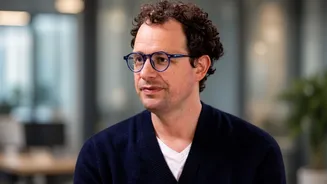






Dario Amodei, CEO of AI leader Anthropic, recently made a stunning claim: AI could help cure most major diseases, including many cancers, within a decade. But is this a realistic vision of the future or just tech industry optimism?
A Bold Ten-Year Horizon
The prediction that
diseases like cancer could become 'relics of the past' in under a decade comes from Dario Amodei, the head of Anthropic, a major competitor to OpenAI. He argues that artificial intelligence is poised to accelerate biological research so rapidly that progress that once took 50 to 100 years could be compressed into just five to ten. This isn't just talk; Anthropic is actively partnering with biotech firms to develop treatments for cancer and other illnesses. Amodei believes that if AI is applied to every stage of the medical research pipeline, from discovery to developing treatments, this seemingly impossible goal is achievable. His vision is shared by other tech leaders, who see AI as a tool to fundamentally change how we study biology and medicine.
How AI Is Already Fighting Cancer
Before we get to a cure, it is important to understand that AI is already a powerful ally in oncology. AI models are being used today to improve diagnostics by analysing medical images like CT scans and mammograms with a precision that can sometimes exceed the human eye. This helps detect cancers earlier and more accurately. In treatment, AI helps plan surgeries and radiation therapy, and even supports the development of personalised treatment plans by analysing a patient's unique genetic data. By processing vast amounts of information from clinical trials and patient records, AI can identify patterns that help doctors choose the most effective therapies for an individual.
The Drug Discovery Revolution
The core of Amodei's prediction lies in AI's ability to revolutionize drug discovery. Traditionally, developing a new drug is a slow and expensive process, with a failure rate of over 90%. AI is changing this by drastically speeding up the early stages. For example, systems like Google DeepMind's AlphaFold have already solved one of biology's biggest challenges: predicting the 3D structure of proteins. This is crucial because most drugs work by targeting specific proteins. AI can now design brand-new molecules from scratch that are perfectly shaped to interact with these disease-causing proteins. Anthropic's own collaborations have shown how its AI, Claude, can help scientists redesign parts of a cell therapy to make it ten times more effective at killing tumour cells in lab tests.
Optimism vs. The Obstacles
A ten-year timeline is incredibly ambitious, and many experts are skeptical. While AI can design a promising drug candidate in record time, that's only the beginning. The drug must still go through years of rigorous and expensive clinical trials in humans to prove it is both safe and effective. AI can help make these trials more efficient, but it can't eliminate the need for them. Furthermore, biology is immensely complex. Cancers are heterogeneous, meaning they vary greatly from person to person and can evolve to resist treatment. AI models are only as good as the data they are trained on, and issues with biased or incomplete data remain a major challenge. Regulatory hurdles and the 'black box' nature of some AI systems also slow down adoption in the highly cautious medical field.