






The Legend of a Lost City
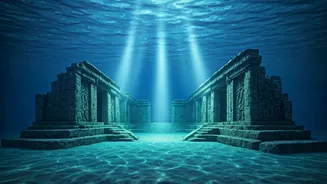
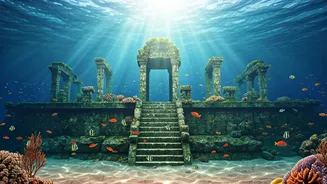
The story is one of India’s most enduring maritime mysteries. European sailors since the 13th century wrote of seeing seven glittering temple spires on the Mahabalipuram coast, calling it the land of the ‘Seven Pagodas’. Today, only one—the iconic Shore
Temple—stands against the sea. Local legend, passed down through generations of fishermen, holds that six other temples were consumed by the ocean, victims of divine wrath against a proud king. This tale of a glorious city lost to the waves has long captivated historians and travellers, but for centuries it was dismissed by many as mere folklore, a romantic myth with no solid proof. That perception began to change dramatically in the 21st century.
Echoes from the Deep
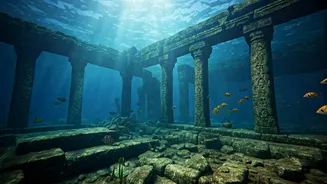
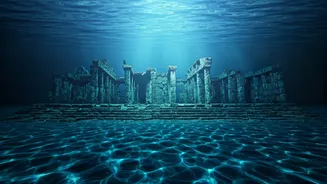
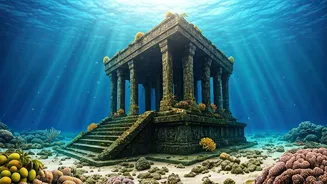
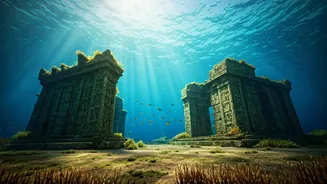
The first major clues emerged well before the new survey. After the devastating tsunami in December 2004, receding waters momentarily exposed large stone structures and carved boulders that tourists and locals had never seen before. This event galvanised the scientific community and lent sudden, startling credibility to the ancient legends. In the years that followed, explorations by the Archaeological Survey of India (ASI) and the National Institute of Oceanography (NIO) confirmed the presence of man-made structures beneath the sea. Divers and sonar scans revealed submerged walls, scattered stone blocks, and features resembling temple foundations at depths of up to nine meters. These were not the grand, intact temples of myth, but they were undeniable evidence of a significant coastal complex that had been lost to time and tide.
A New High-Tech Search
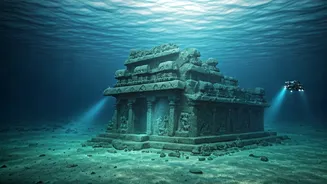
Building on nearly two decades of sporadic findings, the ASI's Underwater Archaeology Wing (UAW) has recently resumed its exploration off the Mahabalipuram coast. This new phase is not just a repeat of past efforts; it's a significant technological upgrade. The team is now armed with advanced equipment, including a Remotely Operated Vehicle (ROV). This submersible drone allows archaeologists to capture high-resolution video and imagery of the seabed without disturbing the fragile remains. It provides safer and more precise documentation, enabling researchers to probe deeper and in more challenging marine environments than was previously possible. The goal is to systematically map the submerged area, moving beyond just confirming the existence of ruins to understanding their layout, scale, and context.
What Are They Looking For?
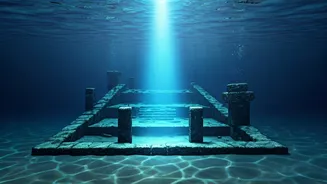
The mission is to solve the riddle of this ancient Pallava dynasty site. The ROV and other survey tools are searching for specific evidence of the lost pagodas and the port city that once surrounded them. Archaeologists are looking for structural alignments, foundation lines, and clusters of dressed stone blocks that differ from natural rock formations. The challenge is immense, as many structures are heavily damaged and covered in thick marine growth, making identification difficult. Past surveys have already identified walls running over 50 meters, carved architectural members, and what appear to be stairs leading to a platform. The new scan will create a more comprehensive map, connecting these scattered dots to reveal the full extent of the submerged settlement and determine if these ruins correspond to the temples of legend.
Why This Discovery Matters
Confirming the existence of the six other temples would be more than just validating a myth; it would rewrite a significant chapter of South Indian history. It would provide invaluable insight into the architectural prowess and urban planning of the Pallava dynasty during the 7th and 8th centuries. For the local community, it would be the triumphant validation of centuries of oral history, affirming the stories passed down by their ancestors. A confirmed discovery would also offer a monumental boost to tourism for this UNESCO World Heritage site, adding a new, underwater dimension to its already rich collection of rock-cut monuments. This mission, led by a dedicated team including pioneering women diver-archaeologists, represents a powerful fusion of ancient legend and modern science, aimed at reclaiming a vital piece of India’s cultural heritage from the depths.