






What Exactly Is Healthy Soil?
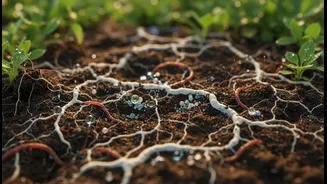
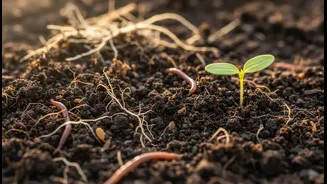
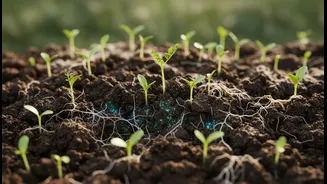
Healthy soil is not an inert medium but a vibrant, living system teeming with life. A single teaspoon can contain billions of microorganisms like bacteria and fungi. These organisms form a complex food web that is crucial for a functioning agricultural
ecosystem. A healthy soil is defined by its capacity to sustain plant and animal productivity, maintain water and air quality, and support human health. It has a good structure that allows for water infiltration and retention, is deep enough for roots to penetrate, and contains a balanced supply of essential nutrients. Crucially, it has high levels of soil organic carbon (SOC), which is the main component of soil organic matter and the foundation of its fertility.
The Challenge of Degradation in India
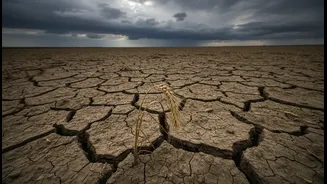
India's agricultural success has come at a cost. Decades of intensive farming, overuse of chemical fertilisers, and practices like monocropping have taken a toll. It is estimated that nearly 30% of India's land is degraded. This degradation manifests in several ways, including widespread nutrient deficiencies. Many Indian soils are low in nitrogen and organic carbon, which are critical for plant growth. The imbalanced use of fertilisers has skewed the natural ratio of nutrients in the soil. Furthermore, soil erosion by wind and water is a significant problem, stripping away an estimated 5.3 billion tonnes of nutrient-rich topsoil every year. This not only reduces farm productivity but also contributes to water pollution as runoff carries excess chemicals into rivers.
Why Healthy Soil is Sustainable
Sustainable agriculture aims to meet present food needs without compromising the ability of future generations to meet their own. Healthy soil is the engine that drives this principle. It acts like a sponge, improving water retention and reducing the need for extensive irrigation, a critical benefit in a water-stressed country. A vibrant soil ecosystem helps control pests and diseases naturally, reducing reliance on chemical pesticides. Healthy soils also cycle nutrients more efficiently, meaning farmers can achieve better yields with fewer synthetic fertilisers. This lowers the cost of cultivation for farmers and minimises the environmental pollution associated with fertiliser runoff. Ultimately, farming on healthy soil is more resilient, productive, and less dependent on costly external inputs.
The Path Forward: Policies and Practices
Fortunately, there is a growing movement to restore soil health across India. The government's Soil Health Card (SHC) scheme, launched in 2015, is a major initiative. It provides farmers with a detailed report on the nutrient status of their land and recommends specific measures for improvement. Beyond government schemes, farmers are increasingly adopting regenerative agriculture practices. These include minimal tillage to protect soil structure, using cover crops to prevent erosion, crop rotation to break pest cycles, and applying organic inputs like compost and Jeevamruth (a fermented microbial culture) to enrich soil life. These methods, many rooted in traditional Indian farming wisdom, are being validated as a path to both economic and environmental sustainability.
More Than Just Farming: Climate and Community
The benefits of healthy soil extend far beyond the farm gate. Healthy soils rich in organic matter act as a crucial carbon sink, drawing down carbon dioxide from the atmosphere and helping to mitigate climate change. Restoring degraded land can improve biodiversity, support cleaner water systems, and make agricultural communities more resilient to climate shocks like droughts and floods. For India's farmers, improved soil health leads to more stable and higher yields, lower input costs, and ultimately, greater prosperity. By focusing on the ground beneath us, we are investing in the long-term food security, environmental stability, and economic well-being of the entire nation.