




A High-Speed Cosmic Encounter
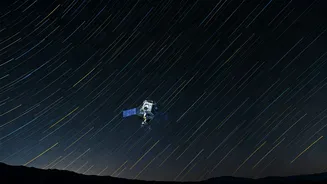
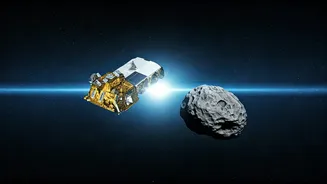
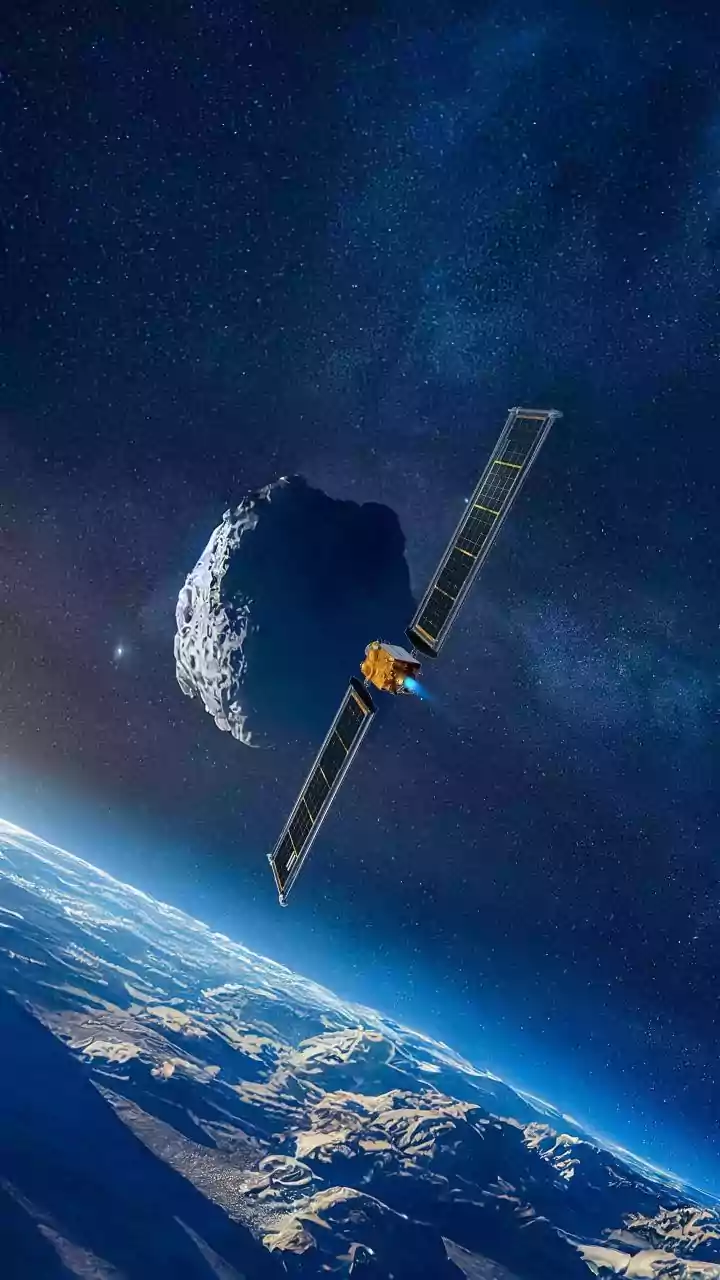
On Sunday, July 5, 2026, the Japan Aerospace Exploration Agency (JAXA) held its breath as the Hayabusa2 spacecraft hurtled towards its target: a 450-metre-wide asteroid named Torifune. Travelling at a staggering 18,000 kilometres per hour, the probe streaked
past the space rock, coming closer than almost any mission of its kind has ever dared. The flyby was confirmed as a success by JAXA, with the spacecraft passing the asteroid's centre at a distance of just 800 metres. To put that in perspective, most flybys are conducted from hundreds or thousands of kilometres away. Achieving this proximity is a world-class feat of autonomous navigation, akin to hitting a tiny coin from hundreds of kilometres away.
Meet the Veteran Probe: Hayabusa2
The Hayabusa2 probe is no stranger to deep space challenges. It is already famous for its primary mission, which saw it successfully land on the asteroid Ryugu, collect samples from both its surface and subsurface, and return them to Earth in December 2020. Those samples have provided a treasure trove of information, revealing the building blocks of life and water trapped within the ancient rock. Having aced its original assignment, the hardy probe was given an extended mission. This latest encounter with Torifune marks a new chapter for Hayabusa2, shifting its focus from uncovering our solar system's past to helping secure humanity's future.
A Crucial Test for Planetary Defense
The primary goal of this incredibly close flyby was not to study Torifune in detail, but to perform a critical technology demonstration for planetary defense. Scientists need to know if we can precisely guide a spacecraft to intercept an asteroid, should one ever be discovered on a collision course with Earth. Missions like NASA's DART, which successfully slammed into an asteroid in 2022 to alter its course, proved the basic concept. JAXA's latest test pushes the envelope on the guidance and control technology needed for such rapid response missions. By proving it can navigate with such high precision at extreme speeds, JAXA is building a vital skill set for protecting our planet from a potential cosmic threat.
A Glimpse of Another Cosmic Beast
While the flyby was brief, it still offered a valuable, if fleeting, scientific opportunity. Because Hayabusa2 was moving so fast, its instruments had only a short window to capture images and data as it approached Torifune. Every asteroid visited by a spacecraft has offered surprises, adding a new and unique member to our growing 'zoo' of celestial bodies. The information gathered will help scientists understand the diversity of these near-Earth objects. Torifune, which is a different type of asteroid than Ryugu, provides another data point for understanding their composition and structure. This knowledge is not just academically interesting; it's crucial for planetary defense, as knowing what an asteroid is made of is key to figuring out the best way to deflect it.
The Journey Ahead
This successful flyby is a stepping stone in Hayabusa2's incredible journey. The probe will continue to cruise through deep space, using Earth's gravity in a series of flybys to set its course for an even more ambitious target. In 2031, it is scheduled to rendezvous with a tiny, rapidly-spinning asteroid known as 1998 KY26. This space rock is estimated to be only about 10 metres wide, which would make it the smallest asteroid ever visited by a spacecraft. The challenges of orbiting and possibly even touching down on such a small, fast-moving object will push JAXA's engineering and navigation skills to their absolute limit. Each of these encounters builds a library of knowledge and experience, making space safer and more accessible for future generations.