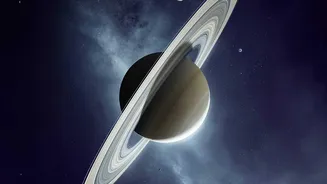



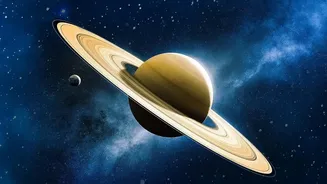
The Jewel of the Night Sky
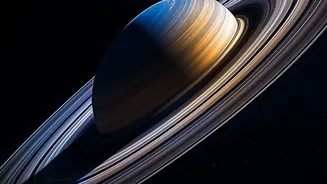
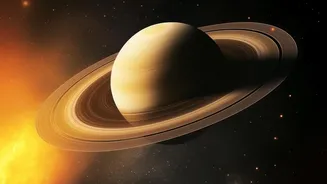
Often called the jewel of the solar system, Saturn is the sixth planet from the Sun and the second largest. While it’s visible to the naked eye as a bright, yellowish point of light, its true glory is famously hidden. But you don't need access to a professional
observatory to uncover it. A relatively simple and inexpensive instrument is enough to transform that dot in the sky into a breathtaking three-dimensional world, an experience that hooks many on the hobby of astronomy for life. This month provides an excellent window for observation as the planet grows brighter and rises earlier in the night.
Your Gateway to the Gas Giant
When we say a "small telescope," what does that really mean? You can get your first glimpse of Saturn’s rings with any telescope featuring an aperture (the diameter of its main lens or mirror) of 50-60mm or more, at a magnification of just 25x. A quality 70mm refractor or a 4-inch (100mm) reflector telescope, both popular choices for beginners, will provide a clear and rewarding view. These instruments are capable of higher magnifications (100x or more), which will make the planet and its rings appear larger and more detailed. Perhaps even more important than the telescope itself is a sturdy mount or tripod; a shaky view can frustrate even the most patient observer.
When and Where to Look This August
Throughout August 2026, Saturn will be visible in the constellation Pisces. At the beginning of the month, it rises in the eastern sky around 11 p.m. local time, but by the end of August, it will be rising as early as 9 p.m. This makes it much more convenient for evening viewing. The best time to observe any planet is when it's highest in the sky, as you're looking through less of Earth's turbulent atmosphere. In August, this means waiting until after midnight. An easy way to find Saturn is to look for a bright, steady, yellowish 'star' that doesn't twinkle like the others. On the nights of August 3-4 and August 30-31, the Moon will be close to Saturn, acting as a convenient signpost to help you locate the planet.
A Unique View of the Rings
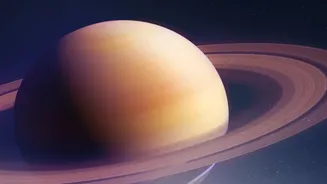
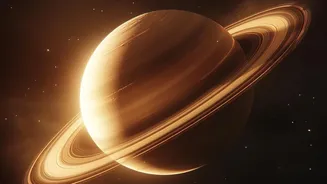
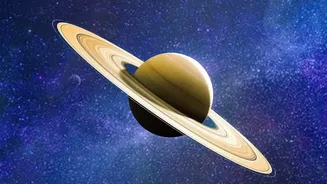
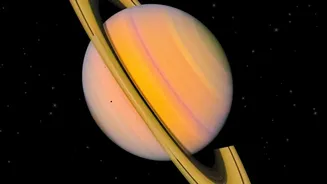
For those who have seen photos of Saturn, the rings usually look wide open. However, 2026 offers a very different and special perspective. Because of Saturn's 29.5-year orbit and its axial tilt, our viewing angle of the rings changes. In March 2025, the rings were perfectly edge-on to us, making them virtually invisible. Now, they are slowly starting to tilt back into view. This August, the rings will be tilted at a narrow angle of around 7.5 to 9 degrees. Through a small telescope, this will appear not as a wide, grand oval, but as a striking, thin sliver of light piercing the planet's globe. This razor-thin appearance is a unique sight that seasoned astronomers find just as compelling as the more familiar wide-open view.
More Than Just Rings to See
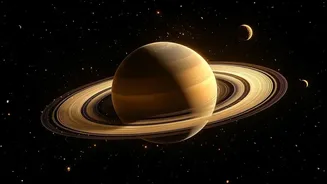
While the rings are the main attraction, they aren’t the only feature to look for. With a small telescope, you can easily spot Saturn’s largest moon, Titan, which appears as a tiny, star-like point of light nearby. Throughout August, you can track its position as it orbits the planet; planetarium apps can show you exactly where to find it on any given night. Depending on the size of your telescope and the clarity of the sky, you may also be able to spot other moons like Rhea, Tethys, and Dione. Look closely at the planet itself. You might notice that it's not perfectly round, but slightly flattened at the poles. With a 4-inch or larger telescope on a very steady night, you might even be able to glimpse the Cassini Division—a thin, dark gap in the rings.