





A City Transformed into an Art Gallery
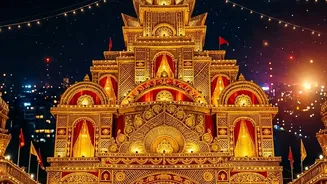
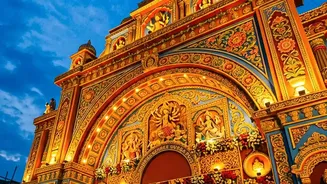
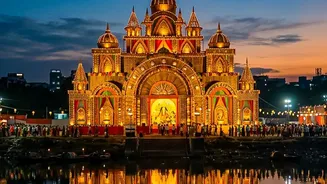
Kolkata has once again transformed itself into the world's largest open-air art gallery. This year, a record number of over 3,300 community pujas are being held in the city, with nearly 400 new additions. Streets are lined with millions of lights, and
the sound of the traditional dhak drum echoes through lanes as millions of people—locals and tourists alike—engage in pandal-hopping. This annual pilgrimage takes them across the city, from the traditional pujas of North Kolkata to the ambitious, theme-driven installations in the South. The crowds began swelling even before the main rituals started on Maha Shashthi, with pandal-hoppers queuing to get an early glimpse of the marquee attractions. The festival is not just a religious event; it is a full-blown cultural spectacle where faith and creativity merge on a scale that is hard to comprehend without witnessing it firsthand.
Themes of Heritage, History and Innovation
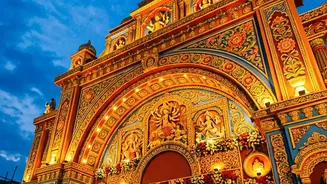
The pandals of 2026 are a testament to artistic innovation, with themes ranging from historical tributes to pressing social issues. Santosh Mitra Square is celebrating 150 years of 'Vande Mataram', complete with a light-and-sound show depicting India's independence journey. Sreebhumi Sporting Club has recreated Jaipur's magnificent Hawa Mahal, while Ekdalia Evergreen Club has built a replica of the grand Somnath Temple. Themes of national and cultural pride are prominent, with Alipore Sarbojanin narrating the Ramayana and New Alipore Suruchi Sangha showcasing the life of Syama Prasad Mookerjee. Environmental consciousness also finds a voice; Nalin Sarkar Street's pandal, 'Jollipi' (Water Script), highlights the pollution of the Ganga, and Kumartuli Park traces the river's journey from its source. These temporary structures are more than just venues for worship; they are immersive experiences designed by celebrated artists.
The Artisans Behind the Spectacle
Months before the first beat of the dhak, the festival's massive creative economy is already in full swing. The heart of this industry is Kumartuli, the historic potters' quarter where artisans shape the idols of Goddess Durga and her children from clay and straw. Their craftsmanship is the foundation of the entire festival. Beyond the idol-makers, a vast network of artisans, pandal fabricators, lighting specialists from Chandannagar, decorators, and labourers work tirelessly to bring the elaborate themes to life. Many community pujas, such as Bagbazar Sarbojanin, remain dedicated to the traditional 'Sabeki' style, preserving Bengal's classic Puja aesthetic with idols adorned in daker saaj (silver foil decorations). These artisans, both traditional and contemporary, are the unsung heroes who make the visual grandeur of Durga Puja possible.
A Multi-Crore Economic Powerhouse
Durga Puja is far more than a cultural and religious event; it is a significant economic engine for West Bengal. A 2019 British Council study estimated the creative industries surrounding the festival at over ₹32,000 crore, and recent estimates suggest the broader festival economy could be significantly higher. This economic activity supports millions of livelihoods across various sectors. From the idol-makers in Kumartuli to electricians, food vendors, retail businesses, and transport workers, the festival generates a massive number of temporary jobs and drives consumer spending. Corporate sponsorships and government grants are also integral, with brands competing for visibility and the state government providing financial aid to thousands of Puja committees. This fusion of community celebration and commercial activity makes Durga Puja a unique socioeconomic phenomenon, underpinning its inscription on UNESCO's heritage list.