



The Fading Era of the Whiteboard
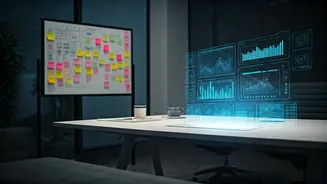
For decades, the humble whiteboard and its colourful cohort of markers and sticky notes have been the unsung heroes of corporate brainstorming. They are visual, tactile, and encourage a free-flow of ideas. In a lively session, the board becomes a physical
manifestation of a team's collective thought process. But this traditional method has always had its drawbacks. Who is responsible for deciphering the messy handwriting? Who takes the blurry photo of the board and emails it to the team, where it will likely be forgotten? The biggest issue has been the analogue-to-digital gap. Ideas born on the board often die there, lost in the chasm between the meeting room and the project management software. Transcribing notes is a tedious, time-consuming task that no one wants, leading to delays and lost momentum.
What Exactly Is an AI Scribe?
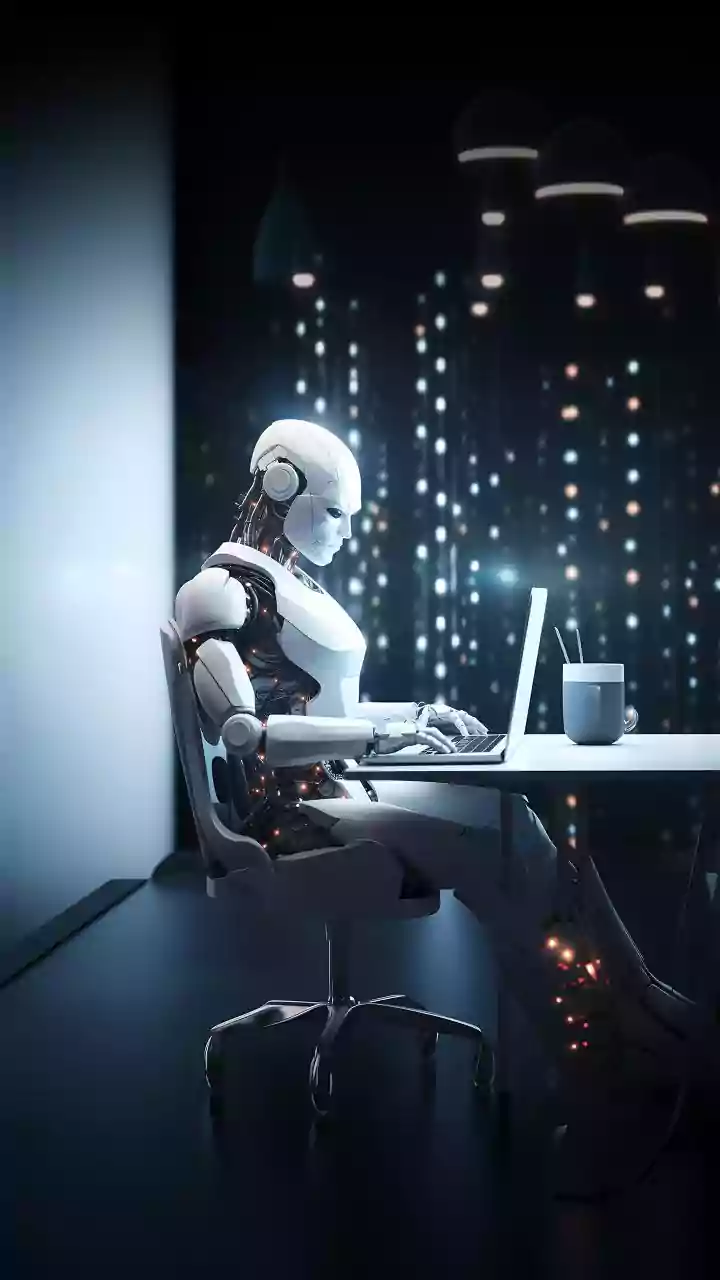
Enter the automated AI scribe. This isn't a single product but a category of software tools designed to act as a silent, digital note-taker for meetings. These tools, often integrated into platforms like Zoom, Google Meet, or Microsoft Teams, use artificial intelligence to perform several key functions. First, they provide real-time transcription, turning spoken words into a written text file. But their capabilities go far beyond simple dictation. Modern AI scribes can distinguish between different speakers, creating a clear record of who said what. More impressively, they use natural language processing (NLP) to analyse the conversation. They can automatically generate concise summaries, pinpoint key decisions, and identify action items or tasks assigned during the discussion. Think of it as a super-efficient personal assistant for every meeting, ensuring that nothing falls through the cracks.
The Lure of Unseen Efficiency
The primary driver behind this trend is a relentless pursuit of productivity. Companies in India and across the globe are recognising the immense time-suck that is post-meeting administration. By automating transcription and summarisation, AI scribes free up employees to focus on their core responsibilities. Instead of one person being designated as the 'note-taker' and potentially participating less, everyone can be fully engaged in the discussion. The benefits extend beyond the meeting itself. Having a searchable, accurate transcript creates a powerful knowledge base. A new team member can quickly get up to speed by reviewing the transcripts of past project meetings. A manager can easily track the progress of action items. This creates a culture of accountability and transparency, where decisions and responsibilities are clearly documented and accessible to all relevant stakeholders. It also makes meetings more inclusive for remote participants or those who couldn't attend, giving them a richer record than a simple set of minutes.
The Hidden Costs and Concerns
However, the shift to AI scribes is not without its challenges. The most significant concern revolves around privacy and data security. When a third-party AI is listening in on a confidential discussion about company strategy or a new product, where is that data being stored? Who has access to it? Companies must carefully vet their AI vendors to ensure they comply with stringent security protocols. There are also accuracy issues. AI can struggle with strong accents, technical jargon, or fast-paced conversations with people talking over each other. This can lead to amusing but potentially harmful errors in the transcript or summary, requiring a human to review and correct the output. Furthermore, the constant presence of a recording device can have a chilling effect on open and honest conversation, making some employees feel like they are under surveillance. This can stifle the very creativity and spontaneity that brainstorming sessions are meant to foster.
A Tool, Not a Teammate
Ultimately, experts advise that teams view AI scribes as powerful tools, not as replacements for human judgment and collaboration. An AI can capture what was said, but it cannot capture the nuance, the body language, or the unspoken consensus in the room. It can identify a task, but it can't understand the strategic context behind it. The most effective teams are those who learn to use these tools to augment their abilities, not abdicate their responsibilities. The AI handles the rote task of documentation, freeing up the humans to do what they do best: think critically, solve complex problems, and build relationships. The whiteboard and sticky notes may not disappear entirely—their tactile nature is still valuable for pure, unstructured ideation. But for structured meetings where decisions are made and tasks are assigned, the AI scribe is quickly becoming an indispensable part of the modern corporate toolkit.