
What Exactly is Friselle?
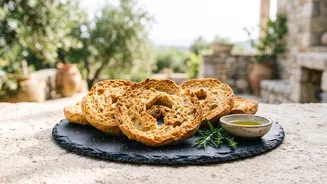
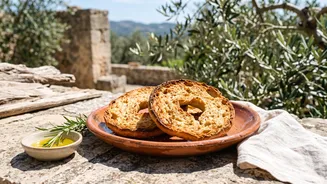
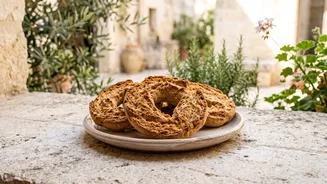
At first glance, you might mistake a frisella for a hard, bagel-shaped rusk. And you wouldn't be entirely wrong. Hailing from the sun-drenched regions of Southern Italy like Puglia, Campania, and Calabria, friselle (the plural of frisella) are rings of bread
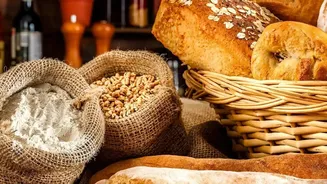
that are intentionally baked twice until they are jaw-breakingly hard. This process, known as 'biscotto' (literally 'twice-cooked'), is the secret to their incredible longevity. Made from simple ingredients like durum wheat or barley flour, water, yeast, and salt, these humble rings have a porous, rough surface perfect for soaking up flavour. They are a testament to the genius of peasant cooking, where nothing goes to waste and every ingredient is maximized for flavour and function.
A Bread Designed for Travel
The history of friselle is a story of practicality. Their origins date back centuries, with some suggesting they were a staple for Phoenician sailors as early as the 10th century BC. Their durability made them the perfect provision for long sea voyages and journeys. They were known as the 'bread of the Crusaders', as soldiers and pilgrims could carry them on long expeditions without fear of spoilage. The hole in the centre wasn't just for looks; it's believed that sailors would thread ropes through the rings to hang and store them easily on board their ships. What began as survival food for sailors and farmers has since evolved into a beloved symbol of Italian culinary identity.
How to Bring Friselle to Life
You cannot eat a frisella straight from the packet—it's far too hard. The magic happens when you rehydrate it. This crucial step is simple but essential. The traditional method, called 'sponzatura', involves quickly dipping the frisella in a bowl of cool water for a few seconds. The goal is not to make it soggy, but to soften it just enough so it's pleasantly yielding yet still retains a foundational crunch. In ancient times, fishermen would simply dip them in clean seawater. The rough, porous texture of the bread quickly absorbs the moisture, preparing it for the final, most delicious stage: the toppings.
The Classic Toppings and Beyond
Once softened, the frisella becomes a perfect canvas. The classic Puglian preparation is a masterclass in simplicity and flavour. It involves rubbing the surface with a clove of garlic, topping it with fresh, juicy, hand-crushed cherry tomatoes, a sprinkle of salt and oregano, and a generous drizzle of high-quality extra virgin olive oil. The bread soaks up the tomato juices and olive oil, creating an irresistible combination of textures and tastes, similar to a bruschetta but with a heartier bite. But don't stop there. Friselle are incredibly versatile. You can top them with anything from creamy burrata and pesto to tuna, olives, and white beans. Some even enjoy them with savoury spreads like 'nduja or sweet toppings like honey and nuts.
A Pantry Staple for Modern Kitchens
In a world of fast-expiring foods, the frisella stands out as a model of sustainability. Its long shelf life—often lasting for months when stored in a sealed container—means you can have a quick, satisfying, and delicious meal on hand at all times. It's more than just an appetiser; a well-dressed frisella can be a light and refreshing lunch, a perfect starter for a dinner party, or a satisfying snack. It embodies the resourceful spirit of Italian cooking: taking simple, high-quality ingredients and transforming them into something truly special that's both practical and a pleasure to eat.