
The Foundational Role of Salt
Salt is much more than a flavour enhancer in pickling; it is the primary agent of preservation and fermentation. Its main job is to draw moisture out of the vegetables through osmosis. This process creates a brine and makes the environment inhospitable
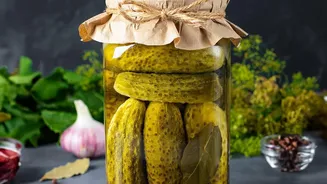
for harmful bacteria that cause spoilage. For fermented pickles, getting the salt concentration right—typically between 2% and 5%—is crucial for safety. This specific salinity encourages the growth of beneficial lactic acid bacteria, which produce the tangy flavour we love while preventing harmful microbes from taking over. Using too little salt can lead to spoiled, mushy pickles, while too much can halt the beneficial fermentation process altogether. For best results, always use non-iodized pickling or kosher salt, as the additives in regular table salt can make the brine cloudy and affect the final taste and colour.
Oil: The Protective Barrier in Achaar
In many traditional Indian pickles, or achaars, oil serves as a vital second line of defence. While salt manages the environment within the pickle, a generous layer of oil on top acts as an airtight seal. This 'oil blanket' prevents airborne bacteria, mould, and yeast from reaching the ingredients below. Since most spoilage microbes need oxygen to thrive, this anaerobic barrier is incredibly effective at preserving the pickle for months, even without refrigeration. Mustard oil is the traditional choice in many parts of India for a reason. It contains a natural antimicrobial compound called allyl isothiocyanate, which actively inhibits the growth of bacteria and fungus. This not only extends the pickle’s shelf life but also contributes the signature pungent flavour that defines classic achaar. For maximum protection, the pickle ingredients should always remain fully submerged under at least a half-inch of oil.
Sterilisation and Storage: The Final Safeguard
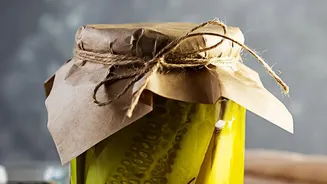
Even with the perfect balance of salt and oil, your efforts can be undone by improper storage. The single most important rule is to use clean, completely dry equipment at all times. Any moisture introduced from a wet spoon or a poorly dried jar can invite mould and spoilage. Glass or ceramic jars are the best choice for storing pickles, as the acidic ingredients can react with plastic or metal containers over time. Before use, jars and lids must be thoroughly washed and sterilised, either by boiling or drying completely in the sun. Once packed, pickles should be stored in a cool, dark, and dry place away from direct sunlight or heat sources like a stove, which can cause condensation inside the jar and lead to spoilage. For pickles that aren't shelf-stable, like quick refrigerator pickles, they must be kept chilled from day one.
Understanding the Risks: Botulism and Mould
Careful technique isn't just about taste; it's about avoiding serious food safety risks. Mould is a common issue, often caused by vegetables exposed to air, insufficient salt, or moisture contamination. If you see mould, it's safest to discard the entire batch. The most severe risk, though rare, is botulism—a potentially fatal illness caused by toxins from Clostridium botulinum bacteria. These bacteria thrive in low-oxygen, low-acid, low-salt environments. This is why storing things like garlic in oil at room temperature is a known risk. In pickling, this danger is mitigated by creating an acidic environment (a pH below 4.6) and using the correct salt concentration, which prevents the bacteria from growing. Fermented pickles naturally become acidic, and vinegar-based pickles are acidic from the start, making them safe when recipes are followed correctly. Never deviating from a trusted recipe's measurements for salt and vinegar is your best protection.