





The Smart Way to Stretch
Squeezing a workout into five minutes is an achievement, but skipping a stretch can short-change your efforts and even increase injury risk. Incorporating just a few minutes of stretching can significantly improve flexibility, boost circulation, and reduce
muscle tension. The key isn't just to stretch, but to stretch intelligently. This means using two different types of stretching at the right times: dynamic stretching before your workout and static stretching after. This simple structure warms up your body for movement and helps it cool down and recover afterward, maximizing the benefits of your brief but powerful session.
Dynamic vs. Static: A Quick Guide
Think of dynamic and static stretching as having two different jobs. Dynamic stretching involves active, controlled movements that take your joints through their full range of motion. This type of stretching prepares your body for exercise by increasing blood flow, raising muscle temperature, and 'waking up' the nervous system. Examples include leg swings and arm circles. Static stretching is the more traditional form, where you hold a stretch in a fixed position, usually for 20-30 seconds. This is best done after a workout when your muscles are warm, as it helps release tension, improve long-term flexibility, and aid recovery. The simple rule to remember is: move before you work out, hold after.
The 60-Second Dynamic Warm-Up
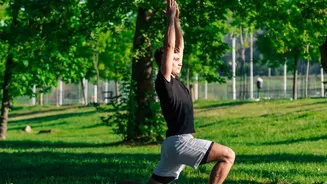
Before you jump into the main part of your workout, dedicate one minute to dynamic movements. This prepares your muscles and joints for the work ahead, reducing the risk of a strain. Focus on continuous, controlled motions rather than holding any single position. Here’s a simple 60-second sequence: Arm Circles (20 seconds): Stand with feet shoulder-width apart and extend your arms to the sides. Make 10 small backward circles, then 10 small forward circles, keeping your movements fluid. Leg Swings (20 seconds per leg): Hold onto a wall or chair for balance. Swing your right leg forward and backward 5-8 times in a controlled manner. Then, face the wall and swing the same leg side-to-side 5-8 times. Repeat on the left leg.
The Three-Minute High-Intensity Burst
With your body primed, it's time for the core of your workout. For these three minutes, focus on compound exercises that engage multiple muscle groups to maximize efficiency. The goal is to elevate your heart rate and challenge your muscles. You could perform a circuit of exercises like jumping jacks, bodyweight squats, push-ups (on knees if needed), and planks. For instance, try 45 seconds of each exercise with 15 seconds of rest in between. The specific exercises are less important than the principle: work at a high intensity that feels challenging for you, maintaining good form throughout.
The 60-Second Static Cool-Down
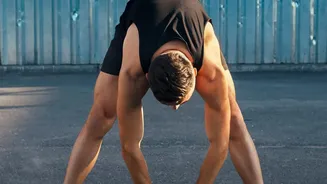
After your three-minute workout, your heart rate is up and your muscles are warm—the perfect time for static stretching. This minute of focused stretching helps lengthen the muscles you just worked, signals to your body that it's time to recover, and can reduce next-day soreness. Here are two essential stretches to hold: Standing Quad Stretch (30 seconds): Stand straight, holding onto a support if needed. Bend your right knee and grab your ankle, gently pulling your heel toward your glute until you feel a stretch in the front of your thigh. Keep your knees together. Hold for 15 seconds and switch sides. Seated Forward Fold (30 seconds): Sit on the floor with both legs extended straight in front of you. Hinge at your hips and slowly walk your hands forward toward your feet, keeping your back as straight as possible. You should feel a stretch in your hamstrings and lower back. Hold the position and breathe deeply.