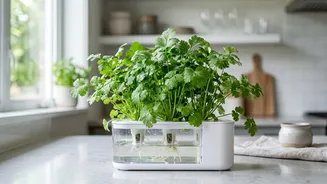



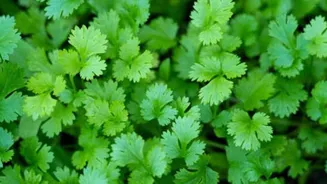
Imagine making a curry and realising you're out of fresh dhaniya. Now, what if you could simply snip some from a plant on your kitchen windowsill? Growing coriander without soil makes this possible, offering a clean, simple, and convenient supply.
Why Go Soil-Free?
Traditional
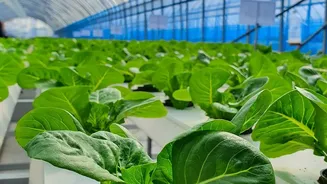
gardening is rewarding, but it can be messy and requires space. Soil-free gardening, also known as hydroponics, offers a compelling alternative for urban homes and apartments. This method involves growing plants in water enriched with nutrients. The primary benefits are clear: it eliminates soil-borne pests and diseases, uses water more efficiently, and often leads to faster growth because nutrients are delivered directly to the roots. For anyone with limited balcony space or a desire for a cleaner indoor garden, growing herbs like coriander in water is a game-changer. It’s a straightforward way to ensure you have fresh, pesticide-free leaves ready for your next meal.
Starting With Quality Seeds
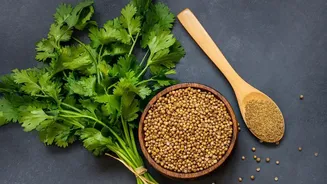
The journey to a successful harvest begins with the seeds. While you can use coriander seeds from your spice rack, purchasing seeds intended for cultivation often yields better germination rates. Coriander seeds are technically a fruit containing two potential plants. For improved results, gently split the whole seeds into two halves. You can do this by rubbing them between your palms or lightly pressing them. After splitting, soak the seeds in water for about 12 to 24 hours. This process softens the hard outer shell and signals the seed to begin sprouting, increasing your chances of success.
Method 1: Growing Coriander in Water
This is the simplest method for beginners. You will need a container like a glass jar or a plastic tub, a net basket or colander that fits snugly over the top, and your prepared seeds. Fill the container with clean, chlorine-free water, leaving a small gap at the top. Place the net basket on top and spread the soaked, split seeds across it. The water level should be high enough to keep the seeds moist but not fully submerged, as this can cause them to rot. To maintain moisture, you can cover the seeds with a damp paper towel for the first few days. Place the setup in a location that receives bright, indirect sunlight. Change the water every two to three days to prevent bacterial growth and ensure the roots get enough oxygen. Within 7 to 14 days, you should see sprouts emerging.
Method 2: A Basic Hydroponic Start
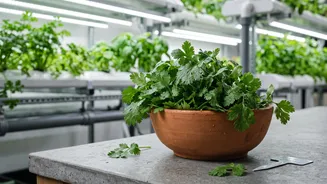
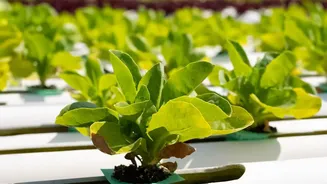
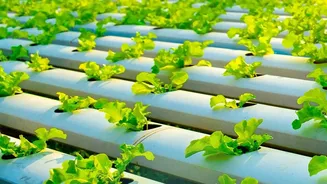
For a more robust setup that provides extra nutrients, you can try a basic hydroponic system. Instead of plain water, this method uses a nutrient solution. You can buy pre-mixed hydroponic nutrients formulated for leafy greens or herbs. After your seeds have sprouted using the water method mentioned above, you can transfer the seedlings to a hydroponic system. A simple Deep Water Culture (DWC) system can be made with a bucket, an air pump, and net pots. The roots are suspended in the aerated, nutrient_rich water, which encourages vigorous growth. It is important to monitor the pH of the solution, aiming for a range between 5.5 and 6.5 for optimal nutrient absorption.
Care and Harvest
Coriander thrives in cooler temperatures and prefers moderate sunlight, ideally around four to six hours a day. Too much direct, harsh heat can cause the plant to 'bolt', meaning it will flower and produce seeds prematurely, which can make the leaves bitter. Yellowing leaves can signal a nutrient deficiency, while wilting may indicate issues with water levels. Once the plants are about six inches tall, you can start harvesting. To ensure continuous growth, snip off the outer leaves and stems as needed, taking no more than a third of the plant at a time. This allows the plant to keep producing fresh leaves for you to enjoy.